
news +insights
Update: St. Petersburg GO Bond Passes as Voters Approve $600M for Storm Resilience
The St. Petersburg GO bond passed on Tuesday. City voters approved up to $600 million in general obligation bonds to speed storm resilience work on stormwater, wastewater and drinking water systems, according to The Bond Buyer. This is an update to our Oct. 28 preview of the referendum. Official vote totals were not available in the sources reviewed for this report, and this is a developing story.
What Happened
The measure appeared on the Nov. 3 general election ballot as the City of St. Petersburg No. 1 Referendum Question. It asked whether the city should finance storm resilience improvements, including floodwater protection, stormwater pump stations, drainage infrastructure, wastewater collection and treatment facilities, and drinking water distribution and supply facilities, by issuing bonds in one or more series not exceeding $600 million, according to the City of St. Petersburg. The bonds may mature no more than 30 years from each issuance date and are backed by the city’s full faith, credit and unlimited ad valorem taxing power (City of St. Petersburg).
The Bond Buyer listed the St. Petersburg result among overnight bond election outcomes nationwide, alongside a $450 million “Safe & Ready Bond” that Miami voters also approved. City Council approved the ballot language on July 23, 2026 (City of St. Petersburg).
What Is Confirmed
- Amount: up to $600 million, issued in one or more series (City of St. Petersburg).
- Timing: the city expects to issue the series from 2027 to 2030 (City of St. Petersburg).
- Tax impact: the city estimates about 0.96 mills, or roughly $96 a year per $100,000 of taxable value, assuming a 4.5 percent rate over 30 years (City of St. Petersburg). The chamber of commerce noted that this is an estimate, not a fixed bill, and that actual costs depend on borrowing amounts, timing, interest rates and future taxable values (St. Petersburg Area Chamber of Commerce).
- Scope: the city says more than half of the money is planned for protecting water and wastewater utilities from storm surge (City of St. Petersburg).
- Program: the work falls under St. Pete Agile Resilience, or SPAR, the city’s resilience program launched after Hurricanes Helene and Milton (Tampa Bay Observer).
The authorization allows borrowing; it does not approve a fixed list of construction contracts, and the city is not required to borrow the full amount at once (St. Petersburg Area Chamber of Commerce). The city has said eligible projects stay inside its Capital Improvement Program under City Council oversight, with annual budget review, public dashboards, yearly public meetings and a proposed citizen advisory group (City of St. Petersburg).
Why the City Asked
About $2.7 billion in SPAR work is already planned. Paying for it through utility rates alone would take roughly 24 years, and the bond is expected to shorten that to about 19 years, according to the Tampa Bay Observer. During Hurricane Milton, two of the city’s three wastewater treatment plants shut down, and Public Works is aiming to keep plants running through a major surge (Tampa Bay Observer).
Public Works Administrator Claude Tankersley said construction costs have risen 45 to 50 percent in recent years and that the bond would let the city lock in more work at current prices (Tampa Bay Observer). “After the storms in 2024 to now, the most common comment I hear is, I don’t want to wait 24 years,” Tankersley said during a community webinar, as reported by the Tampa Bay Observer. The city has also been pursuing other drainage work, including a $7 million HydroPlanter rain garden pilot, and recovery funding such as the $173 million in Milton recovery funds restored after a federal error.
What It Means for Owners and Contractors
For contractors, the vote points to a multiyear pipeline of public utility and drainage work in St. Petersburg, with bond series expected between 2027 and 2030 (City of St. Petersburg). The categories named in the ballot question, from pump stations and drainage to treatment facilities and water distribution, cover civil, mechanical, electrical and process scopes (City of St. Petersburg). Specific projects were not named on the city’s bond page, which links to an eligible projects dashboard and describes those materials as illustrative and subject to refinement (City of St. Petersburg).
For property owners, the repayment comes from a dedicated property tax millage rather than utility bills. The city estimated that funding the same $600 million through rates would have cost a typical customer about $486 more per year, and that the bond would be cheaper for about 89 percent of city properties, while properties with taxable values above roughly $500,000 could pay more under the bond (Tampa Bay Observer). Commercial landlords may pass some cost through to tenants, the Tampa Bay Observer noted.
Amendment 3 Passed on the Same Ballot
Florida voters also approved Amendment 3, which raises the homestead exemption for non-school property taxes from $50,000 to $150,000 in 2027 and to $250,000 in 2028, and slows annual taxable value growth for second homes, investment and commercial properties, according to CBS Miami. The current 10 percent annual cap on non-homestead assessment growth will be cut in half (WUSF). A legislative analysis estimated a reduction of nearly $5 billion in local government revenue in fiscal 2027-28, with larger impacts in later years (CBS Miami). The chamber stressed before the vote that the city bond and Amendment 3 were separate questions (St. Petersburg Area Chamber of Commerce).
What to Watch
- Certified vote totals from the Pinellas County Supervisor of Elections.
- The city’s refined list of eligible projects and the timing of the first bond series, expected as early as 2027 (City of St. Petersburg).
- Formation of the proposed citizen advisory group and public reporting dashboards (City of St. Petersburg).
- How Amendment 3 affects St. Petersburg’s broader operating and capital budgets, which has not yet been detailed by the city.
Key Questions
Did the St. Petersburg GO bond pass?
Yes. St. Petersburg voters approved up to $600 million in general obligation bonds for flood protection and water systems on Nov. 3, 2026. Official vote totals were not yet available in the sources reviewed (The Bond Buyer).
How much will the St. Petersburg bond cost property owners?
The City of St. Petersburg estimates about 0.96 mills, or roughly $96 a year per $100,000 of taxable value, assuming a 4.5 percent rate over 30 years. Actual costs depend on borrowing amounts, timing and interest rates (City of St. Petersburg).
What will the $600 million St. Petersburg bond pay for?
The bonds fund storm resilience work on stormwater, wastewater and drinking water systems, including pump stations, drainage and treatment facilities. The city says more than half is planned for protecting utilities from storm surge (City of St. Petersburg).
When will St. Petersburg issue the bonds?
The city expects to issue multiple bond series from 2027 to 2030, each maturing within 30 years (City of St. Petersburg).
Related Coverage
- St. Petersburg $600M Storm Resilience GO Bond Goes to Voters Nov. 3
- St. Petersburg Gets $173M in Milton Recovery Funds After Federal Error Is Fixed
- St. Petersburg to Trial HydroPlanter Rain Gardens in $7 Million Drainage Project
- Tampa Bay Water Gets $10M for Plant Expansion in $22.6M Regional Award
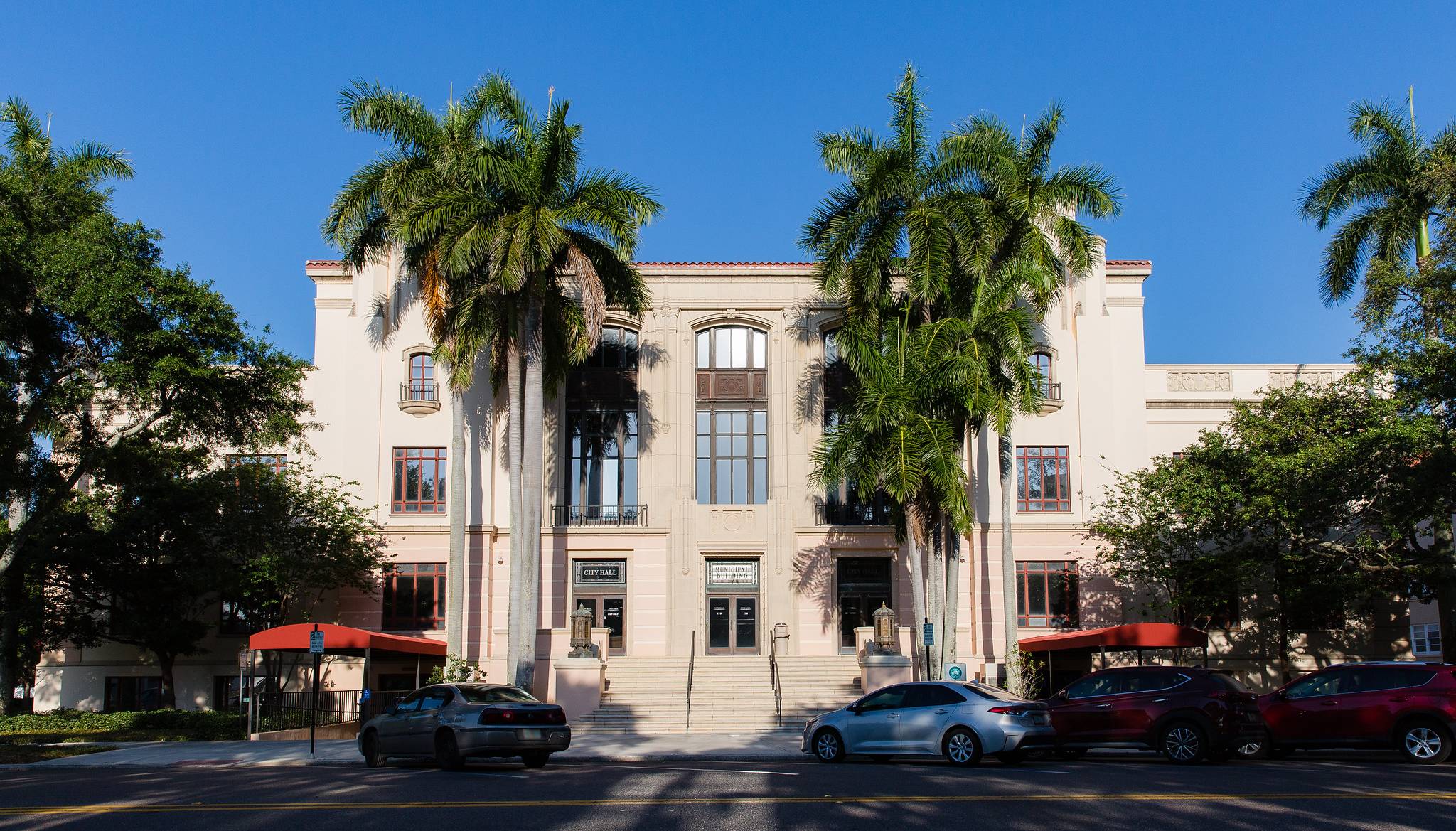
Image credit: City of St. Petersburg. Image from the source article.
Sources
- The Bond Buyer, “Bond election roundup: Voters backing most bond referendums,” https://bondbuyer.com/news/bond-election-roundup-california-passes-largest-issues
- City of St. Petersburg, “2026 General Obligation Bond Referendum,” https://www.stpete.org/residents/sustainability/spar/gobond2026.php
- City of St. Petersburg, “St. Pete City Council Approves General Obligation Bond Language to Fund Storm Resilience Improvements,” https://www.stpete.org/news_detail_T30_R1695.php
- Tampa Bay Observer, “St. Pete voters to decide $600M SPAR bond for storm resilience,” https://www.tampabayobserver.com/st-pete-600-million-spar-bond-november-storm-resilience/
- St. Petersburg Area Chamber of Commerce, “St. Petersburg GO Bond / SPAR Program,” https://www.stpete.com/2026/10/08/st-petersburg-go-bond-spar-program/
- CBS Miami, “Florida Amendment 3 is approved, deciding major property tax changes for homeowners,” https://www.cbsnews.com/miami/news/florida-amendment-3-property-tax-election-results-2026/
- WUSF, “Florida voters approve Amendment 3 property tax reduction,” https://www.wusf.org/politics-issues/2026-11-03/florida-2026-election-results-voters-approve-amendment-3-property-tax-reduction

Let's connect
For organizations planning commercial, industrial, or infrastructure work, we will review the project and recommend the appropriate delivery approach.

Join our team
If you hold yourself to careful, accountable work, you already work the way we do.