

news +insights
St. Petersburg to Trial HydroPlanter Rain Gardens in $7 Million Drainage Project
St. Petersburg will install its first HydroPlanter rain garden system as part of a roughly $7 million stormwater drainage project in a flood-prone neighborhood along the 54th Avenue canal. The City Council has approved the project, which pairs larger drainage pipes with modular planted boxes that slow and filter runoff, according to Public Works Administrator Claude Tankersley Bay News 9. The city plans to install eight of the units and collect performance data to decide whether they belong in future projects St. Pete Rising.
For the local construction market, the project is a small but useful signal. A municipal owner is adding manufactured green infrastructure to a conventional pipe replacement job, and it is citing tighter state stormwater rules as the reason.
What Happened
Bay News 9 reported on September 22, 2026 that the council approved a nearly $7 million drainage project for a neighborhood west of Fourth Street North Bay News 9. St. Pete Rising followed on October 5 with more detail on the planters and described the project cost as $7 million St. Pete Rising. Neither report gives the date of the council vote.
The city's project page lists the work as the 7th Street North, 50th Avenue North and Vicinity Drainage Improvements, run by the Engineering and Capital Improvements Department City of St. Petersburg. It covers 50th Avenue North between 4th Street North and 7th Street North, and 7th Street North between 50th Avenue North and the 54th Avenue North canal City of St. Petersburg.
Scope of Work
- Pipe replacement: Undersized drainage pipes will be replaced along both corridors St. Pete Rising. Tankersley said pipes installed in the 1950s are usually 15 to 18 inches in diameter and the city is "looking at doubling the size, tripling the size" Bay News 9. A 42-inch stormwater pipe is planned at 50th Avenue and Fourth Street North Bay News 9.
- Roadway and street work: The city lists road profile adjustments, sediment collection devices, traffic calming islands to replace traffic humps, and sidewalk improvements City of St. Petersburg. Bay News 9 also reported roadway elevation work and said construction impacts will run curb to curb Bay News 9.
- Canal outfall: The city bought a flooded home at Seventh Street North and 53rd Terrace, on a lot backing up to the canal, and had it removed. Public Works plans to build an outfall there and leave the rest of the lot undeveloped Bay News 9.
- HydroPlanters: Eight units, each about five feet long, three feet wide and two and a half feet deep, arranged in an L shape on a city-owned grassy area near 50th Avenue North and 7th Street North St. Pete Rising.
The two news reports describe the planter location a little differently. Bay News 9 places the green infrastructure on the south side of 50th Avenue North from Fourth Street to Seventh Street Bay News 9, while St. Pete Rising places it near the 50th Avenue and 7th Street intersection St. Pete Rising.
How the System Works
The units are made by GreenBlue Urban, and Public Works will buy the system from the company Bay News 9. The manufacturer describes the HydroPlanter as a modular bioretention system for small catchment areas. Surface water from nearby paved areas is directed into the planter, held temporarily, filtered through the planting media, and then released to the surrounding ground or to drainage infrastructure GreenBlue Urban.
In St. Petersburg, the boxes will hold engineered soil, grasses, shrubs and small trees. Street runoff will pass through the soil and plants, then drain to the city stormwater system and on to the 54th Avenue canal St. Pete Rising. Because the units collect filtered water and pipe it away, they do not depend on water soaking deep into the ground, which suits areas with high groundwater St. Pete Rising.
Tankersley was direct about the limits. The planters will not stop water from reaching the canal, he said, but they will slow it so it does not all arrive at once St. Pete Rising. The treatment targets phosphorus and nitrogen, nutrients found in fertilizer runoff that can feed algae blooms and damage seagrass in Tampa Bay St. Pete Rising. Tankersley said the state tightened stormwater regulations last year and the city must now remove more nutrients before water reaches the bay Bay News 9.
Funding, Schedule and Contractor
- Funding: A $2.7 million grant from the Southwest Florida Water Management District, with the balance paid from stormwater utility fees St. Pete Rising. The project is part of St. Pete Agile Resilience, or SPAR, the city program meant to speed up stormwater and flood protection work St. Pete Rising.
- Schedule: Pipe work is expected to begin around January, with the planters installed later, after the drainage work is done St. Pete Rising. Bay News 9 reported an early 2027 start and about one year of construction Bay News 9, and St. Pete Rising said work should continue through 2027 St. Pete Rising.
- Outreach: Public Works plans neighborhood outreach in November and December Bay News 9. The city says it will coordinate with residents to limit traffic disruption and keep access to properties open St. Pete Rising.
- Contractor: None of the sources reviewed names a construction contractor or design engineer.
Maintenance Is the Real Test
The city expects to inspect and service the planters about once a quarter, and crews will trim and harvest vegetation to remove the nutrients captured in the plant material St. Pete Rising. Tankersley said the contained design makes it easier to reach and replace soil and plants St. Pete Rising. He also warned that these are living systems and that the main reason they fail is that "the maintenance failed" St. Pete Rising.
James Scott, chair of the Suncoast Sierra Club Executive Committee, said the combination of pipes and a nature-based system is what makes the project unusual, and that the approach should become routine for the city St. Pete Rising.
Implications for Owners, Developers, Contractors and Subs
- Site and utility contractors: The bulk of this job is still conventional work: large diameter pipe, an outfall, road profile changes and curb to curb restoration in an occupied neighborhood. The planters arrive late in the sequence, so crews should expect a separate mobilization for the landscape and bioretention scope.
- Developers and civil engineers: The city tied the planters to stricter state nutrient removal requirements Bay News 9. Private sites in St. Petersburg face the same high groundwater that limits traditional infiltration, so contained, underdrained bioretention is worth pricing as an option during design.
- Landscape and maintenance firms: Quarterly inspection, pruning and media replacement is recurring work. If the city expands the program, maintenance capacity will matter as much as installation.
- Property owners: Residents along 50th Avenue North and 7th Street North should plan for a year of street construction and attend the outreach sessions to learn about access and phasing.
What to Watch
- The contract award and the name of the contractor, which have not been reported.
- The actual start date in early 2027 and the phasing plan presented to the neighborhood.
- Performance data from the eight planters. Tankersley said the city believes the benefit will exceed the cost but wants data to show it St. Pete Rising.
- Whether the city writes nature-based solutions into policy. Public Works said it wants green infrastructure in as many future projects as possible Bay News 9.
Bottom Line
St. Petersburg is using a roughly $7 million pipe replacement project, backed by a $2.7 million water management district grant, to trial eight manufactured rain garden units for the first time St. Pete Rising. Construction is expected to start in early 2027 and run about a year Bay News 9. The results will help decide whether planted treatment systems become a standard line item in city drainage work.
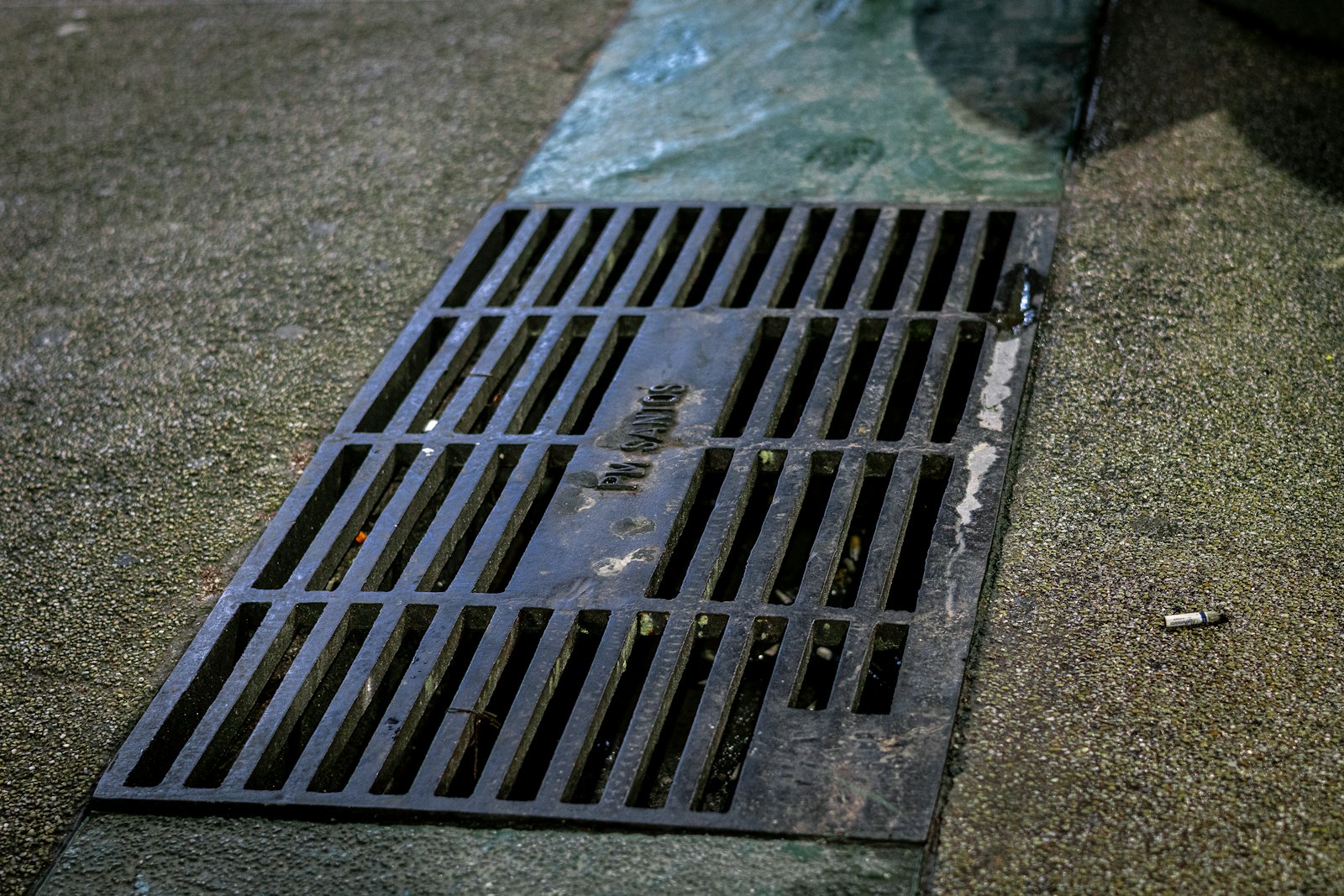
Image credit: Juan Pablo on Unsplash. Free-license stock photo of a drainage grate, not the St. Petersburg project. Image from Unsplash.
Related Coverage
- St. Petersburg Approves $40.85M in Disaster Recovery Funds for Six Housing Projects
- Kolter Plans Twin 44-Story Condo Towers on St. Pete's Hilton Bayfront Site
- Demolition Begins at Former Tampa Bay Times Building in Downtown St. Petersburg
Sources
- St. Pete Rising, St. Pete to test plant-based HydroPlanters as part of $7 million stormwater project: https://stpeterising.com/home/st-pete-to-test-plant-based-hydroplanters-as-part-of-7-million-stormwater-project
- Bay News 9, St. Pete to install first HydroPlanter system in $7M stormwater drainage project: https://baynews9.com/fl/tampa/news/2026/09/22/st-pete-to-install-first-hydroplanter-system-in-m-stormwater-drainage-project
- City of St. Petersburg, 7th Street North, 50th Avenue North and Vicinity Drainage Improvements: https://www.stpete.org/residents/current_projects/drainage_improvements.php
- GreenBlue Urban, HydroPlanter rain garden system: https://na.greenblue.com/products/rain-gardens/



Let's connect
For organizations planning commercial, industrial, or infrastructure work, we will review the project and recommend the appropriate delivery approach.

Join our team
If you hold yourself to careful, accountable work, you already work the way we do.