

news +insights
St. Petersburg Gets $173M in Milton Recovery Funds After Federal Error Is Fixed
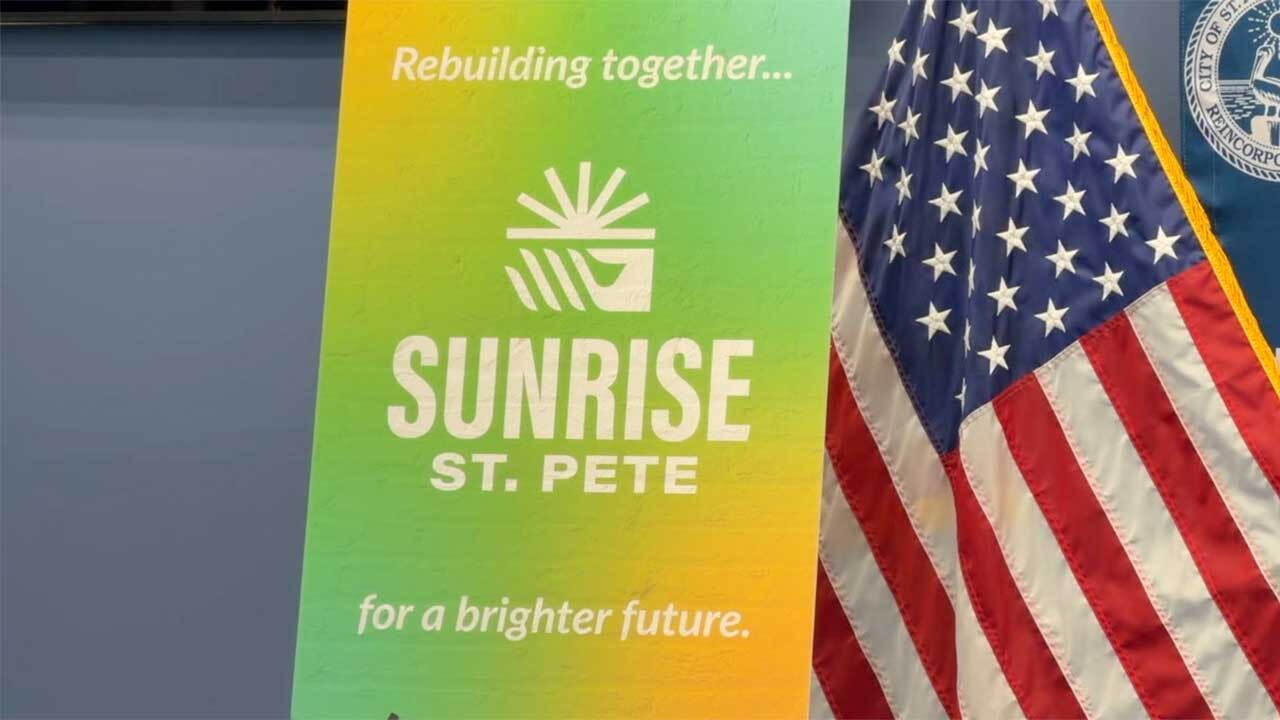
St. Petersburg will receive $173 million in federal Hurricane Milton recovery funds after a federal geocoding error that had sent the city's share to Pinellas County was corrected. City officials announced on October 9, 2026, that $126 million will go to housing repair and reconstruction through the Sunrise St. Pete program and about $47.6 million to infrastructure and storm mitigation projects.
What Happened
Mayor Ken Welch, City Council Vice Chair Richie Floyd and U.S. Representative Anna Paulina Luna announced the funding on Friday, October 9, the second anniversary of Hurricane Milton's landfall, according to St. Pete Catalyst. The U.S. Department of Housing and Urban Development had mistakenly allocated money intended for St. Petersburg to Pinellas County because of a geocoding error.
The result was that city residents could not access Milton recovery money through the city's own program for roughly two years, Tampa Bay 28 reported. Amy Foster of the City of St. Petersburg told the station that the federal agency had not encountered this situation before and "didn't have the legislative tools they needed to correct this issue," which is why the fix took almost two years.
The correction followed work by city officials and members of Florida's congressional delegation, including Luna and U.S. Representative Kathy Castor, per St. Pete Catalyst.
How the Money Is Split
- Housing: $126 million. This portion goes to housing assistance through Sunrise St. Pete, the city's federally funded disaster recovery program, per St. Pete Catalyst. The program offers aid for eligible home repairs, reconstruction and certain storm-related costs, and it also helps qualifying renters and displaced residents.
- Infrastructure and mitigation: about $47.6 million. This portion will fund infrastructure and storm mitigation projects with Pinellas County, per St. Pete Catalyst. Tampa Bay 28 described the same portion as $47 million for resiliency and flood mitigation projects, per Tampa Bay 28.
The new money comes on top of the city's original allocation of nearly $160 million in Community Development Block Grant Disaster Recovery funds, which covered damage from Hurricanes Idalia and Helene, per St. Pete Catalyst.
Who Becomes Eligible
Under the original grant, homeowners whose properties were damaged only by Milton were not eligible. The correction closes that gap, according to St. Pete Catalyst. The city had encouraged affected residents to apply anyway while it sought federal approval to add Milton to the program.
Applications that were previously denied will be reconsidered, and those applicants will not need to resubmit, per St. Pete Catalyst. City staff will contact residents who applied after Milton and re-evaluate their files, and after that review the program could reopen to new applicants, Tampa Bay 28 reported. The city has not said when applications will reopen for residents who have not applied before.
Background
Milton struck St. Petersburg on October 9, 2024, with wind gusts up to 101 miles per hour and rainfall up to 20.4 inches, according to St. Pete Catalyst. The storm tore off part of the roof at Tropicana Field, knocked a construction crane into a downtown building and flooded neighborhoods. Urban search and rescue teams assessed more than 43,000 structures in the aftermath.
The delay had consequences for residents. One Milton survivor told Tampa Bay 28 that she lost her home in the storm and eventually left the city where she had lived for 15 years, and that the funding would have helped two years ago. Floyd, whose own home flooded, spoke at the announcement about the difficulty of rebuilding, per St. Pete Catalyst.
The city has been moving other disaster recovery money in recent weeks. Earlier this month the city approved $40.85 million in disaster recovery funds for six affordable housing projects, which we covered in an earlier post.
What Is Not Yet Known
- The city has not published a list of the infrastructure and mitigation projects the $47.6 million will fund, or how the work will be divided between the city and the county.
- No schedule has been given for reopening Sunrise St. Pete to new applicants.
- Neither report describes how housing repair and reconstruction work will be procured or when construction awards would begin.
Implications for Owners, Developers, Contractors and Subs
The housing portion is the larger and more immediate piece. A $126 million commitment to repair and reconstruction will translate into a large volume of small residential jobs spread across the city: roofing, structural repair, mechanical and electrical replacement, flood damage restoration and, in some cases, full reconstruction. Programs funded with federal disaster recovery block grants typically run this work through pre-qualified contractor pools with program-specific requirements for documentation, inspections and payment. Residential contractors, restoration firms and trade subcontractors in Pinellas County who want this work should watch for qualification notices from the city.
Volume of this kind also affects the wider market. Residential repair programs draw on the same roofers, electricians, plumbers and HVAC technicians that light commercial and multifamily projects use. Owners planning small commercial or tenant improvement work in the St. Petersburg area over the next couple of years should expect those trades to stay busy and should confirm subcontractor availability early.
The $47.6 million for infrastructure and mitigation is the part most relevant to civil and site contractors. Flood mitigation and resiliency work commonly involves drainage improvements, pump stations, seawalls and utility hardening, although the city has not yet said what this money will build. The fact that the funds are to be spent on projects with Pinellas County suggests joint or coordinated procurement, so both the city's and the county's bid calendars are worth following.
Federal disaster recovery funding carries compliance obligations that affect pricing, including federal labor standards, procurement rules and documentation requirements. Firms that have not worked under these programs before should account for the administrative load when they bid.
For property owners, the practical point is that a previously denied application is not final. Owners of Milton-damaged homes who applied and were turned away should expect contact from the city and do not need to file again.
What to Watch
- The city's re-evaluation of earlier Sunrise St. Pete applications and the date the program reopens.
- A project list and procurement schedule for the infrastructure and mitigation funds.
- Contractor qualification or solicitation notices tied to the housing program.
- Any City Council action needed to accept and program the corrected allocation.
Bottom Line
A two-year-old federal mapping error has been fixed, and St. Petersburg now has $173 million for Milton recovery that it did not have before. Most of it will fund home repair and reconstruction, and the rest will go to infrastructure and flood mitigation with the county. The work has not been scheduled or procured yet, but it will add meaningful residential and civil volume to the local market once it is.
Image credit: Tampa Bay 28. Image from the source article.
Sources
- St. Pete Catalyst, "Federal error correction brings $173 million to St. Petersburg": https://stpetecatalyst.com/federal-error-correction-brings-173-million-to-st-petersburg/
- Tampa Bay 28, "St. Pete finally receives $173M in Hurricane Milton recovery funds after error": https://www.tampabay28.com/news/region-pinellas/st-pete-finally-receives-173m-in-hurricane-milton-recovery-funds-after-error



Let's connect
For organizations planning commercial, industrial, or infrastructure work, we will review the project and recommend the appropriate delivery approach.

Join our team
If you hold yourself to careful, accountable work, you already work the way we do.