

news +insights
Update: FeedMore WNY Hamburg Warehouse Opens at $115M Headquarters
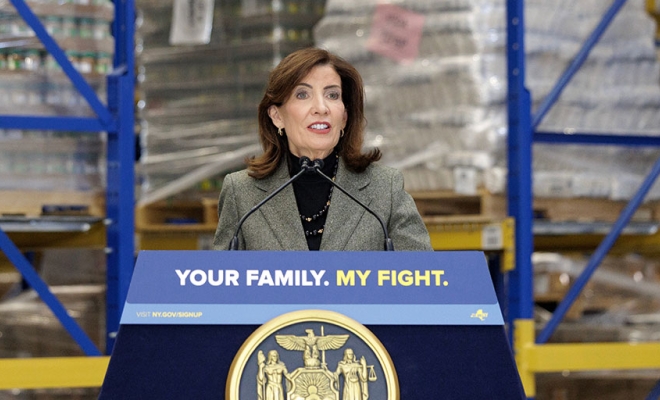
Update: The FeedMore WNY Hamburg warehouse is open. FeedMore WNY began warehouse operations on Thursday, November 19, 2026, at its new $115 million regional headquarters and distribution center at 4832 Camp Road in the Town of Hamburg, Governor Kathy Hochul announced the same day (Office of the Governor). The 200,000 square foot campus is backed by more than $53 million in New York State funding (Office of the Governor). Officials held a ceremonial ribbon cutting inside the building, though shelves were not yet fully stocked and the full facility is expected to be ready around the start of 2027 (Buffalo Toronto Public Media).
This is an update to WCG’s earlier coverage, FeedMore WNY’s $107 Million Hamburg Campus Is Taking Shape, which followed the project through construction. Today’s news marks the move from construction into operations.
What Happened
The governor’s office described the event as the grand opening of the warehouse and the start of warehouse operations at the new campus (Office of the Governor). Hochul joined FeedMore leaders, capital campaign volunteers and local officials for the ribbon cutting (Buffalo Toronto Public Media). FeedMore WNY President and CEO Tara Ellis said the organization had been turning away about two million pounds of donated food every year before the move, and that the new dry racks, coolers and freezers can hold more than five million pounds of food (Buffalo Toronto Public Media).
FeedMore WNY was formed in 2020 through the merger of the Food Bank of Western New York and Meals on Wheels for Western New York (Office of the Governor). The Hamburg campus is more than twice the size of the two legacy facilities combined, and the organization plans to sell its current sites on James E. Casey Drive and Holt Street in Buffalo (FingerLakes1.com). Buffalo Toronto Public Media reported that the Holt Street building will be put up for sale once the Hamburg facility is fully running (Buffalo Toronto Public Media).
What Is Confirmed
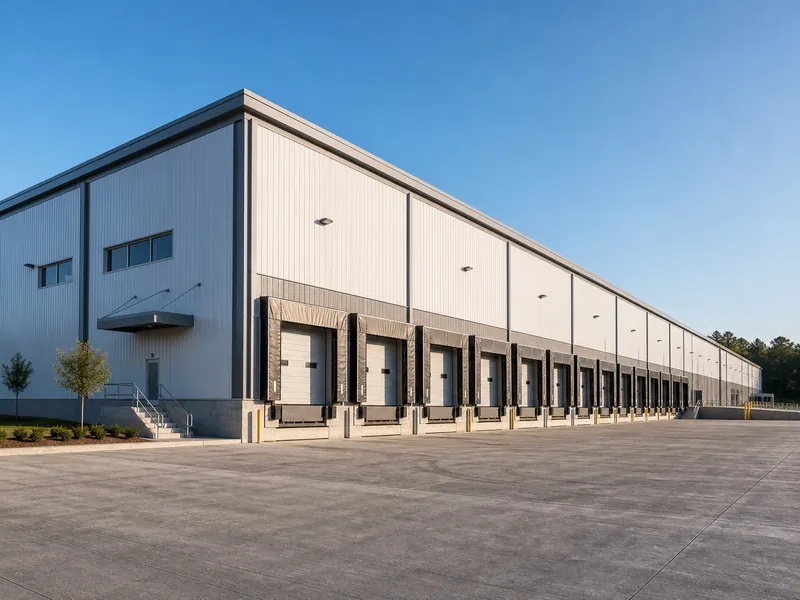
- Size and location: a 200,000 square foot headquarters and distribution center at 4832 Camp Road in Hamburg, serving Erie, Niagara, Cattaraugus and Chautauqua counties (FingerLakes1.com).
- Warehouse: a 50 foot tall warehouse designed vertically to leave room for future expansion, with a high, very narrow aisle racking system served by specialized narrow aisle forklifts (Office of the Governor).
- Docks: six ambient docks plus five cold docks that feed perishable food directly into coolers and freezers, according to Ellis (Buffalo Toronto Public Media).
- Donation handling: rooms for repacking bulk goods and a dedicated protein suite for large protein donations, which the state calls the first of its kind at a food bank in the Northeast (Office of the Governor). FeedMore estimates it turned away roughly $13.5 million worth of food donations over the past five years for lack of space (Office of the Governor).
- Kitchen: a commercial commissary able to produce up to 20,000 meals a day, plus a completely separate gluten free kitchen (Office of the Governor).
- Resilience and support spaces: six 500 kilowatt backup generators, sanitation and antibacterial equipment around the commissary, a community donation drop off area, space for the RISE job training program and small quiet rooms for post traumatic incident management (Office of the Governor).
- Staffing: about 160 paid employees at the start, with growth expected, and room for twice as many volunteers (FingerLakes1.com).
Project Team and Funding
Uniland Development Company served as construction manager, Trautman Associates was the architect and Buffalo Construction Consultants acted as owner’s representative (Office of the Governor).
The funding stack, as reported by the state and FingerLakes1.com, includes:
- $48 million in state funds administered by Empire State Development (Office of the Governor).
- $5 million from the New York Power Authority’s Power Proceeds program for construction (Office of the Governor).
- A $400,000 NY PLATES grant, administered by DASNY with the state Department of Health, for a specialized forklift and a refrigerated truck (Office of the Governor).
- $5.5 million in federal funding cited by U.S. Senators Charles Schumer and Kirsten Gillibrand (FingerLakes1.com).
- $3 million from Erie County, according to County Executive Mark Poloncarz (FingerLakes1.com).
A capital campaign is still raising money for the project (Buffalo Toronto Public Media).
What Is Not Yet Known
Sources describe the cost in different ways. The state calls the campus a $115 million headquarters (Office of the Governor), while Buffalo Toronto Public Media put the construction cost at an estimated $110 million (Buffalo Toronto Public Media). WCG’s earlier coverage cited a project cost not to exceed $107 million at the construction start. None of the announcements reconciled those figures, so the final project cost has not been confirmed.
The timing of full operations is also still open. Warehouse operations began November 19, but the facility as a whole is expected to be ready around the start of 2027 (Buffalo Toronto Public Media). Meal production figures also differ: the state says the commissary doubles current output potential (Office of the Governor), while Hochul said at the event that the center will raise Meals on Wheels production from 6,000 to 20,000 meals a day when fully operational (Buffalo Toronto Public Media). The amount remaining in the capital campaign was not disclosed.
What It Means for Owners and Contractors
For Western New York contractors, the opening closes out one of the region’s largest nonprofit construction projects of the past two years. The finished scope shows the systems that drive cost and schedule on food distribution buildings: high bay racking and slab tolerances suited to very narrow aisle equipment, separate ambient and cold docks, cooler and freezer construction, commercial kitchen infrastructure and enough standby power to keep refrigeration and production running through an outage (Office of the Governor).
The six 500 kilowatt generators are a useful benchmark. Owners planning cold storage or food processing space increasingly treat backup power as a core requirement rather than an option, and that drives electrical, fuel storage and switchgear scope early in design. Separate allergen controlled kitchens and sanitation rated finishes, like the gluten free kitchen and antibacterial equipment here (Office of the Governor), add further detail for mechanical, plumbing and finish trades.
The funding is also instructive. The project combined state economic development money, a NYPA power program award, a DASNY equipment grant, federal funds, county money and private campaign dollars (FingerLakes1.com). Contractors working on similar publicly supported nonprofit projects should expect reporting requirements tied to each source. Grocery and food distribution remains an active segment for builders more broadly, as seen in the $200 million Publix produce warehouse expansion in Lakeland.
The two Buffalo properties FeedMore plans to sell may become reuse or redevelopment opportunities once they hit the market (FingerLakes1.com). Buffalo already has several community projects in motion, including the Buffalo Urban League’s planned $25 million campus.
What to Watch
- Full facility operations, including the commissary and Meals on Wheels production, expected around the start of 2027 (Buffalo Toronto Public Media).
- Listing and sale of the Holt Street and James E. Casey Drive properties in Buffalo (FingerLakes1.com).
- A final project cost and the close of the capital campaign (Buffalo Toronto Public Media).
- Growth in staffing beyond the initial 160 employees and expansion of the RISE program (FingerLakes1.com).
Key Questions
When did the FeedMore WNY Hamburg warehouse open?
FeedMore WNY began warehouse operations at its new Hamburg headquarters at 4832 Camp Road on November 19, 2026, with the full facility expected to be ready around the start of 2027 (Buffalo Toronto Public Media).
How much did the new FeedMore WNY headquarters cost?
New York State describes FeedMore WNY’s Hamburg campus as a $115 million project supported by more than $53 million in state funding (Office of the Governor). Buffalo Toronto Public Media put the construction cost at an estimated $110 million (Buffalo Toronto Public Media).
How big is the FeedMore WNY Hamburg facility?
The FeedMore WNY campus in Hamburg is about 200,000 square feet, with a 50 foot tall warehouse and a commissary able to produce up to 20,000 meals a day (Office of the Governor).
Who built the FeedMore WNY Hamburg campus?
Uniland Development Company was construction manager on the FeedMore WNY campus in Hamburg, with Trautman Associates as architect and Buffalo Construction Consultants as owner’s representative (Office of the Governor).
Related Coverage
- FeedMore WNY’s $107 Million Hamburg Campus Is Taking Shape, And It’s One of WNY’s Largest Active Construction Projects
- Publix Lakeland Warehouse Expansion: $200M Produce Center Advances
- Buffalo Urban League New Building Gets $5M State Grant for $25M Campus
- U.S. Industrial Construction Pipeline Ticks Back Up as Market Stabilizes in 2026
Image credit: Office of Governor Kathy Hochul. Image from the source article.
Sources
- Office of Governor Kathy Hochul, Governor Hochul Announces Warehouse Opening Ahead of the Holidays at FeedMore WNY’s New $115 Million Regional Headquarters in Hamburg, https://www.governor.ny.gov/news/governor-hochul-announces-warehouse-opening-ahead-holidays-feedmore-wnys-new-115-million
- Buffalo Toronto Public Media, Officials celebrate new FeedMore WNY facility for expanded capacity, possibilities, https://www.btpm.org/local/2026-11-19/officials-celebrate-new-feedmore-wny-facility-for-expanded-capacity-possibilities
- FingerLakes1.com, FeedMore WNY opens warehouse at $115 million Hamburg headquarters, https://www.fingerlakes1.com/2026/11/19/feedmore-wny-opens-warehouse-at-115-million-hamburg-headquarters/

Let's connect
For organizations planning commercial, industrial, or infrastructure work, we will review the project and recommend the appropriate delivery approach.

Join our team
If you hold yourself to careful, accountable work, you already work the way we do.