
news +insights
MTA Awards $119M Design-Build Contract to Restore Chambers Street Station
The Chambers Street station rehab is funded and awarded. The MTA Board on Wednesday, November 18, 2026 approved a contract of nearly $119 million to completely overhaul the Chambers St J/Z subway station in Lower Manhattan (amNewYork). Governor Kathy Hochul said the design-build contract went to a joint venture of Forte Construction Corp. and Citnalta Construction Corp., with the work paid for by congestion pricing revenue (Office of the Governor).
What Happened
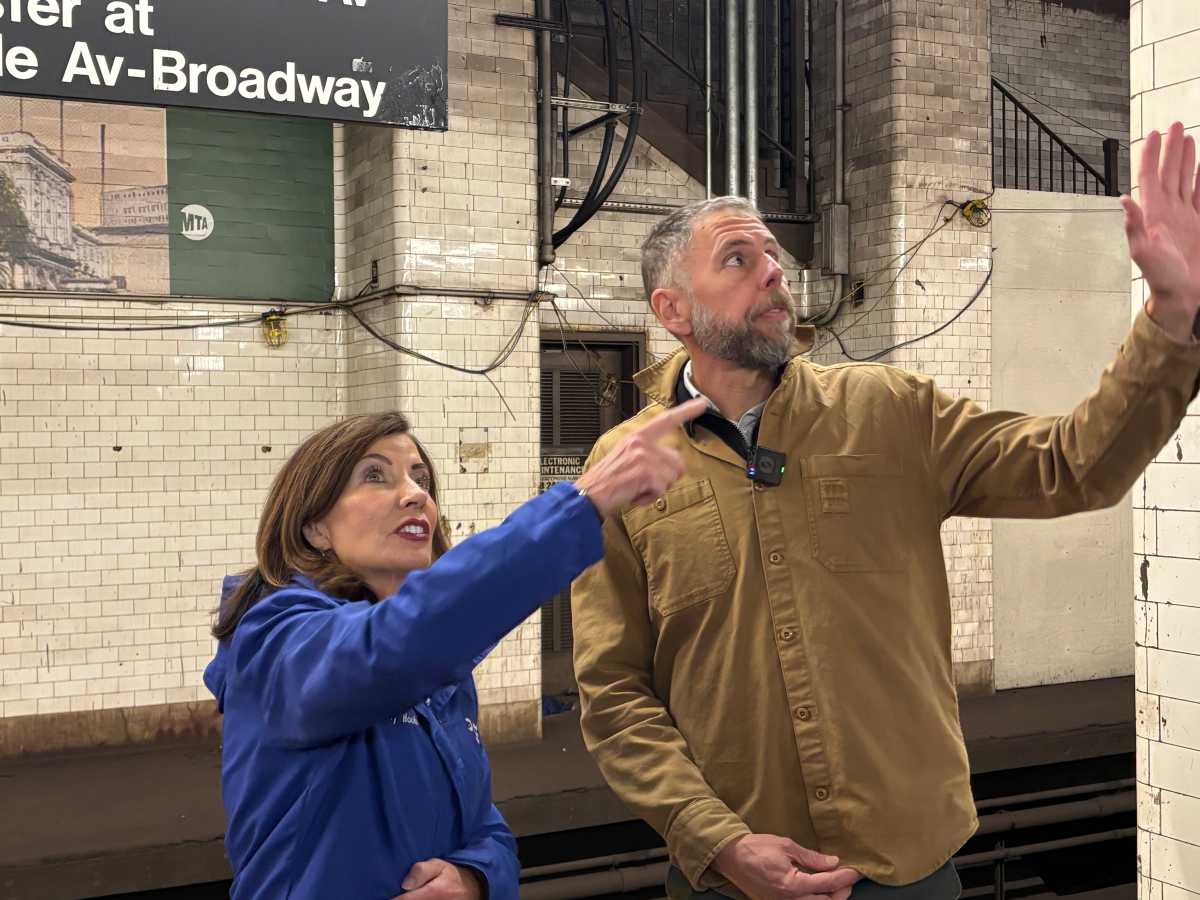
Hochul announced the contract the same day as the board vote, describing a top-to-bottom renewal that will rebuild structures, replace tiles, upgrade stairways and restore the station’s architectural finishes (Office of the Governor). The project sits in the MTA’s 2020-24 Capital Plan (Office of the Governor). The governor toured the station with reporters earlier in the week, pointing to its cracked tiles, peeling paint and pools of water from chronic leaks (amNewYork).
The station opened in 1913, is listed on the National Register of Historic Places and serves 18,196 riders on an average weekday (Office of the Governor). It sits directly beneath the David N. Dinkins Manhattan Municipal Building, steps from City Hall (amNewYork). The state describes it as among the stations most urgently in need of repair in the entire subway system, with water damage and decades of structural decay (Office of the Governor).
MTA Chair and CEO Janno Lieber said that for decades the agency could not afford the makeover until Hochul took office (Office of the Governor). MTA Construction and Development President Jamie Torres-Springer said the rehabilitation is meant to keep the station’s historic character while bringing conditions up to what riders expect from a modern system (FingerLakes1).
What Is Confirmed
The governor’s office listed the following scope (Office of the Governor):
- Finishes: painting the full station and new floor finishes in select areas of the public mezzanines.
- Stairs and platforms: reconstructing stairs and replacing platform edges.
- Historic restoration: replacing damaged finishes and restoring ceramic tiles, mosaics, terra cotta decorations, base tiles, and concrete and marble bases and trims.
- Structure and water: structural steel and concrete repairs, water leak mitigation and ceiling improvements.
- Systems: new station lighting, new cameras and updates to the existing CCTV system.
- Art: installation of new artwork.
Construction is due to begin by the middle of next year, according to amNewYork. MTA Construction and Development Chief Engineer Matt Best said the work will not close the station during normal commuting hours but could cause outages on nights and weekends, and riders should expect narrower platforms where crews section off active work areas (amNewYork).
The design-build delivery method lets the contractor team carry design forward while construction proceeds (amNewYork). The Forte and Citnalta joint venture is the only team the state named for this contract (Office of the Governor).
Heat Study and a Possible Thermal Energy Network
The rehabilitation will be coordinated with a study of extreme heat at the station complex, which connects to the Brooklyn Bridge-City Hall 4, 5 and 6 station (Office of the Governor). Hochul, Mayor Zohran Mamdani and the MTA announced the study earlier in 2026 (FingerLakes1). amNewYork reports the study is worth $800,000 and is examining a Thermal Energy Network that would capture station heat in summer, store it, and make it available to warm nearby buildings, including the Municipal Building and City Hall, in winter (amNewYork). The state says aligning that work with the station rehab would lower cost and reduce construction impacts for riders, and that the network would be the first installed in a U.S. transit system (Office of the Governor).
Funding and the Wider Program
Congestion pricing, which charges a $9 base toll to drivers entering Manhattan below 60th Street, is the funding source (amNewYork). The governor’s office says the tolling program is generating $15 billion for the 2020-24 Capital Plan (Office of the Governor). The same revenue is behind the MTA’s $1.9 billion A and C line signal replacement that began in October.
The board is also expected to award a separate congestion pricing-funded contract for accessibility upgrades and state of good repair work at 110 St on the 6, 145 St on the A, B, C and D, and Wakefield-241 St on the 2, chosen to widen the geographic reach of accessible stations (FingerLakes1; Office of the Governor). That follows the first finished station in the agency’s $965 million accessibility public-private partnership in the Bronx.
What Is Not Yet Known
The announcements did not give a completion date, a phasing plan, the night and weekend outage schedule or a breakdown of the contract value by scope. Neither source named the design firm on the joint venture team or how the thermal energy network, if it moves forward, would be procured. This is a developing story.
What It Means for Owners and Contractors
For contractors, this is historic restoration inside an operating transit station. The scope pairs structural steel and concrete repair with specialty finish work in tile, mosaic, terra cotta and marble on a National Register property (Office of the Governor). That combination usually means preservation review of materials and methods, careful salvage and matching of historic pieces, and qualified masonry and tile trades who can work to restoration standards.
Water leak mitigation comes before most of the finish work. In below-grade structures, leak repair, waterproofing and steel and concrete remediation typically control the schedule, because new finishes installed over active leaks fail early. Subcontractors pricing this kind of work should expect investigation and unforeseen conditions to drive change orders.
The access constraints are also significant. With no closures during normal commuting hours and possible night and weekend outages (amNewYork), productivity inside limited work windows will matter as much as unit pricing. Staging, material delivery and protection of the public on narrowed platforms are cost items in their own right. Owners of other historic, occupied buildings face a similar tradeoff between keeping a facility open and the cost of phased, off-hours work.
What to Watch
- The construction start, which amNewYork reports is due by mid-2027 (amNewYork).
- Service notices for night and weekend outages at Chambers St once work begins.
- The separate board award for accessibility work at 110 St, 145 St and Wakefield-241 St (Office of the Governor).
- Results of the thermal energy network study and whether it is built alongside the rehab.
Key Questions
How much will the Chambers Street station rehab cost?
The MTA Board approved a contract of nearly $119 million on November 18, 2026 to overhaul the Chambers St J/Z station in Lower Manhattan (amNewYork).
Who won the Chambers St J/Z station contract?
The design-build contract for the Chambers St J/Z station went to a joint venture of Forte Construction Corp. and Citnalta Construction Corp., according to Governor Hochul’s office (Office of the Governor).
When will construction start at Chambers Street station?
Construction on the Chambers St J/Z station is due to begin by the middle of 2027, and the MTA says the station will stay open during normal commuting hours (amNewYork). No completion date has been announced.
How is the Chambers Street station project funded?
The $119 million Chambers St rehabilitation is funded by congestion pricing revenue through the MTA’s 2020-24 Capital Plan (Office of the Governor).
Related Coverage
- MTA Starts $1.9B A and C Line Signal Replacement, Largest in Its History
- Halmar Finishes Yankee Stadium Station in MTA’s $965M Accessibility P3
Image credit: Ethan Stark-Miller, amNewYork. Image from the source article.
Sources
- Office of Governor Kathy Hochul, Governor Hochul Announces MTA Will Award Design-Build Contract for Modernization Project to Restore Century-Old Chambers St J,Z Subway Station, https://www.governor.ny.gov/news/governor-hochul-announces-mta-will-award-design-build-contract-modernization-project-restore
- amNewYork, MTA Board approves $119 million rehab of spooky Chambers St J/Z station, https://www.amny.com/news/mta-approves-rehab-chambers-st-subway-station/
- FingerLakes1, MTA plans $119 million overhaul of Chambers Street subway station, https://www.fingerlakes1.com/2026/11/18/mta-plans-119-million-overhaul-of-chambers-street-subway-station/


Let's connect
For organizations planning commercial, industrial, or infrastructure work, we will review the project and recommend the appropriate delivery approach.

Join our team
If you hold yourself to careful, accountable work, you already work the way we do.