

news +insights
ISM Manufacturing PMI Rises to 55.5% in October as Production Hits 2021 High
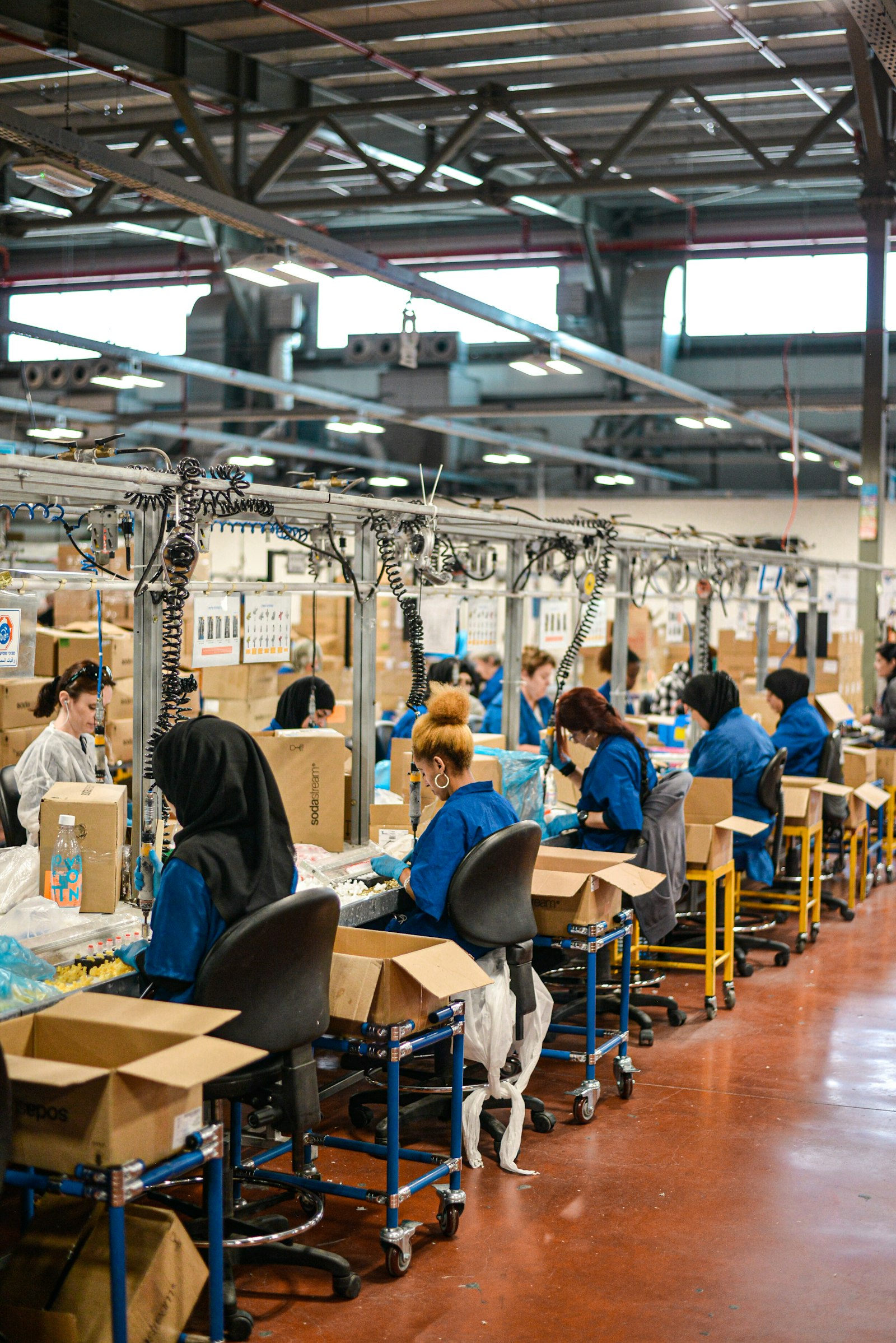
The ISM Manufacturing PMI rose 1.0 percentage point to 55.5% in October 2026, the tenth consecutive month of expansion for U.S. factories, the Institute for Supply Management reported Monday, November 2. Production climbed to 59.0%, its highest reading since November 2021, while the Prices Index eased but remained elevated at 75.2% (ISM).
What Happened
The October Manufacturing Report On Business showed the sector picking up speed after ten straight months of expansion that followed ten months of contraction. A reading above 50% signals growth, and the overall economy has now expanded for 24 consecutive months by ISM's measure (ISM).
Susan Spence, who chairs the ISM Manufacturing Business Survey Committee, said four of the five subindexes that make up the PMI grew faster than in September, with Employment the exception (ISM). TD Economics noted that all five headline components were above 50 for the month (TD Economics).
The report lands on the same day the Census Bureau said total construction spending fell 1.9% in September, a drop driven by housing while private nonresidential work kept rising. WCG covered that release in Construction Spending Falls 1.9% in September on 5.5% Residential Drop.
The October Numbers
ISM reported the following readings for October, with the change from September (ISM):
- Manufacturing PMI: 55.5%, up 1.0 point.
- New Orders: 55.5%, up 0.2 point.
- Production: 59.0%, up 2.3 points, the highest since November 2021 and the twelfth straight month of growth.
- Employment: 52.4%, down 0.3 point.
- Supplier Deliveries: 59.1%, up 0.1 point, meaning deliveries slowed for an eleventh consecutive month.
- Inventories: 51.4%, up 2.8 points, back in expansion.
- Customers' Inventories: 41.6%, unchanged, a level customers have rated too low for 25 months.
- Prices: 75.2%, down 2.7 points, but still rising for a 25th consecutive month.
- Backlog of Orders: 54.6%, down 1.8 points.
- New Export Orders: 51.2%, up 0.3 point.
- Imports: 52.9%, up 1.9 points.
TD Economics said the production gain was the standout, and that employment, while slightly softer, expanded for a fourth consecutive month (TD Economics). It also noted that the drop in the Prices Index partly reversed a 6.8-point jump in September (TD Economics).
Which Industries Grew
Twelve of the manufacturing industries ISM tracks reported growth in October: Plastics and Rubber Products; Electrical Equipment, Appliances and Components; Machinery; Computer and Electronic Products; Textile Mills; Primary Metals; Transportation Equipment; Fabricated Metal Products; Furniture and Related Products; Chemical Products; Miscellaneous Manufacturing; and Food, Beverage and Tobacco Products (ISM).
Three reported contraction: Printing and Related Support Activities, Paper Products, and Nonmetallic Mineral Products (ISM). Nonmetallic mineral products is the category that includes many building materials, so its contraction is worth noting for contractors even as the broader sector grows.
Several of the growing industries are the same ones driving factory construction. Electrical equipment, machinery, computer and electronic products, primary metals and food and beverage producers have all been active builders in 2026, a trend WCG tracked in $500B in U.S. Factories Under Construction as $3.4T Pipeline Waits.
Prices, Tariffs and Lead Times
Even with the October decline, the Prices Index remains far above the 50% line. Spence said price pressure is still being driven by steel and aluminum costs, tariffs, and increases in petroleum-based products tied to the conflict in the Middle East (ISM).
Survey sentiment also weakened. Spence said general sentiment among respondents worsened for a third straight month, with 34% of comments positive and 66% negative. Respondents most often cited pricing volatility, longer lead times, tariffs and the Iran war as concerns (ISM). TD Economics quoted one respondent saying lead times and prices are increasing, while another said demand remains strong (TD Economics).
TD Economics said the softer Prices Index is a positive for the goods inflation outlook, but it does not consider the inflation challenge resolved because the index is still elevated and supplier delays persist (TD Economics).
What It Signals for the Broader Economy
Spence said the October PMI reading corresponds to roughly a 2.7% annualized increase in real GDP, based on past relationships between the index and the economy (ISM). She also said the share of manufacturing GDP in contraction rose to 6% in October from 2% in September (ISM), a reminder that growth is not uniform across the sector.
TD Economics said manufacturing demand appears to be holding up and production is gaining momentum, and that backlogs still in expansion suggest a pipeline of work that should support output in the near term (TD Economics).
Implications for Owners, Developers, Contractors and Subs
- Owners and developers: Rising production and a backlog index still above 50 point to manufacturers running harder, which is often the first step before capacity additions, line expansions and plant upgrades. Owners weighing capital projects should expect continued competition for equipment and long-lead items.
- General contractors: Supplier Deliveries slowed for an eleventh straight month (ISM). Procurement schedules for switchgear, structural steel, process equipment and mechanical systems should assume longer lead times than in prior years.
- Subcontractors and suppliers: With steel, aluminum and petroleum-based products cited as price drivers (ISM), escalation clauses, shorter bid validity periods and early material releases remain practical protections.
- Industrial and food processing clients: Food, beverage and tobacco producers and fabricated metal manufacturers both reported growth (ISM), two sectors that are central to the plant work common in upstate New York and Florida.
Steel price pressure also ties back to the wave of domestic mill construction now under way, covered in New Steel Mills: Six U.S. Projects Total About $26.7 Billion.
What to Watch
- Whether the Prices Index continues to fall from its September level or settles above 70%.
- Whether Employment, at 52.4%, holds in expansion as producers balance stronger output against weaker sentiment.
- Whether the 6% share of manufacturing GDP in contraction widens in November (ISM).
- Lead time trends for materials and equipment that feed directly into construction schedules.
Bottom Line
The October ISM Manufacturing PMI showed U.S. factories growing faster, with production at a four-year high and twelve industries expanding. For builders, the report signals steady demand from industrial clients alongside the same pressures they already face: elevated input prices, slow deliveries and tariff uncertainty. Planning for long lead times and price movement remains the safest approach on industrial work.
Key Questions
What was the ISM Manufacturing PMI for October 2026?
The ISM Manufacturing PMI was 55.5% in October 2026, up 1.0 point from September and the tenth consecutive month of expansion for U.S. manufacturing (ISM).
Is U.S. manufacturing growing or shrinking?
U.S. manufacturing is growing. Any ISM PMI reading above 50% indicates expansion, and in October 2026 twelve industries reported growth while three reported contraction (ISM).
Are manufacturing prices still rising?
Yes. The ISM Prices Index fell 2.7 points to 75.2% in October 2026 but still showed rising prices for a 25th consecutive month, driven by steel and aluminum costs, tariffs and petroleum-based products (ISM).
What does the October 2026 ISM report mean for GDP?
ISM's Susan Spence said the October 2026 PMI corresponds to roughly a 2.7% annualized increase in real GDP, based on past relationships between the index and the economy (ISM).
Related Coverage
- Construction Spending Falls 1.9% in September on 5.5% Residential Drop
- $500B in U.S. Factories Under Construction as $3.4T Pipeline Waits
- New Steel Mills: Six U.S. Projects Total About $26.7 Billion
- Q3 2026 GDP Growth Hits 3.4% as Investment Leads and Inflation Cools
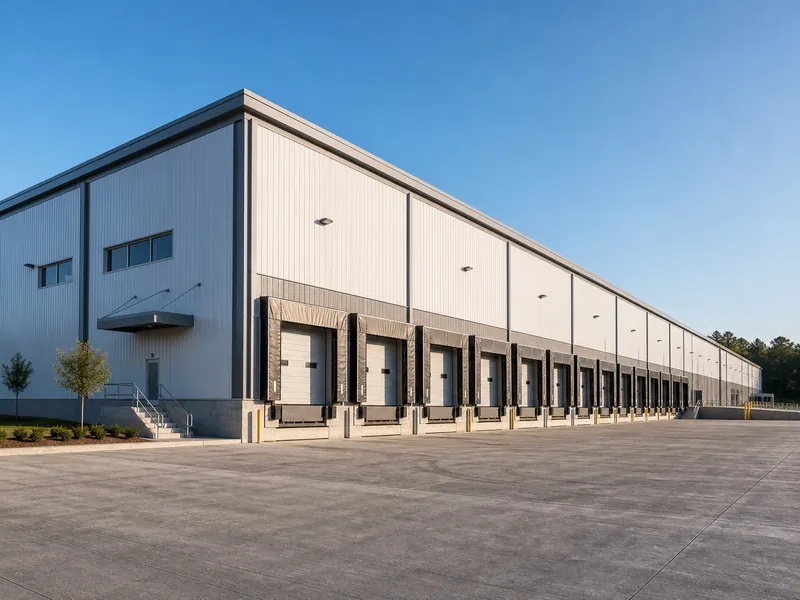
Image credit: Remy Gieling on Unsplash. Free-license photo used because the source releases had no usable project image.
Sources
- Institute for Supply Management via PR Newswire, “Manufacturing PMI at 55.5%; October 2026 ISM Manufacturing PMI Report”: https://www.prnewswire.com/news-releases/manufacturing-pmi-at-55-5-october-2026-ism-manufacturing-pmi-report-302925617.html
- TD Economics, “U.S. ISM Manufacturing Index (October 2026)”: https://economics.td.com/us-ism-manufacturing-index

Let's connect
For organizations planning commercial, industrial, or infrastructure work, we will review the project and recommend the appropriate delivery approach.

Join our team
If you hold yourself to careful, accountable work, you already work the way we do.