

news +insights
Construction Spending Falls 1.9% in September on 5.5% Residential Drop
Construction spending fell 1.9% in September 2026, the Census Bureau reported Monday, November 2, as a 5.5% drop in private residential outlays wiped out most of August’s gain. Total spending ran at a seasonally adjusted annual rate of $2,186.1 billion, down from a revised $2,227.4 billion in August (InvestingLive).
What Happened
The monthly construction spending report from the Commerce Department’s Census Bureau showed a much weaker September than forecasters expected. Economists polled by Reuters had looked for a 0.3% increase; instead, spending declined 1.9% (Reuters via GV Wire). The drop followed a strong, upwardly revised August.
August itself was revised sharply higher. Census now shows August spending up 2.0%, compared with the 0.9% gain first reported (Investing.com). The original August release put total spending at $2,203.1 billion (U.S. Census Bureau), and WCG covered that report at the time in August 2026 Construction Spending Rises 0.9% as Data Center Work Surges. Because August was revised up, part of September’s decline reflects a higher starting point.
Compared with a year earlier, September spending was down 2.7%. For January through September, spending was 2.9% below the same period of 2025 (InvestingLive).
What Is Confirmed
The breakdown released with the report shows the decline was concentrated in housing:
- Private construction: $1,639.3 billion, down 2.4% from $1,680.3 billion in August (InvestingLive).
- Private residential: $848.8 billion, down 5.5% from $898.0 billion (InvestingLive). Single-family spending was unchanged for the month but down 2.4% from a year earlier, and multifamily spending rose 0.1% (Investing.com).
- Private nonresidential: $790.6 billion, up 1.1% from $782.3 billion (InvestingLive). Spending on power plants rose 1.2% (Reuters via GV Wire).
- Public construction: $546.8 billion, down 0.1% from $547.1 billion. State and local spending fell 0.3%, while federal spending rose 2.5% (Reuters via GV Wire).
- Public education: $113.1 billion, essentially unchanged (InvestingLive).
- Public highways: $149.2 billion, down 0.3% from $149.7 billion (InvestingLive).
In dollar terms, private residential spending fell by about $49 billion at an annual rate, more than the roughly $41 billion drop in total spending. Gains in private nonresidential work of about $8 billion offset part of that decline, while public spending was nearly flat.
Reuters reported that high materials costs likely held down spending on residential renovation projects. It also noted that the average 30-year fixed mortgage rate has risen at least 125 basis points since the war with Iran began in late February, according to Freddie Mac data, which has weighed on residential investment (Reuters via GV Wire).
What It Means for Owners and Contractors
For commercial and industrial builders, the most relevant line is private nonresidential spending, which rose for a second straight month. Power plant work continued to grow. That fits the pattern seen across 2026, in which large energy, data center and manufacturing projects have carried much of the nonresidential market while other building types have been softer. The September report as summarized by these sources did not include a data center figure, so it is not yet clear how that category moved in the month.
The residential decline matters for contractors and suppliers that work across both markets. Residential renovation and new housing compete for many of the same trades and materials as light commercial work. A pullback in housing outlays can ease some local labor pressure, but it also signals weaker demand for firms that depend on residential volume. Earlier data pointed in the same direction: September housing starts fell 5.2%, and new home sales slipped in the same month.
InvestingLive noted that the report measures spending in current dollars, so it does not separate changes in real activity from changes in prices (InvestingLive). With materials costs elevated, owners comparing budgets to these figures should keep in mind that flat or rising dollar totals can hide lower physical volume.
Public work remains steady. Federal construction outlays rose, while state and local spending dipped slightly. Education and highway spending were close to unchanged, which suggests public owners are holding their programs in place rather than expanding them this fall.
What to Watch
- Revisions: Census revises each month’s estimate in later releases. August moved from a 0.9% gain to a 2.0% gain, so the September figure could also change.
- Category detail: The full Census tables break out manufacturing, data center, power and other categories. Those details will show whether nonresidential strength is broad or limited to a few project types.
- Forward indicators: September construction starts and design activity were already soft. See September Construction Starts Dip 1.5% as Commercial Falls 18% for the Dodge data.
- Mortgage rates and materials: Reuters linked residential weakness to higher borrowing costs and materials prices, so movement in either will shape the next few reports.
Key Questions
How much did U.S. construction spending fall in September 2026?
U.S. construction spending fell 1.9% in September 2026 to a seasonally adjusted annual rate of $2,186.1 billion, according to Census Bureau data released November 2, 2026 (InvestingLive).
Why did construction spending drop in September?
Private residential spending fell 5.5% to $848.8 billion, which more than accounted for the total decline. Reuters said high materials costs likely held back renovation spending and higher mortgage rates weighed on housing (Reuters via GV Wire).
Did nonresidential construction spending rise in September 2026?
Yes. Private nonresidential spending rose 1.1% to $790.6 billion, with power plant outlays up 1.2%. A September data center figure was not reported in the coverage available so far (Reuters via GV Wire).
Is construction spending down from last year?
Yes. September 2026 spending was 2.7% below September 2025, and spending for January through September was 2.9% below the same period a year earlier (InvestingLive).
Related Coverage
- August 2026 Construction Spending Rises 0.9% as Data Center Work Surges
- Data Center Construction Starts Fall to $9.4B in September as Costs Climb 31%
- September Construction Starts Dip 1.5% as Commercial Falls 18%
- September Housing Starts Fall 5.2% to 1.221 Million Annual Rate
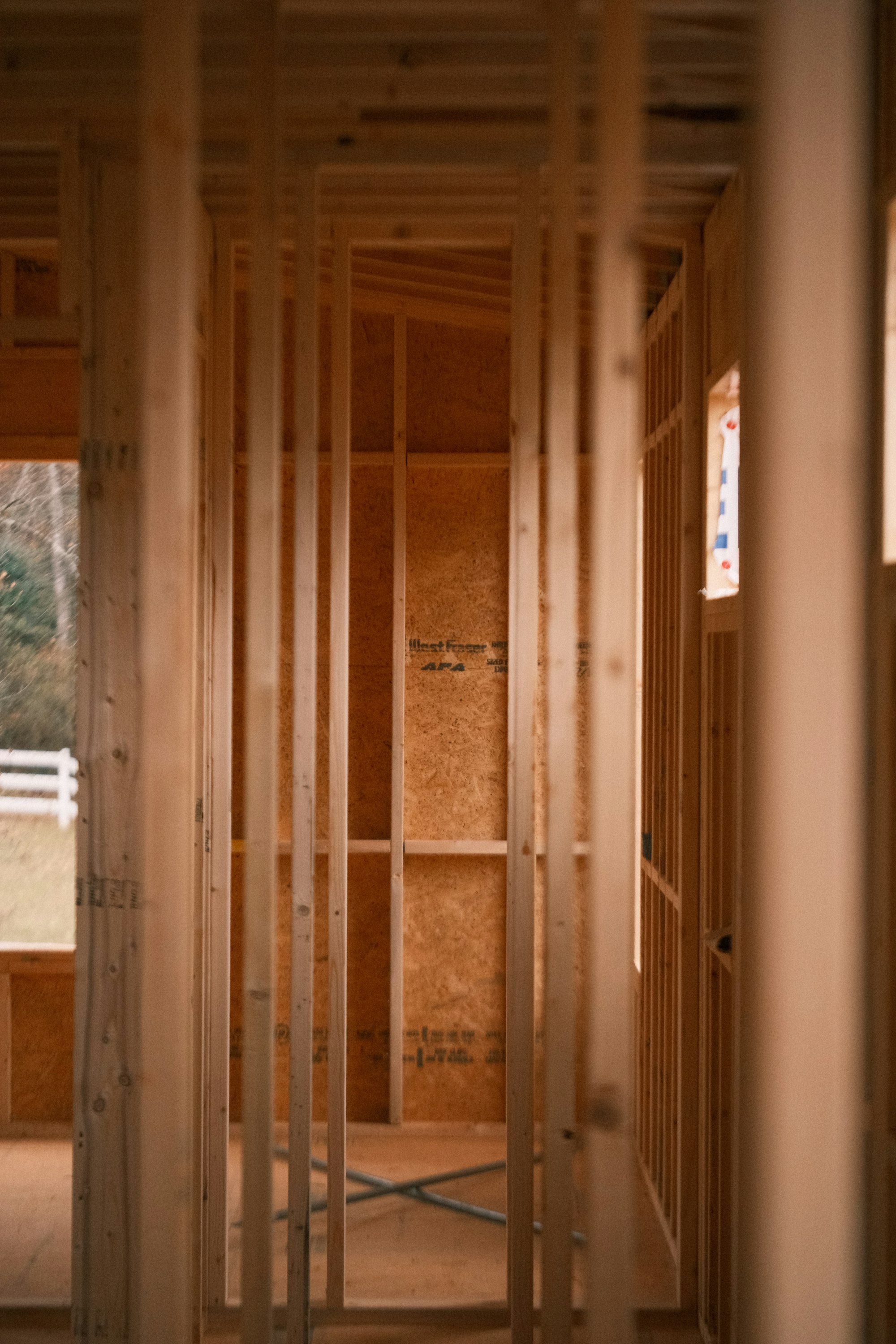
Image credit: Taylor Heery on Unsplash. Free-license photo used because the source articles had no usable, credited non-wire image.
Sources
- InvestingLive, “US construction spending for the month of September -1.9% versus 0.3% estimate”: https://investinglive.com/news/us-instruction-spending-for-the-month-of-september-1-9-versus-0-3-estimate/
- Reuters via GV Wire, “US Construction Spending Tumbles in September”: https://gvwire.com/2026/11/02/us-construction-spending-tumbles-in-september/
- Investing.com, “US construction spending fell 1.9% in September”: https://in.investing.com/news/economy-news/us-construction-spending-fell-19-in-september-5672442
- U.S. Census Bureau, “Monthly Construction Spending, August 2026”: https://www.census.gov/construction/c30/pdf/release.pdf



Let's connect
For organizations planning commercial, industrial, or infrastructure work, we will review the project and recommend the appropriate delivery approach.

Join our team
If you hold yourself to careful, accountable work, you already work the way we do.