
news +insights
$500B in U.S. Factories Under Construction as $3.4T Pipeline Waits
About two dozen major U.S. manufacturing facilities are under construction, representing roughly $500 billion in committed capital, and another 124 proposed or announced projects add up to about $3.4 trillion in potential investment, according to Avison Young data reported by Bisnow. The firm's lead industrial researcher expects groundbreakings to accelerate through the end of the year.
What Happened
Bisnow published an analysis on October 11 built on Avison Young's tracking of large U.S. manufacturing projects. The figures separate the projects actually in the ground from the much larger list of announcements: about 24 facilities under construction worth roughly $500 billion, against 124 proposed or announced projects totaling about $3.4 trillion Bisnow.
Avison Young publishes the data through its U.S. Manufacturing Investment Tracker, which it describes as providing monthly insight on publicly announced deals. The firm notes that the data reflects announcements at the time of reporting and does not account for projects later withdrawn or rescinded, and it identifies semiconductors, pharmaceutical manufacturing, rare earth processing, magnet production, battery manufacturing, aerospace and food processing as high-growth sectors Avison Young.
Peter Kroner, Avison Young's lead industrial researcher, told Bisnow that he expects another sharp rise in groundbreakings starting at the end of the year, driven by manufacturers moving to take advantage of the One Big Beautiful Bill Act. He also said the industry has moved past a peak of uncertainty that lasted about 18 months Bisnow.
What Is Driving the Pipeline
Several policies are behind the projects, according to Bisnow. Some current projects are using the CHIPS and Science Act. The One Big Beautiful Bill Act added manufacturing incentives that apply broadly, not only to chip fabrication. Trade pressures have also pushed firms to bring production back to the United States, while the administration has largely sidelined the Inflation Reduction Act Bisnow.
Craig Van Pelt, research lead at Cresa, called the CHIPS Act "one of the biggest financial packages we've ever done in the United States," while noting the long path from permitting to production. He also said the reshored work is more technically advanced and relies heavily on robotics, and that the country will not regain many traditional steelworker jobs Bisnow.
Technology dominates the largest projects, followed by pharmaceutical and automotive production, with aerospace growing at a smaller scale Bisnow.
The Largest Projects Underway
Bisnow highlighted seven of the largest projects in Avison Young's data Bisnow:
- TSMC, Phoenix, Arizona ($100 billion): construction on a third chip fab began in April 2025. TSMC's Arizona commitment has grown to $265 billion.
- Micron, Clay, New York ($100 billion): slated to be the largest semiconductor facility in the country, with groundbreaking in January 2026 and chip production expected in 2030.
- Terafab, Grimes County, Texas ($16.8 billion): a chip production campus announced by Elon Musk for xAI, SpaceX and Tesla, with delivery slated for 2028 and 3,000 jobs cited by the Texas governor's office.
- Eli Lilly, Houston area ($6.5 billion): selected from more than 300 site proposals, with groundbreaking about a year after its September 2025 announcement and more than 600 jobs expected.
- Hyundai Steel, Donaldsonville, Louisiana ($5.8 billion): a 1,700-acre mill designed for 2.7 million metric tons a year. A ceremonial groundbreaking was held in September, but work awaits an air permit.
- Rivian, Georgia ($5 billion): phase one now relies on a $4.5 billion Department of Energy loan, down from $6.6 billion.
- SK Hynix, West Lafayette, Indiana ($4 billion): a 133-acre high-bandwidth memory packaging hub that broke ground in August, the company's first U.S. manufacturing site.
The New York Connection
For Upstate New York, the Micron project is the anchor. At the January 16, 2026 groundbreaking, Micron described the Clay complex as a $100 billion leading-edge memory manufacturing site with up to four fabs and called it the largest private investment in New York State history Micron. The company projects 50,000 jobs in New York, expects production to begin in 2030 with the fabs ramping throughout the decade, and has a $500 million community investment framework with Empire State Development, including $250 million Micron plans to invest in workforce development, education, transportation and housing Micron. The New York project is part of an approximately $200 billion U.S. expansion that also includes fabs in Idaho and work at Micron's Virginia site Micron.
Where Things Stand
The gap between the two headline numbers is the main point. Roughly $500 billion is committed and under construction, while about $3.4 trillion sits in proposals and announcements Bisnow. Bisnow's examples show why the second figure should be read carefully: Hyundai's Louisiana mill held a ceremony but is waiting on a permit, Rivian's federal loan was reduced, and Lilly's planned plants in Virginia and Alabama had not broken ground Bisnow. Avison Young itself cautions that its figures reflect announcements and do not account for later withdrawals Avison Young.
Implications for Owners, Developers, Contractors and Subs
- Separate announcements from starts: For business development, a project with permits, a selected builder and a groundbreaking is a very different opportunity from a press release. Contractors should track permit status and site selection, not just the headline investment.
- Second-tier work follows the megaprojects: Large fabs and plants pull in supplier facilities, utility and transmission work, housing, roads and training centers in their regions. In Central New York, the Micron project already carries a defined community investment program.
- Labor and equipment pressure: If Kroner's expected rise in groundbreakings arrives, electrical, mechanical and process piping trades will face more competition for crews, and long-lead electrical gear will stay tight.
- Different buildings, different trades: Bisnow's sources describe automated, technically advanced plants. That shifts scope toward clean environments, process utilities, controls and high-capacity power rather than large conventional assembly floors.
- Policy risk: The pipeline depends on federal incentives and trade policy. Changes to either can stall projects that are announced but not yet funded.
What to Watch
- Avison Young's monthly tracker updates and whether year-end groundbreakings arrive as expected.
- Permit decisions on projects such as Hyundai's Louisiana mill.
- Construction milestones at Micron's Clay site as the first fab advances toward its 2030 production target.
Bottom Line
Avison Young's data shows a manufacturing construction market with about $500 billion of work actually underway and a far larger announced pipeline behind it. The opportunity is real, but contractors and owners should plan around permitted, funded projects and treat the $3.4 trillion figure as a list of possibilities rather than a backlog.
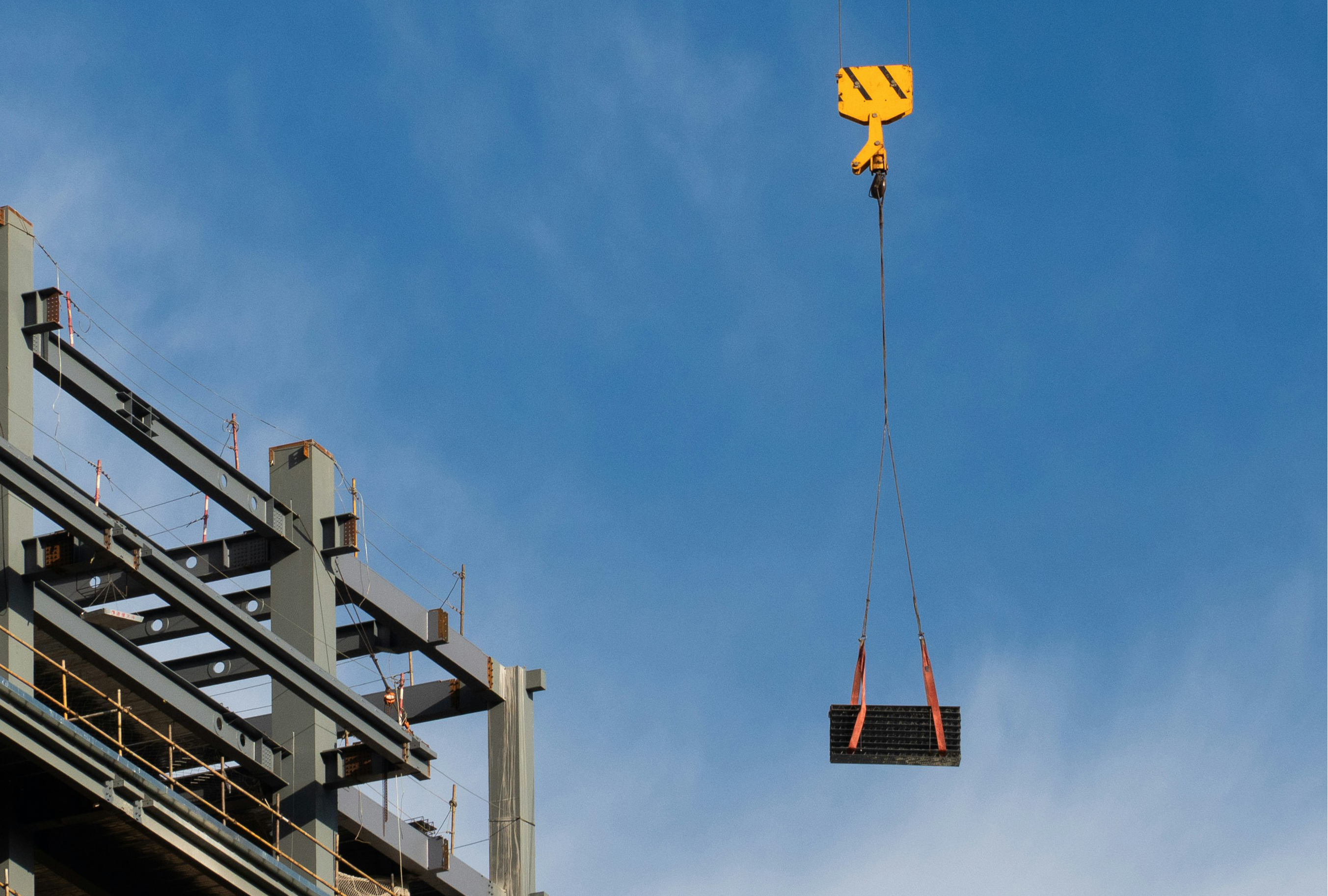
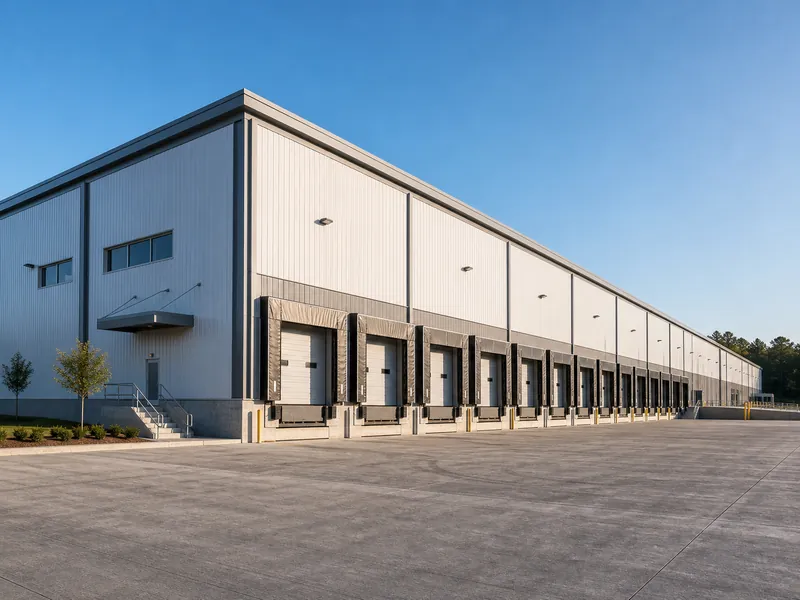
Image credit: Wenzy Wong / Unsplash, via Bisnow. Image from the source article.
Sources
- Bisnow, "Meet The Early Movers In America's $3T Push For Manufacturing Construction": https://www.bisnow.com/news/national/industrial/meet-early-movers-in-americas-3-trillion-dollar-push-for-manufacturing-construction
- Avison Young, "United States Manufacturing Investment Tracker": https://www.avisonyoung.us/united-states-manufacturing-investment-tracker
- Micron, "Micron Celebrates Official Groundbreaking at New York Megafab Site": https://investors.micron.com/news/press-release/2026/Micron-Celebrates-Official-Groundbreaking-at-New-York-Megafab-Site-01-16-2026/default.aspx
Let's connect
For organizations planning commercial, industrial, or infrastructure work, we will review the project and recommend the appropriate delivery approach.

Join our team
If you hold yourself to careful, accountable work, you already work the way we do.