
news +insights
Update: Brooklyn Building Collapse Site Backfilled, 5 Linked Jobs Halted
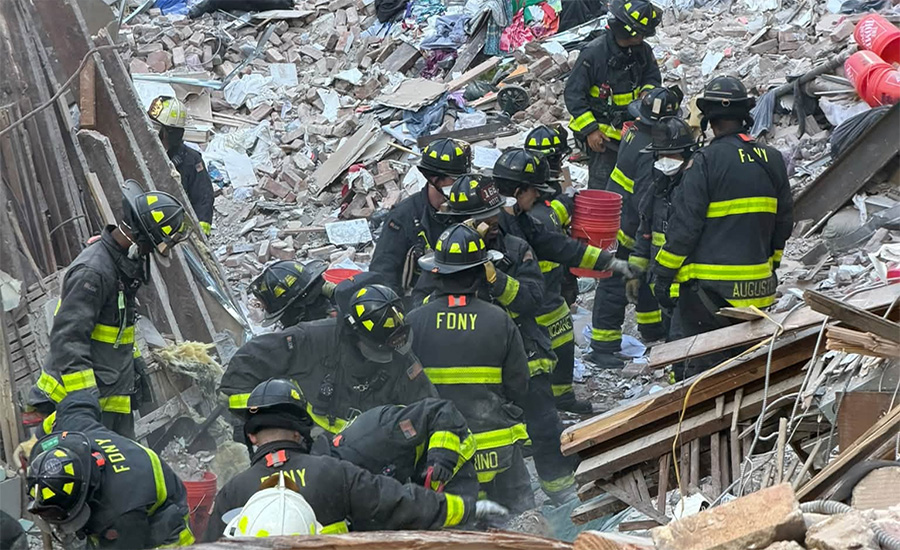
Update: The Brooklyn building collapse investigation moved into a new phase on Tuesday, November 17, 2026. New York City ordered portions of the Flatbush excavation backfilled and paused debris removal until an independent forensic engineer joins the investigation (ENR), and a review of city records found the Department of Buildings has issued full or partial stop-work orders at at least five other job sites tied to two engineers on the project (Gothamist). This is a developing story. The cause of the November 11 collapse at 1321 Flatbush Avenue, which killed eight people and injured 18, has not been determined (ENR).
WCG first covered the collapse in Brooklyn Building Collapse: Flatbush Building Falls Into Excavation, 8 Dead. This update covers the city actions reported on November 17.
What Happened
On November 17, officials ordered parts of the excavation at 2625 Bedford Avenue, the construction site next to the collapsed building, to be backfilled. They also paused debris removal until an independent engineering firm can join the forensic investigation (ENR). The Department of Buildings (DOB) ordered shoring inside the neighboring building at 1325 Flatbush Avenue and additional structural stability inspections at 1323 Flatbush (ENR).
The stop-work order on 2625 Bedford Avenue remains in effect. Only work needed to keep the site safe or to support the investigation may continue, and debris removal will resume once the independent consultant is on site, with the work arranged to accommodate the forensic review (ENR).
Separately, a Gothamist analysis of DOB records published the same afternoon found that inspectors had issued full or partial stop-work orders at at least five projects tied to two engineers who worked on the Flatbush excavation: the licensed engineer who submitted the structural and support of excavation plans, and the engineer hired as special inspector to monitor the excavation and shoring (Gothamist). Mayor Zohran Mamdani said the citywide safety sweeps would reach about 160 projects involving six firms connected to the Flatbush project (Gothamist).
What Is Confirmed
- Scope of the sweeps: Gothamist identified at least 24 job sites in four boroughs tied to the two engineers that DOB has inspected since the collapse, including at least 17 projects that list the plan engineer and his firm (Gothamist).
- Stop-work orders: Four of the five orders were partial and one was a full stop-work order. Only one of the five involves excavation (Gothamist).
- Reasons cited: DOB records cite conditions such as unsafe or noncompliant scaffolding, a worker on interior scaffolding without a harness, loose netting above a neighboring school playground, missing guardrails, and broken safety fencing around an excavation (Gothamist).
- Locations: Sites with orders include a parking garage being converted to condominiums in Greenwich Village, a new six-story apartment building in Woodside, Queens, a planned four-story apartment building in the Highbridge section of the Bronx, a church project in Douglaston, Queens, and a planned four-story apartment building in the Bronx where the order was upgraded to a full stop-work order on November 17 (Gothamist).
- No link to the Flatbush owners: Gothamist found that none of the sweep sites it identified appear to be connected to the owners of the Flatbush construction project (Gothamist).
DOB spokesperson Andrew Rudansky declined to provide more detail, saying the agency would not share the targets, scope or results of the sweeps while the investigation continues (Gothamist). Rudansky also repeated the agency’s position that the project engineer is responsible for determining whether plans account for site-specific conditions and are code compliant and safe for construction (Gothamist). The special inspector applied to withdraw from the Flatbush project on November 12, and DOB has not approved that request (Gothamist).
What Is Not Yet Known
The central engineering questions remain open. ENR’s review of public records found that they do not establish whether 1321 Flatbush was underpinned, how deep the excavation had reached along the property line, or which parts of the approved support of excavation system had been installed when the building fell (ENR). DOB said on November 16 that excavation along the south side of the site used benching, which it described as a standard practice used safely on similar projects across the city, but it did not say whether 1321 Flatbush was underpinned (ENR).
The approved plans required baseline readings and continued monitoring of movement, existing cracks and vibration at neighboring buildings as excavation progressed, with thresholds that called for notification or a halt to work (ENR). That monitoring data and the underlying special inspection reports for excavation sheeting, shoring and bracing have not been released, and DOB’s portal lists that inspection category as identified but not certified, which does not establish whether inspections took place (ENR). ENR also reported that a March 5 preconstruction survey lacked detailed information on the foundation of 1321 Flatbush, and that DOB later directed the project engineer to add adjoining foundation materials and elevations to the support of excavation drawings; the records do not show how those conditions were established (ENR).
ENR found 98 open housing violations at 1321 Flatbush, including 21 classified as immediately hazardous, but none of the recent violations it reviewed identified foundation failure or structural instability (ENR). No agency has made a finding of fault, and nothing in this post should be read as one.
What It Means for Owners and Contractors
The most immediate effect is enforcement. A citywide sweep of about 160 projects means more unannounced inspections, and the orders issued so far show inspectors are writing up routine site safety conditions, not only excavation issues (Gothamist). Scaffolding compliance, fall protection, netting over occupied neighboring property, guardrails and perimeter fencing are the items being cited. Contractors working in the five boroughs should assume a full site walk can happen on any day and keep those basics in order. The city already raised its expectations for site supervision this year, as covered in our report on the NYC superintendent rule.
The sweep also shows that a project can be pulled into enforcement because of who designed or inspected it, even when it has no connection to the owner of the failed site. One Queens owner told Gothamist the company inherited the engineer along with the plans when it bought the property (Gothamist). Owners and developers should know who their engineer of record and special inspectors are and how a stop-work order would affect schedules, financing draws and neighbors.
For excavation and foundation work next to existing buildings, the investigation is centered on documentation: preconstruction surveys, adjoining foundation information, monitoring readings and special inspection reports (ENR). Those records will decide what investigators can reconstruct after the fact. Owners, general contractors and excavation subcontractors should confirm that monitoring is actually read and reported, that thresholds trigger a real stop, and that inspection reports are filed when required. The same discipline applies to any urban excavation upstate or in Florida wherever crews dig beside older masonry buildings.
For the broader market, tighter enforcement arrives as New York City expects record construction spending and a sharp rise in housing permits, as covered in our report on the $79.8 billion NYC construction outlook. More inspections and possible changes to excavation review could slow approvals on similar sites.
What to Watch
- The name of the independent engineering firm and the start of its forensic review (ENR).
- Whether DOB releases monitoring data and special inspection records for 2625 Bedford Avenue (ENR).
- Additional stop-work orders, violations or license actions as the sweep of about 160 projects continues (Gothamist).
- Any policy changes to how the city reviews support of excavation plans for sites next to existing buildings.
Key Questions
What happened in the Brooklyn building collapse investigation on November 17?
On November 17, 2026, New York City ordered portions of the 2625 Bedford Avenue excavation in Flatbush backfilled, paused debris removal until an independent forensic engineer joins the investigation, and ordered shoring inside 1325 Flatbush Avenue (ENR).
How many job sites has NYC shut down after the Flatbush collapse?
Gothamist found that the NYC Department of Buildings issued full or partial stop-work orders at at least five projects tied to two engineers on the Flatbush excavation, out of at least 24 inspected sites in four boroughs (Gothamist).
What caused the Brooklyn building collapse?
The cause of the November 11, 2026 collapse of 1321 Flatbush Avenue has not been determined, and public records do not yet show whether the building was underpinned or how deep the excavation had reached (ENR).
How many projects are in the NYC construction safety sweep?
Mayor Zohran Mamdani said the sweeps would cover about 160 projects involving six firms connected to the Flatbush project (Gothamist).
Related Coverage
- Brooklyn Building Collapse: Flatbush Building Falls Into Excavation, 8 Dead
- NYC Construction Superintendent Rule Limits to One Primary Job Effective January 2026
- National Safety Month 2026: What Construction’s Fatality Data, the Struck-By Stand-Down, and Prevention Through Design Mean for the Field
- NYC Construction Spending Set to Hit $79.8B in 2026, Building Congress Says
Image credit: FDNY UFA, via ENR. Image from the source article.
Sources
- ENR, Brooklyn Collapse Records Reveal Gap Between Plans and Site Work, https://www.enr.com/articles/64346-brooklyn-collapse-records-reveal-gap-between-plans-and-site-work
- Gothamist, NYC inspection blitz halts construction at sites tied to fatal Brooklyn building collapse, https://gothamist.com/news/nyc-inspection-blitz-halts-construction-at-sites-tied-to-fatal-brooklyn-building-collapse

Let's connect
For organizations planning commercial, industrial, or infrastructure work, we will review the project and recommend the appropriate delivery approach.

Join our team
If you hold yourself to careful, accountable work, you already work the way we do.