

news +insights
DOL Independent Contractor Rule Finalized: Two Core Factors Return
The new DOL independent contractor rule is final. On Thursday, November 19, 2026, the U.S. Department of Labor announced a final rule that rescinds its 2024 worker classification standard and replaces it with a streamlined “economic reality” test built on two core factors: how much control a worker has over the work, and whether the worker has a real opportunity for profit or loss (U.S. Department of Labor). The rule takes effect 60 days after it is published in the Federal Register (SHRM).
What Happened
The department said the new rule is substantially similar to the framework it adopted in early 2021 and is consistent with federal appellate decisions (U.S. Department of Labor). It applies to classification under the Fair Labor Standards Act, the Family and Medical Leave Act and the Migrant and Seasonal Agricultural Worker Protection Act, all of which use the FLSA definition of “employ” (U.S. Department of Labor).
The department published its proposal on February 27, 2026, and received more than 16,000 comments during a 60 day comment period (U.S. Department of Labor). The final version adds 14 fact-specific examples, including new ones for farm labor contractors, digital platform workers and truck drivers that were added in response to comments (U.S. Department of Labor).
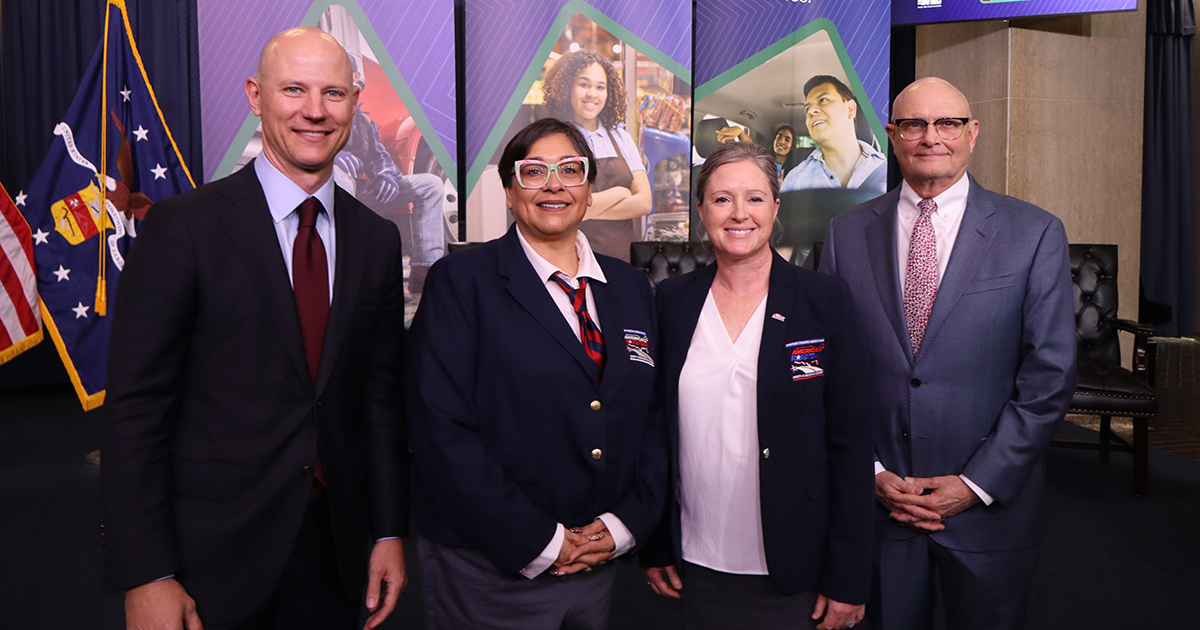
Labor Secretary Keith Sonderling and other department officials said at a Washington event that the rule provides clarity and would reduce regulatory burdens on businesses (Transport Topics).
How the New Test Works
Under the final rule, the question is whether a worker is in business for himself or herself, which points to independent contractor status, or is economically dependent on a potential employer, which points to employee status (U.S. Department of Labor).
- Core factor one, control: whether the worker sets schedules, chooses assignments and workloads, and can work for others (SHRM).
- Core factor two, profit or loss: whether the worker can affect earnings through initiative, business decisions or investment, rather than simply by working more hours (SHRM).
- Additional factors: the skill the work requires, the permanence of the relationship, and whether the work is part of an integrated unit of production (U.S. Department of Labor).
- Practice over paper: what the worker and the company actually do counts more than what a contract says is possible (U.S. Department of Labor).
When both core factors point the same way, the department says there is a substantial likelihood the classification is correct (SHRM). SHRM also reported that the department clarified that requirements tied to legal compliance, health and safety, and quality control do not necessarily show employer control (SHRM).
How This Differs From the 2024 Rule
The 2024 rule used six factors weighed together under the totality of the circumstances: opportunity for profit or loss, investments by the worker and the company, permanence, control, whether the work is integral to the business, and skill and initiative (Transport Topics). The standard has changed with each administration, and the classification decides whether a worker is owed minimum wage and overtime (Transport Topics).
What Construction Groups Said
Associated Builders and Contractors welcomed the rule. Kristen Swearingen, ABC's vice president of government affairs, said the 2024 standard forced employers to guess which factors carried the most weight, and that the new rule provides greater clarity and consistency (Associated Builders and Contractors). ABC, its Southeast Texas chapter and other groups are challenging the 2024 rule in federal court; that case has been held in abeyance while the department completed new rulemaking (Associated Builders and Contractors).
Trucking groups were also at the announcement. The American Trucking Associations said the rule protects about 350,000 independent truckers (Transport Topics).
What the Rule Does Not Change
The rule does not change classification under other federal laws, including the Internal Revenue Code, and does not preempt state or local laws (U.S. Department of Labor). SHRM noted it does not override stricter state tests, such as the ABC test used in California, and does not change requirements under the National Labor Relations Act (SHRM). Contractors in New York and Florida still need to apply each state's own wage, unemployment insurance and workers' compensation rules.
Implications for Owners, Developers, Contractors and Subs
- General contractors: The federal test is easier to apply, but a sub's 1099 status on paper is not the answer. How the job is actually run, including who sets hours and who supplies tools and crews, still decides classification.
- Specialty subs and owner-operators: Small firms that bid their own work, carry their own equipment and serve multiple customers line up well with the two core factors.
- Safety programs: Site safety, quality and code requirements imposed on a sub do not by themselves signal employer control, according to the department's explanation reported by SHRM (SHRM).
- Labor market: Classification rules matter more when crews are hard to find. Construction quits and openings have been rising, as WCG covered in our look at September labor shortage signs.
What to Watch
- Publication in the Federal Register, which starts the 60 day clock to the effective date (SHRM).
- Whether the pending court challenge to the 2024 rule is dismissed, and whether new suits are filed against the 2026 rule.
- State responses, particularly in states that use stricter classification tests.
Bottom Line
The Department of Labor has returned to a two core factor test for independent contractor status, effective 60 days after publication. For construction firms, it simplifies the federal analysis, but state law and day-to-day practice on the jobsite still decide how a worker should be classified.
Key Questions
What is the new DOL independent contractor rule?
The Department of Labor's final rule, announced November 19, 2026, replaces the 2024 six factor test with an economic reality test that gives the most weight to the worker's control over the work and opportunity for profit or loss (U.S. Department of Labor).
When does the DOL independent contractor rule take effect?
The DOL independent contractor rule takes effect 60 days after it is published in the Federal Register (SHRM). The publication date had not been announced as of November 19, 2026.
Does the DOL independent contractor rule override state law?
No. The Department of Labor says the rule does not preempt state or local laws and does not change classification under the Internal Revenue Code (U.S. Department of Labor).
What did construction groups say about the independent contractor rule?
Associated Builders and Contractors called the rule a welcome change that brings greater clarity and consistency for employers and workers (Associated Builders and Contractors).
Related Coverage
- Construction Labor Shortage Signs: Quits Near 200,000 as Openings Hit 298,000
- Construction Unemployment Rate Falls to 3.5% in September; All States Under 10%
- NYC Construction Superintendent Rule Limits to One Primary Job Effective January 2026
Image credit: American Trucking Associations, via Transport Topics. Image from the source article.
Sources
- U.S. Department of Labor, Final Rule: Employee or Independent Contractor Status Under the Fair Labor Standards Act, Family and Medical Leave Act, and Migrant and Seasonal Agricultural Worker Protection Act, https://www.dol.gov/agencies/whd/flsa/misclassification/2026rulemaking
- Transport Topics, Labor Department finalizes independent contractor rule, https://www.ttnews.com/articles/final-independent-contractor
- SHRM, DOL Finalizes Independent Contractor Rule, Reversing 2024 Standard, https://www.shrm.org/topics-tools/employment-law-compliance/dol-finalizes-independent-contractor-rule-reversing-biden
- Associated Builders and Contractors, ABC: DOL's Independent Contractor Final Rule a Workable, Welcome Change, https://www.abc.org/News-Media/News-Releases/abc-dols-independent-contractor-final-rule-a-workable-welcome-change





Let's connect
For organizations planning commercial, industrial, or infrastructure work, we will review the project and recommend the appropriate delivery approach.

Join our team
If you hold yourself to careful, accountable work, you already work the way we do.