

news +insights
Construction Labor Shortage Signs: Quits Near 200,000 as Openings Hit 298,000
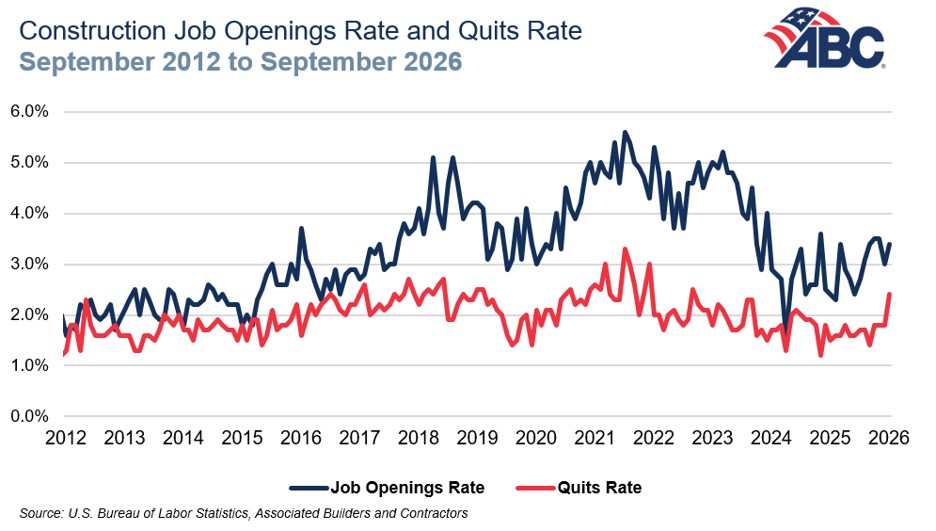
Signs of a returning construction labor shortage showed up in federal data released Tuesday: construction job openings rose by 36,000 to 298,000 in September 2026, and nearly 200,000 construction workers quit their jobs, the most in any month since the first half of 2023, according to an Associated Builders and Contractors analysis of the Bureau of Labor Statistics Job Openings and Labor Turnover Survey (ABC).
What Happened
The Bureau of Labor Statistics released its Job Openings and Labor Turnover Survey, known as JOLTS, for September at 10:00 a.m. Eastern on November 3, 2026 (BLS). The report measures unfilled positions that employers are actively recruiting for on the last business day of the month, along with hires, quits, layoffs and other separations during the month.
For construction, openings reached 298,000 on the last day of September. That was up 36,000 from August and up 92,000 from September 2025 (ABC). ABC put construction quits at 198,000 for the month in the headline of its release and described the total as nearly 200,000 in its text (ABC).
What Is Confirmed
Beyond openings, the September construction data showed more movement in and out of jobs:
- Quits rose by 46,000 from August and by 71,000 from a year earlier (ENR).
- Hires rose by 49,000 for the month and by 19,000 for the year (ENR).
- Total separations, which include quits, layoffs, discharges and other separations, rose by 77,000 from August, driven mainly by quits (ENR).
- Layoffs and discharges rose by 25,000 from August but were down 56,000 from a year earlier (ENR).
- The construction layoff rate remains lower than in any month on record before 2020, said ABC Chief Economist Anirban Basu (ABC).
Basu called the quit total “a strong indication that the industry’s labor supply is once again tightening” (ABC). He also said contractors have responded by holding on to workers they otherwise might part with (ENR).
Across the whole economy, the picture was steadier. Total nonfarm job openings were little changed at 7.5 million, a rate of 4.5 percent. Hires were 5.4 million and layoffs and discharges were 1.6 million, both little changed. Quits increased to 3.4 million and were up 375,000 over the year, with the largest monthly gain in accommodation and food services (BLS).
The September release continues a run of rising construction openings. ABC reported that openings climbed to a near two year high in July (ABC), a release WCG covered in its July JOLTS report. Other September labor data have pointed the same way: the national construction unemployment rate fell to 3.5% in September, as covered in WCG’s state unemployment report.
What It Means for Owners and Contractors
Basu said reemerging worker shortages will put upward pressure on labor costs, adding to the strain from high borrowing costs and materials price escalation (ABC). ABC’s Construction Confidence Index already shows more than 1 in 4 contractors expecting profit margins to contract over the next six months, and Basu said that share will likely rise if labor shortages continue to intensify into early 2027 (ABC).
For owners and developers pricing work for 2027, the data suggest a few practical steps:
- Expect trade partners to carry more labor escalation in bids with long durations or starts several months out, and ask how wage assumptions were built.
- Lock in key subcontractors and craft crews earlier, especially for electrical, mechanical and other trades already stretched by industrial and data center demand.
- Build realistic schedule float. Higher quit rates mean more turnover on crews, which can affect productivity and quality on long projects.
For contractors, the combination of more openings, more quits and still historically low layoffs points to a market where retaining trained workers matters as much as recruiting new ones. Wage, training and retention plans are likely to come up in more bid and negotiation conversations.
What to Watch
The October 2026 JOLTS report is scheduled for Tuesday, December 1, 2026, at 10:00 a.m. Eastern (BLS). It will show whether September’s jump in quits was a one month spike or the start of a trend. September figures are also subject to revision in that release. State construction employment, tracked in WCG’s September jobs by state report, offers a regional view of where demand for workers is strongest.
Key Questions
How many construction job openings were there in September 2026?
Construction job openings totaled 298,000 on the last day of September 2026, up 36,000 from August and 92,000 from a year earlier, based on BLS JOLTS data analyzed by Associated Builders and Contractors (ABC).
How many construction workers quit in September 2026?
ABC reported 198,000 construction quits in September 2026, which it described as nearly 200,000 and the most in any month since the first half of 2023 (ABC).
Is there a construction labor shortage in 2026?
ABC Chief Economist Anirban Basu said the September quit total is a strong sign the industry’s labor supply is tightening again and that reemerging shortages will push labor costs higher (ABC).
When is the next JOLTS report?
The Bureau of Labor Statistics will release October 2026 JOLTS data on Tuesday, December 1, 2026, at 10:00 a.m. Eastern (BLS).
Related Coverage
- Construction Job Openings Rose in July as Hiring Accelerated, and Two Analyses Disagree on the Level
- Construction Unemployment Rate Falls to 3.5% in September; All States Under 10%
- Construction Jobs by State: 34 States Up Year Over Year in September
Image credit: Associated Builders and Contractors. Image from the source article.
Sources
- Bureau of Labor Statistics, “Job Openings and Labor Turnover Summary, September 2026”: https://www.bls.gov/news.release/jolts.nr0.htm
- Associated Builders and Contractors, “ABC: Construction Quits Surge to 198,000 in September as Labor Shortages Reemerge”: https://www.abc.org/News-Media/News-Releases/abc-construction-quits-surge-to-198000-in-september-as-labor-shortages-reemerge
- ENR, “Construction Job Openings Rise in September as Quits Surge”: https://www.enr.com/articles/64181-construction-job-openings-rise-in-september-as-quits-surge
- Associated Builders and Contractors, “ABC: Construction Job Openings Up by 28,000 to Near-2-Year High in July”: https://www.abc.org/News-Media/News-Releases/abc-construction-job-openings-up-by-28000-to-near-2-year-high-in-july


Let's connect
For organizations planning commercial, industrial, or infrastructure work, we will review the project and recommend the appropriate delivery approach.

Join our team
If you hold yourself to careful, accountable work, you already work the way we do.