
news +insights
MTA Starts $1.9B A and C Line Signal Replacement, Largest in Its History
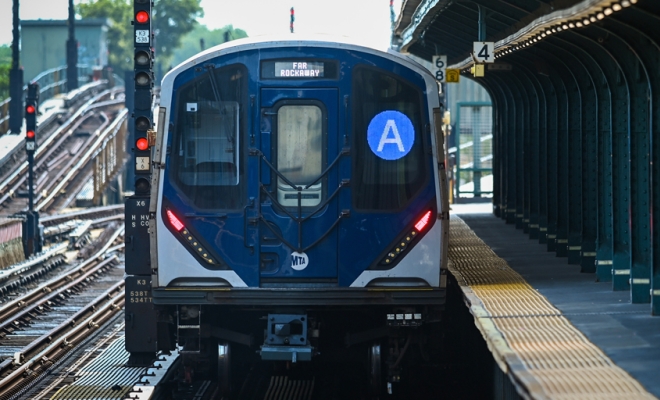
The Metropolitan Transportation Authority has started work on a $1.9 billion project to replace the signal system on the A and C lines in Brooklyn and Queens, which state officials describe as the largest subway signal replacement in MTA history. Governor Kathy Hochul announced the start of construction on Thursday, October 22. The design-build contract covers 42 track miles and 23 stations and is scheduled for completion in the second quarter of 2032.
What Happened
The project will remove signal equipment dating to the 1930s on the Fulton Street and Liberty Avenue lines and replace it with Communications-Based Train Control, or CBTC, according to the Governor's Office release. The work area runs from High Street in Brooklyn, which serves the A and C, to Ozone Park-Lefferts Boulevard in Queens, which serves the A (Governor's Office). The release says this segment contains the oldest remaining signal equipment in the subway system.
The first phase is already underway. Crews are replacing aging switches and more than 250 feet of specialized track between 104 Street and 99 Street in Queens (Governor's Office). amNewYork reported that the MTA board approved the contracts nearly a year ago (amNewYork), and the Governor's Office identified the contractor as L.K. Comstock and Railworks, which was awarded the work in December 2025 (Governor's Office).
Funding comes from congestion pricing revenue (Governor's Office). amNewYork noted that the project is effectively paid for entirely by the central business district toll program, which charges a $9 base toll for vehicles entering Manhattan below 60th Street (amNewYork).
Project Scope
- Value: $1.9 billion (Governor's Office).
- Limits: High Street in Brooklyn to Ozone Park-Lefferts Boulevard in Queens, along the Fulton and Liberty lines (Governor's Office).
- Size: 42 track miles and 23 stations that serve about 350,000 weekday riders (Governor's Office).
- Connections: The corridor links to seven other subway lines, 36 bus routes and the Long Island Rail Road (Governor's Office).
- Delivery method: Design-build, which the release says shifts much of the project risk to the contractor (Governor's Office).
- Extras: The scope includes infrastructure to support future cell service for riders (Governor's Office).
- Completion: Second quarter of 2032 (Governor's Office).
Why the MTA Is Doing It This Way
CBTC tracks the location and speed of each train more precisely than the older fixed-block system, which lets trains run closer together and more often, according to the release. The new equipment is also cheaper and easier to maintain than legacy components that are no longer manufactured (Governor's Office).
The MTA is citing results from earlier conversions to make its case. On-time performance on the 7 line rose from 68 percent to 91 percent after CBTC was installed, and train speeds on the E line in Queens rose about 10 percent after new signals were activated (amNewYork). amNewYork reported that CBTC already runs on the entire 7 and L lines and on parts of the Queens Boulevard and Culver lines (amNewYork). On the A and C, the new work builds on CBTC already being installed along Eighth Avenue between 59 Street in Manhattan and High Street in Brooklyn (Governor's Office).
The agency also changed how it packages signal work. According to the Governor's Office, the project installs CBTC only, rather than maintaining legacy signals through a long transition, and relies on scheduled service outages to give crews more working time. The MTA says the combination of design-build delivery and this approach cuts signal modernization cost per mile by 33 percent compared with the average of its prior CBTC projects (Governor's Office).
MTA Chair and CEO Janno Lieber called signal problems the "number one cause of subway delays" and described the job as the largest of its kind in the agency's history (amNewYork). MTA Construction and Development President Jamie Torres-Springer said new construction methods have cut per-mile costs by a third (Governor's Office).
Where Things Stand in the Wider Program
The A and C contract is one piece of a larger signal push. The release says congestion pricing is funding signal work on nearly 85 miles of track citywide, and that the MTA's 2025 to 2029 Capital Plan includes $5.4 billion to modernize signals on more than 75 miles of the N, Q, R and W lines, the A on the Liberty Avenue segment, the A and S in the Rockaways, and the J and Z on Nassau Street (Governor's Office). That is a steady pipeline of systems, track and station work in New York City for the rest of the decade, alongside the agency's accessibility program, including the recently finished Yankee Stadium station work under the $965 million accessibility P3, and the Second Avenue Subway extension.
Implications for Owners, Developers, Contractors and Subs
- Systems and electrical trades: CBTC programs require signal, communications, power and track labor over many years. With roughly $5.4 billion of additional signal work in the current capital plan (Governor's Office), demand for qualified rail systems crews and specialty subs in the New York market should stay firm.
- Design-build risk transfer: The MTA says design-build moves much of the risk to the contractor (Governor's Office). Subcontractors pricing into these teams should read flow-down terms on schedule, outage windows and design changes carefully.
- Outage-driven schedules: Because the strategy depends on maximizing scheduled service outages (Governor's Office), productivity inside each outage window will drive cost. Logistics, staging and night and weekend labor planning matter as much as unit pricing.
- Funding stability: The work is tied to congestion pricing revenue (Governor's Office). Owners and contractors watching New York transit should track that revenue stream, since it now backs a large share of the agency's signal program.
What to Watch
- Service change announcements and weekend outage schedules on the A and C as early track and switch work proceeds in Queens.
- Procurement timing for the next signal contracts named in the 2025 to 2029 Capital Plan (Governor's Office).
- Whether the MTA's reported 33 percent per-mile savings (Governor's Office) hold as the project moves into station and tunnel segments.
Bottom Line
The MTA has moved its largest signal replacement from approval to active construction. The $1.9 billion A and C project is scheduled to run into 2032, and it sits inside a capital plan with billions more in signal work behind it. For contractors and specialty subs in New York, it adds to a long, steady stream of transit systems work.
Related Coverage
- Halmar Finishes Yankee Stadium Station in MTA's $965M Accessibility P3
- Second Avenue Subway Phase 2: Civil Construction Is Underway as New York's $7 Billion Q Train Extension Takes Shape
- NYC Transit Expansion: Hochul Pushes Multiple Megaprojects Including $7.7B Second Avenue Subway Extension
Image credit: Office of Governor Kathy Hochul. Image from the source article.
Sources
- Office of Governor Kathy Hochul, "Governor Hochul Announces Start of Largest Subway Signal Replacement Project in MTA History": https://www.governor.ny.gov/news/governor-hochul-announces-start-largest-subway-signal-replacement-project-mta-history
- amNewYork, "MTA starts $1.9 billion resignalling, track replacement work on A/C lines in Brooklyn and Queens": https://www.amny.com/news/mta-resignalling-track-replacement-a-c-lines-brooklyn-queens/


Let's connect
For organizations planning commercial, industrial, or infrastructure work, we will review the project and recommend the appropriate delivery approach.

Join our team
If you hold yourself to careful, accountable work, you already work the way we do.