

news +insights
U.S. 19 Construction in Pinellas Pushed to 2030 as County Adds $10M Utility Deal
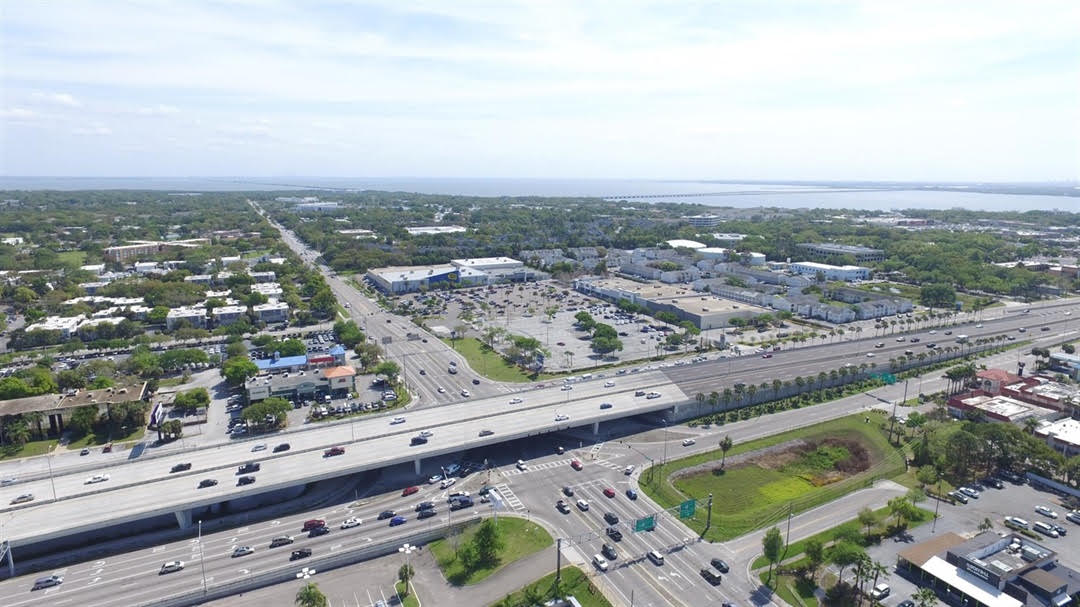
U.S. 19 construction in Pinellas County is now expected to run until 2030. On Tuesday, November 17, 2026, the Pinellas County Commission voted 4-3 to add $10 million to a utility repair contract with QRC Inc., about $4.5 million of it for water main work tied to the state’s $242.7 million rebuild of the highway, which county officials say is more than 800 days behind schedule (St Pete Catalyst). Highway contractor Johnson Brothers Corporation opposed the move, saying design problems and slow plan revisions have contributed to the delays (Tampa Bay Times).
What Happened
The vote expanded an existing emergency water and reclaimed water work-order contract with QRC and extended it by one year (Citizen Portal). County staff recommended bringing in QRC for utility work along the highway, citing concerns about the quality and progress of the utility work under the highway contract, and said a county-hired contractor would give the county more control and help speed the project (St Pete Catalyst).
Commissioner Kathleen Peters moved to approve the increase, and Commissioner Rene Flowers seconded. The outcome was unsettled for several minutes as commissioners debated whether waiting a month would expose the county to more claims (St Pete Catalyst).
The Highway Project
The Florida Department of Transportation (FDOT) is rebuilding U.S. 19 from State Road 580 to north of County Road 95, adding two interchanges and frontage roads meant to improve traffic flow while keeping access to businesses. Johnson Brothers won the construction contract in 2022 and work began the following spring; FDOT’s project website now shows completion in 2030 (St Pete Catalyst). FDOT estimated in 2024 that about 105,000 vehicles a day travel the highway just north of State Road 580 (Tampa Bay Times).
Part of the holdup is a water main. Pinellas County Utilities Director Jeremy Waugh said crews must relocate about a mile of one of the two major water lines that feed the county’s water system, and road construction in that area cannot proceed until the utility work is done. The county also wants to fix a leaking valve near Evans Road while crews are there (St Pete Catalyst).
The Contractor’s Position
Johnson Brothers representative James Charles traced some problems to March 2025, when the company raised concerns about the water main’s pipe restraint system. Revised plans arrived more than five months later, with more revisions in January 2026. He said a drainage structure issue took six months to get a response from the county’s engineer (Tampa Bay Times). The company has identified six issues it considers major causes of delay and puts the associated costs at $20.7 million (St Pete Catalyst).
Charles argued that the county could work with FDOT to let Johnson Brothers, which already has crews and equipment on site, do the work under its existing contract. In written comments he said the company priced the revised Evans Road additions at about $2.64 million and asked how that compares with the county’s $4.5 million allocation. The county’s figure also covers water main bypass operations and other utility relocations, and the two estimates have not been shown to cover the same scope (St Pete Catalyst). Charles asked commissioners to defer the vote for an independent review; those claims were not resolved at the meeting (Citizen Portal).
Why the County Did Not Wait
Several commissioners considered revisiting the contract in December. County staff estimated that further delays could lead to claims against the county of about $230,000 per week. Because Johnson Brothers contracts with FDOT rather than the county, FDOT could pass delay costs caused by county utility work on to Pinellas. Waugh said his department is already negotiating about 70 claims tied to the project and that the utility work needed to start within 30 days to avoid another delay (St Pete Catalyst).
There was also an emergency-repair concern. Earlier U.S. 19 work and emergency repairs had nearly used up QRC’s existing contract, and without the increase the county risked losing the ability to dispatch QRC to water main breaks elsewhere (Tampa Bay Times). Staff expects the Evans Road work and bypass operations to take six to eight months. “Everyone that lives up there wants this road done,” Waugh said (St Pete Catalyst).
The same meeting also approved, 5-2, an annual marine construction work-order contract with Southern Road and Bridge after commissioners questioned its $18 million ceiling (Citizen Portal).
Implications for Owners, Developers, Contractors and Subs
- Utility conflicts drive highway schedules. A single mile of water main relocation can hold back a whole segment. Owners of public and private projects alike benefit from locating and resolving utility conflicts before mobilization.
- Plan revision turnaround matters. The dispute centers on how long revised plans and engineer responses took. Clear response deadlines in contracts protect both owners and builders.
- Third-party costs flow through. When a utility owner is not the party holding the highway contract, delay costs can still reach it through the state. Local governments should weigh claim exposure, as Pinellas staff did, against the cost of a short pause.
- Businesses on the corridor face four more years. Retail and commercial owners along U.S. 19 should plan for continued lane closures and changing traffic patterns through 2030 (St Pete Catalyst).
Pinellas has several large public projects in motion, including the $60 million St. Pete-Clearwater International Airport garage and St. Petersburg’s $600 million storm resilience bond program.
What to Watch
- Mobilization of QRC on the water main relocation and Evans Road valve work.
- Any FDOT decision on the $20.7 million in delay costs Johnson Brothers has identified.
- Whether the 2030 completion date holds.
Bottom Line
Pinellas County has hired its own contractor to speed water main work holding up the $242.7 million U.S. 19 rebuild, betting that acting now will limit claims of about $230,000 a week. The highway contractor disputes the county’s account, and drivers and businesses face about four more years of construction.
Key Questions
When will U.S. 19 construction in Pinellas County be finished?
FDOT’s project website shows the U.S. 19 rebuild from State Road 580 to north of County Road 95 finishing in 2030, about four more years (St Pete Catalyst).
How much does the U.S. 19 project in Pinellas cost?
The FDOT overhaul of U.S. 19 in Pinellas County is a $242.7 million project, with Johnson Brothers Corporation as contractor since 2022 (Tampa Bay Times).
Why is U.S. 19 construction delayed?
Part of the delay is a mile-long water main relocation that must finish before road work can continue; Johnson Brothers also cites design problems and slow plan revisions, and county officials say the project is more than 800 days behind schedule (St Pete Catalyst).
What did Pinellas County approve for U.S. 19?
On November 17, 2026, Pinellas commissioners voted 4-3 to add $10 million to a QRC Inc. utility contract, about $4.5 million of it for U.S. 19 water main work (St Pete Catalyst).
Related Coverage
- St. Pete-Clearwater Airport Parking Garage: $60M Build Set for January 2027
- Update: St. Petersburg GO Bond Passes as Voters Approve $600M for Storm Resilience
- Selmon Expressway Widening Closes Downtown Tampa Street for Two Years
Image credit: City of Clearwater, via St Pete Catalyst. Image from the source article.
Sources
- St Pete Catalyst, Four more years of construction await U.S. 19 drivers, https://stpetecatalyst.com/four-more-years-of-construction-await-u-s-19-drivers/
- Tampa Bay Times via Yahoo News, In Pinellas, 4 more years of construction await US 19 drivers, https://www.yahoo.com/news/us/articles/pinellas-4-more-years-construction-190000987.html
- Citizen Portal, Pinellas approves $10 million QRC contract increase after US 19 dispute, https://citizenportal.ai/articles/12224992/Florida/Pinellas-County/Pinellas-approves-10-million-QRC-contract-increase-after-US-19-dispute
- Citizen Portal, Marine work-order contract passes 5-2 after commissioners question $18 million ceiling, https://citizenportal.ai/articles/12224994/Florida/Pinellas-County/Marine-work-order-contract-passes-5-2-after-commissioners-question-18-million-ceiling



Let's connect
For organizations planning commercial, industrial, or infrastructure work, we will review the project and recommend the appropriate delivery approach.

Join our team
If you hold yourself to careful, accountable work, you already work the way we do.