

news +insights
Data Center Cancellations Double in Q3 2026 as Local Officials Say No
Data center cancellations more than doubled in the third quarter of 2026. Relae, a climate solutions company that tracks stopped projects, reported that 16 U.S. data center projects were stopped in Q3 2026, up from 7 in Q3 2025, putting about $64 billion in planned investment on hold or off the table. Local governments drove most of the change: 11 of the 16 ended in a formal denial or a zoning ban (Relae).
What Happened
Relae published the findings on November 17, 2026 as the first edition of a quarterly report it calls Community Signals, written by product manager Declan Johnson and Grant Gutierrez, its director of community impact and resilience (Relae). Construction Dive reported on the data on November 23 and noted that Relae was formerly known as Carbon Direct (Construction Dive).
Relae’s tracker counts projects that were blocked, withdrawn or stalled indefinitely. It now covers 70 projects since January 2024 representing about $271 billion in planned investment, of which $183 billion is publicly disclosed. Projects still in review are excluded, so Relae describes its totals as a conservative lower bound (Relae). With this update, Relae added 24 projects to the tracker: the 16 from Q3 2026 and 8 earlier cancellations it identified since its May 2026 analysis (Relae).
Local Governments Are Now Deciding Outcomes
The mix of outcomes shifted sharply. Of the 16 projects stopped in Q3 2026 (Relae):
- 7 ended in formal denials, up from 2 in Q2 2026.
- 4 ended in zoning bans, up from 1 in Q2.
- 5 ended when the developer withdrew.
That means local government action stopped 11 of 16 projects, or 69%, compared with 3 of 15, or 20%, in the second quarter. Before Q3, developer withdrawal had been the most common way projects ended (Relae). Construction Dive summarized the trend in Relae’s words as “more cancellations, greater intervention by local governments” (Construction Dive).
Geography matters. Three of the 16 Q3 projects were in Virginia, and 7 of the 16 were in the PJM grid region, which covers much of the Mid-Atlantic and parts of the Midwest. Relae also noted that 42 of the 70 projects it tracks are in counties that voted for Donald Trump in 2024, indicating that opposition is not confined to one political base (Relae).
Why Communities Are Saying No
Relae analyzed 44 stopped projects in depth, using hearing testimony, meeting minutes, op-eds, local news and official filings. It sorted concerns into leading and secondary themes (Relae):
- Transparency and process: a leading concern in 19 cases and a leading or secondary concern in 34. Nondisclosure agreements were cited in 31 of the 44 cases.
- Place attachment: a leading concern in 15 cases and present in 38, the widest reach of any theme.
- Energy cost and the grid: a leading concern in 6 cases and present in 29, centered on who pays for new generation and transmission.
- Health, noise and air: leading in 5 cases and present in 26.
- Economic terms: leading in 4 cases and present in 29.
- Water: present in 32 of 44 cases but the leading concern in only one, San Marcos, Texas.
Relae said local opposition “is not inherently a broad referendum on AI” and that “most community concerns are within a project team’s control” (Construction Dive). In 20 of the 44 cases, residents or officials described the outcome as setting a precedent for future policy (Relae).
The Election Connection
The report also looked at the 2026 midterms. Relae identified 47 local data center ballot measures, and 46 of those that constrained or banned development passed (Relae). Construction Dive reported that voters approved restrictions in jurisdictions across 10 states and that Relae described the results as showing “the growing significance of data center development as a local electoral issue” (Construction Dive). Relae built its election comparison from state and county returns along with data from the MIT Election Data and Science Lab, The Downballot and the Cook Political Report (Relae). WCG covered those votes in Data Center Ballot Measures: Voters Back Limits in Nearly Every 2026 Local Vote and the follow-up Update: Data Center Ballot Measures Hit 47 in 2026.
In the 21 House districts hosting a stopped project, the median vote shifted about 16 points toward Democrats from 2024 to 2026, compared with about 14 points across 240 comparable districts nationally, and 15 of the 21 host districts outpaced the national median. Relae cautioned that the results show where voting shifted, not why (Relae). Construction Dive added that an NBC exit poll found 76% of voters opposed new data centers in their communities and 56% called data centers a crucial or major factor in choosing a congressional candidate (Construction Dive). IndustrialBriefs reported the same poll results alongside Relae’s figures (IndustrialBriefs).
What Relae Recommends
Relae’s recommendations for developers include transparency by default: naming end users, disclosing power and water needs and dropping local nondisclosure agreements. It also recommends treating local character as a siting input, answering utility bill questions directly and offering benefits that can be verified. Relae noted that Virginia now bars executive branch agencies from entering into or requiring certain data center NDAs (Relae).
For the fourth quarter, Relae expects denials and bans to keep outnumbering withdrawals, at least one more state to propose NDA restrictions before year end and on-site gas generation to draw more health and air quality objections (Relae).
Implications for Owners, Developers, Contractors and Subs
- Entitlement risk is rising. When most stopped projects end at a zoning board or council vote rather than a developer decision, approval risk belongs in the schedule and in preconstruction budgets.
- Backlogs need a second look. Contractors counting data center work in their pipelines should weight projects without final local approvals more conservatively. Starts were already softening, as WCG reported in Data Center Construction Starts Fall to $9.4B in September.
- New York is not immune. Buffalo has moved toward a two-year pause, covered in Buffalo Moves Toward Two-Year Data Center Moratorium.
- Power and water disclosures matter. Projects that plan on-site generation or heavy water use should expect detailed questions, and engineering teams may need to show alternatives early.
- Trades should diversify. Electrical, mechanical and site contractors that have leaned on hyperscale work can protect backlog by keeping industrial, institutional and utility clients in the mix.
What to Watch
- Relae’s Q4 2026 Community Signals report, due in February 2027 (Relae).
- New state limits on data center NDAs.
- Whether local moratoriums spread to more counties in the PJM region and the Northeast.
Bottom Line
Relae counts 16 U.S. data center projects stopped in Q3 2026, double the year-earlier figure, with about $64 billion in planned investment affected and local governments deciding 11 of the 16 outcomes. Transparency, local character and power costs are the main drivers, and developers and contractors should treat local approval as a real schedule risk.
Key Questions
How many data center projects were cancelled in Q3 2026?
Relae reported that 16 U.S. data center projects were stopped in Q3 2026, up from 7 in Q3 2025, representing about $64 billion in planned investment (Relae).
Why are data center projects being cancelled?
In Relae’s analysis of 44 stopped data center projects, transparency and process concerns appeared in 34 cases and nondisclosure agreements were cited in 31, while water appeared in 32 cases but led in only one (Relae).
How many data center cancellations have there been since 2024?
Relae’s data center cancellation tracker counts 70 U.S. projects blocked, withdrawn or stalled since January 2024, representing about $271 billion in planned investment (Relae).
Who is stopping data center projects?
In Q3 2026, local governments stopped 11 of the 16 cancelled data center projects through 7 formal denials and 4 zoning bans, while developers withdrew 5 (Relae).
Related Coverage
- Data Center Ballot Measures: Voters Back Limits in Nearly Every 2026 Local Vote
- Update: Data Center Ballot Measures Hit 47 in 2026 as December Votes Near
- Buffalo Moves Toward Two-Year Data Center Moratorium, Local Law Still Needed
- Data Center Construction Starts Fall to $9.4B in September as Costs Climb 31%
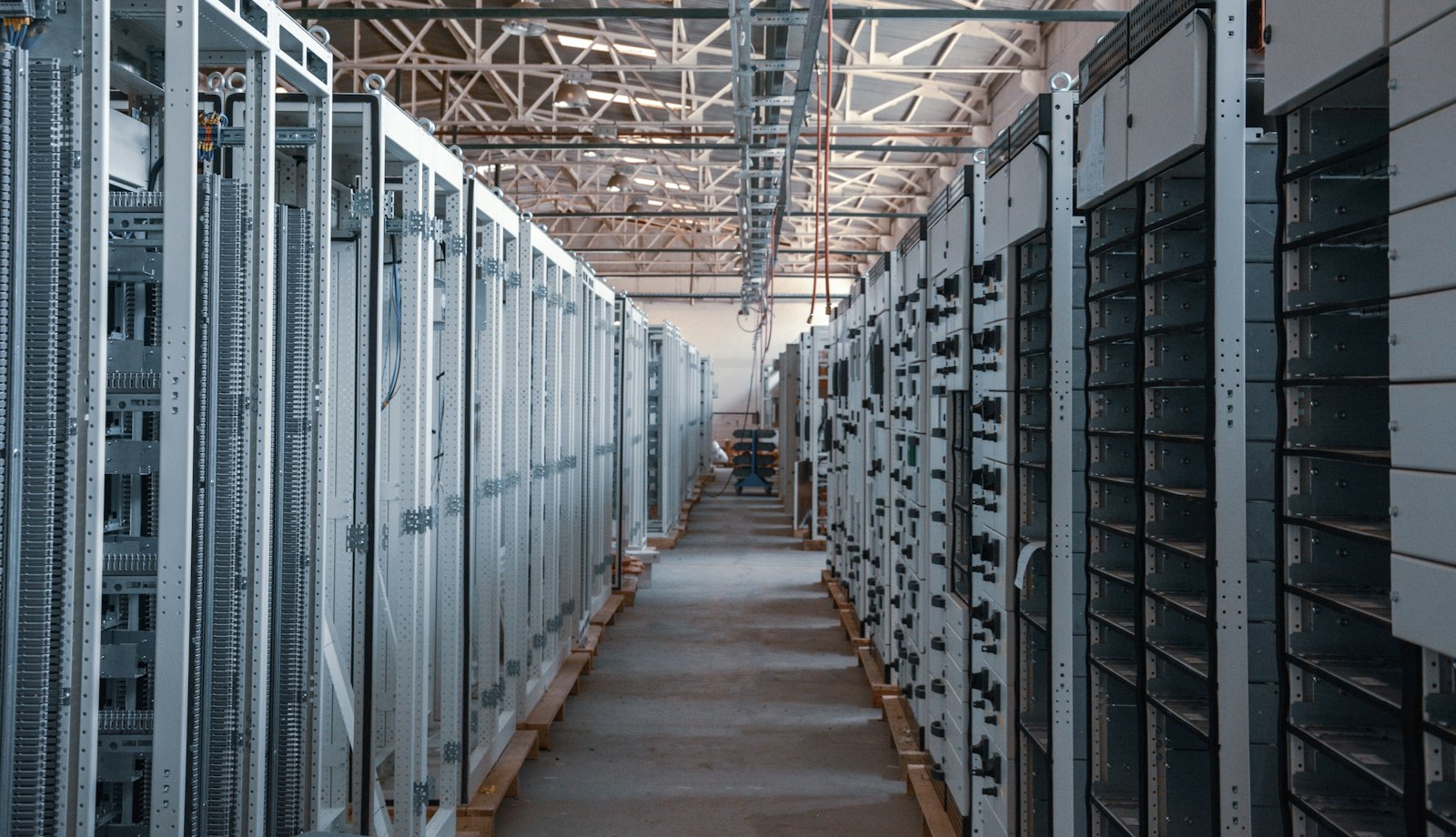
Image credit: İsmail Enes Ayhan on Unsplash (Unsplash License). Free-license photo of a server room; the source articles did not include a usable image.
Sources
- Relae, Community Signals Q3 2026: Data Center Cancellations Double as Local Governments Step In, https://relae.co/blog/community-signals-q3-2026-data-center-cancellations
- Construction Dive, Data center cancellations in Q3 doubled: Relae, https://www.constructiondive.com/news/data-center-cancellations-in-q3-double-relae/875445/
- IndustrialBriefs, Data Center Cancellations Surge Amid Community Pushback, https://www.industrialbriefs.com/data-center-cancellations-q3-2026/
Let's connect
For organizations planning commercial, industrial, or infrastructure work, we will review the project and recommend the appropriate delivery approach.

Join our team
If you hold yourself to careful, accountable work, you already work the way we do.