

news +insights
Update: Data Center Ballot Measures Hit 47 in 2026 as December Votes Near

Update: data center ballot measures have now gone against development in 46 of 47 local votes decided in 2026, and four more are scheduled in December in Arkansas, Maine and North Dakota. Ballotpedia News published the updated count on November 15, 2026, as of November 13 (Ballotpedia News).
This follows our November 6 report on data center ballot measures, which covered preliminary midterm results showing opponents winning virtually all of about 40 local votes. The new tally adds a firmer year-to-date number and the details of the December votes.
What Happened
According to Ballotpedia, voters had decided 47 ballot measures related to data centers in 2026 as of November 13. Of those, 46, or 98%, limited data center development, and one, or 2%, favored it (Ballotpedia News). The article gives a cumulative figure for the year and does not break out how many of the 47 were decided on November 3, 2026, or list the states for all of them.
The one result that went the other way is consistent with our earlier coverage, which reported that voters in Harwood, North Dakota rejected a charter amendment that would have added review requirements for large industrial projects, including data centers (WCG).
The Four December Votes
Clarksville, Arkansas: December 1, 2026
Two referendums concern bond financing for data centers being developed by Serverfarm. The first would uphold an ordinance authorizing up to $50 billion in taxable industrial development bonds for data center equipment and improvements, with the project leased to Hatchbo LLC and a payment in lieu of taxes agreement. The second would uphold an ordinance authorizing up to $5 billion in taxable industrial development bonds for land acquisition, with the project leased to SF ARK1, LLC under a similar agreement (Ballotpedia News).
The City Council approved both ordinances in July, and residents submitted 425 signatures on each to force a referendum. Ballotpedia notes that the votes concern the financing, not whether the data centers are built. Each needs a simple majority (Ballotpedia News).
Hollis, Maine: December 8, 2026
Article 2 would put a 180-day moratorium in place, starting December 8, on new or expanded data centers with at least 2,500 square feet of data center area, counting associated impervious surfaces such as access roads and parking lots. The threshold was originally 25,000 square feet, but the Select Board lowered it to 2,500 square feet on November 4, 2026 (Ballotpedia News).
Mandan, North Dakota: December 15, 2026
Measure 1 would prohibit large-scale data centers, and multiple data centers, within the city and its territories when their combined electrical demand reaches 25 megawatts or more. It responds to a planned Stark Power data center that has not started construction and still has to go through city planning and approval (Ballotpedia News).
Where Things Stand
The ballot results sit inside a much larger pattern of local action. More than 500 local governments in 46 states have placed moratoriums on data center development, according to the US Data Center Moratorium Tracker from Interconnected Capital, as cited by Construction Dive. On November 13, Climate Mayors released a model local law meant to help cities guide data center siting and permitting, operating standards, transparency and community benefits (Construction Dive).
The model law covers four areas: transparency, including limits on secret deals and nondisclosure agreements; siting and permitting that steers projects toward underused land, brownfields and industrial areas; community benefit agreements that address jobs, wages, environmental mitigation and decommissioning; and operating standards for power sourcing, backup generation, noise and building materials (Construction Dive). Climate Mayors developed it with the Model Climate Laws Initiative, the Sabin Center for Climate Change Law at Columbia Law School and Climate XChange (Construction Dive).
Implications for Owners, Developers, Contractors and Subs
- Entitlement risk is now a schedule risk. With 46 of 47 local votes going against development this year, owners should assume that a referendum, petition or moratorium is possible on any large campus and build that into preconstruction timelines (Ballotpedia News).
- Thresholds are getting smaller. Hollis cut its moratorium trigger from 25,000 to 2,500 square feet, a size that can capture small edge facilities and expansions, not only hyperscale campuses (Ballotpedia News).
- Financing votes can matter as much as zoning votes. The Clarksville referendums target up to $55 billion in combined bond authority and payment in lieu of taxes deals, which shape project economics even if construction is allowed (Ballotpedia News).
- Expect community benefit and disclosure terms in local codes. The Climate Mayors model law gives cities a ready template for nondisclosure limits and community benefit agreements, which contractors may see written into approvals (Construction Dive).
- Demand is still large. Data center work remains a major part of the construction pipeline, as our look at data center construction starts showed, so local friction is changing where and how projects get built rather than ending them.
What to Watch
The Clarksville vote on December 1 is the first test of a financing referendum rather than a ban. Hollis follows on December 8 and Mandan on December 15, and each needs a simple majority (Ballotpedia News). Closer to home, New York communities have weighed their own limits, including the Buffalo data center moratorium proposal.
Bottom Line
Data center ballot measures in 2026 have gone almost entirely one way, 46 of 47 against development, and three more communities vote in December. For builders, the takeaway is to treat local approval, disclosure and community benefit terms as core project risks from day one.
Key Questions
How many data center ballot measures have voters decided in 2026?
As of November 13, 2026, voters had decided 47 ballot measures related to data centers, and 46 of them, or 98%, limited data center development, according to Ballotpedia News.
Which data center votes are scheduled for December 2026?
Clarksville, Arkansas votes December 1 on two Serverfarm bond ordinances, Hollis, Maine votes December 8 on a 180-day moratorium, and Mandan, North Dakota votes December 15 on a ban on data centers of 25 megawatts or more (Ballotpedia News).
Does the Clarksville vote decide whether the Serverfarm data center is built?
No. Ballotpedia says the two Clarksville referendums concern up to $50 billion and $5 billion in taxable industrial development bonds and related payment in lieu of taxes agreements, not whether the data centers are built (Ballotpedia News).
How many local governments have data center moratoriums?
More than 500 local governments in 46 states have placed moratoriums on data center development, according to the US Data Center Moratorium Tracker from Interconnected Capital, as reported by Construction Dive.
Related Coverage
- Data Center Ballot Measures: Voters Back Limits in Nearly Every 2026 Local Vote
- Buffalo Moves Toward Two-Year Data Center Moratorium, Local Law Still Needed
- Data Center Construction Starts Fall to $9.4B in September as Costs Climb 31%
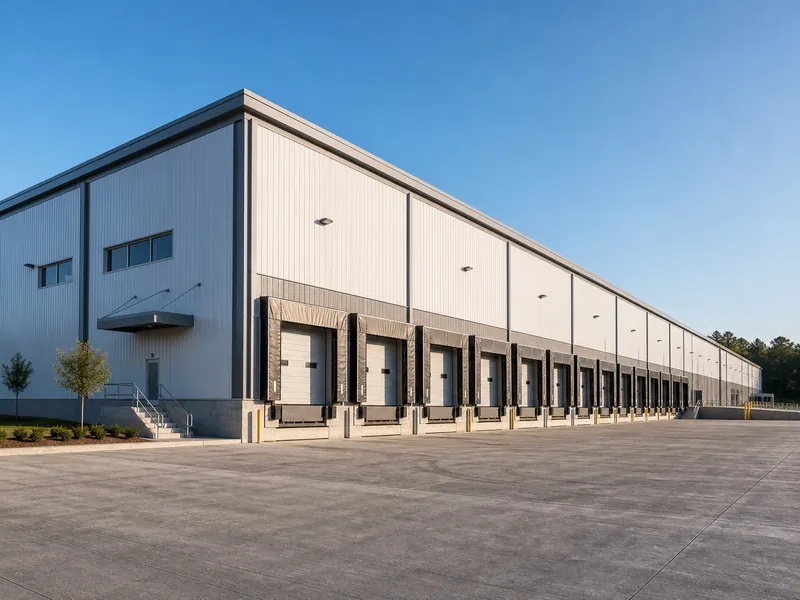
Image credit: Ballotpedia News. Image from the source article (Ballotpedia News).
Sources
- Ballotpedia News, Voters have decided on 47 measures related to data centers in 2026; in December, they will consider four more, https://news.ballotpedia.org/2026/11/15/voters-have-decided-on-47-measures-related-to-data-centers-in-2026-in-december-they-will-consider-four-more/
- Construction Dive (from Smart Cities Dive), As data center backlash grows, a model law aims to give cities more control, https://www.constructiondive.com/news/data-center-backlash-model-law-aims-to-give-cities-more-control/874600/
Let's connect
For organizations planning commercial, industrial, or infrastructure work, we will review the project and recommend the appropriate delivery approach.

Join our team
If you hold yourself to careful, accountable work, you already work the way we do.