

news +insights
BRG Survey: AI Is Reshaping Construction Teams More Than Cutting Jobs

Artificial intelligence is changing how construction firms organize their people far more often than it is eliminating jobs, according to a new survey from Berkeley Research Group (BRG). Among North American builders and owners, 46 percent said AI led them to change team structures and 38 percent retrained employees, while only 11 percent reduced headcount and 18 percent added staff in some areas (Construction Dive; BRG report).
What Happened
BRG released its AI in Construction Report 2026, based on a July 2026 survey of 109 senior executives involved in AI implementation: 58 builders and 51 owners (BRG report). Respondents were spread across North America (65), Europe (22) and Asia-Pacific (22), and most findings Construction Dive reported reflect the 65 North American respondents (Construction Dive; BRG report). Builders in the sample were mainly small and mid-sized general contractors and construction managers, while owners were mainly larger developers and real estate investment trusts (Construction Dive).
Construction Dive reported the findings on October 21 (Construction Dive). It was the first time BRG's sector surveys asked about workforce changes, so the construction results have no earlier comparison point (Construction Dive).
How Firms Are Changing Their Workforce
The survey's workforce questions show reorganization rather than replacement. Among North American respondents (Construction Dive):
- 51 percent changed their reliance on outside vendors, consultants or contractors.
- 46 percent changed team structures.
- 38 percent retrained employees.
- 31 percent redeployed staff to different work.
- 29 percent created new types of roles.
- 20 percent changed the skills they look for when hiring.
- 18 percent added headcount in certain areas.
- 11 percent reduced headcount because of AI.
Only 2 percent of respondents reported no workforce change at all (BRG report). Richard Fultineer, a BRG managing director and head of global construction, told Construction Dive that the near term impact falls on "information-intensive work" such as cost estimating and contract review (Construction Dive).
The finding that half of firms changed their reliance on outside parties deserves attention from subcontractors and consultants. If owners and general contractors bring more analysis in house with AI tools, the scopes they buy from outside firms, and the way those scopes are written, are likely to shift.
How Much Firms Are Spending
Spending is already significant. More than two-thirds of North American respondents, 68 percent, invested at least $250,000 in AI over the previous two years, and 37 percent spent $1 million or more (Construction Dive; BRG report). Only 6 percent made no dedicated AI investment (BRG report). Still, just 15 percent said AI is fully integrated across their projects and operations (Construction Dive). Another 29 percent expect full integration within 12 months and 31 percent within one to two years (BRG report).
Eight in 10 surveyed builders use AI to evaluate and plan proposed projects (Construction Dive). Across all respondents, planning and feasibility was the most widely adopted function at 58 percent, followed by project management and scheduling at 52 percent, corporate and administrative work at 48 percent, and field operations and procurement at 46 percent each (BRG report). Design and engineering stood at 38 percent and risk, claims and dispute management at 37 percent (BRG report).
Construction still trails some other industries. AI was active in most core functions for 42 percent of construction respondents, compared with 48 percent in retail and 54 percent at financial institutions in BRG's other sector surveys (Construction Dive).
Savings and How Firms Measure Them
Double-digit cost savings were common in the report. BRG found that 67 percent of respondents reported savings of that size in construction activities, 62 percent in business operations and 58 percent in both preconstruction and post-construction work (BRG report). Firms measure returns in different ways: 37 percent use financial metrics, 29 percent operational metrics, 23 percent usage or adoption, 5 percent qualitative assessment, and 6 percent do not evaluate ROI at all (BRG report). BRG argues that narrow ROI measures miss avoided costs and new capabilities, and suggests tracking uncommitted contingency as a construction-specific measure (BRG report). Fultineer recommended watching estimating accuracy, schedule performance, rework and change orders (Construction Dive).
Barriers and Risk
The biggest obstacle is people. Forty percent of respondents cited a lack of skilled talent or expertise, 38 percent said AI had limited relevance to their work, and 37 percent pointed to data and integration problems (BRG report). On risk, 43 percent named liability for AI-generated errors as a concern restricting use, and 40 percent cited unclear treatment of AI in contracts (Construction Dive; BRG report).
Policies have not kept pace. Construction had the lowest policy coverage of the four sectors BRG surveyed: 42 percent of firms have policies addressing human oversight and accountability, and 34 percent address accuracy and reliability (Construction Dive). Fultineer attributed part of the gap to stronger regulatory pressure in sectors such as banking and energy (Construction Dive).
BRG's report closes with five practices: focus on a specific problem, invest in talent, data and integration, establish accountability, avoid narrow ROI measures, and prepare contracts for AI use (BRG report).
Where This Fits
The findings line up with what WCG has seen in the tools reaching the market. Many of them target exactly the information-heavy tasks Fultineer described, and some are being shared broadly, such as Turner's AI safety tool opened to the whole industry. The workforce results also echo the theme of AI supporting construction workers instead of replacing them. They arrive while the industry still faces a tight skilled labor supply, a backdrop covered in WCG's look at immigrant workers and construction trades growth.
Implications for Owners, Developers, Contractors and Subs
- General contractors: The early payoff is in estimating, contract review, scheduling and planning. Firms that retrain estimators and project managers to supervise AI output can gain capacity without adding headcount.
- Owners and developers: Owners in the survey were more likely to have invested $250,000 or more (BRG report). Expect more owner-side analysis of bids, schedules and change orders, and more requests for structured project data from contractors.
- Subcontractors and consultants: With 51 percent of firms changing their reliance on outside parties, scopes for estimating support, document control and some consulting services may shrink or change shape.
- Risk and legal teams: Liability for AI errors and unclear contract language are the top concerns. AI use clauses, verification duties and data ownership terms are likely to show up more often in contracts.
What to Watch
- Whether the share of firms reporting full integration climbs toward the 29 percent that expect it within a year (BRG report).
- Contract forms and industry guidance that address AI-generated work product and liability.
- Hiring patterns, including the 29 percent creating new types of roles and the 20 percent changing the skills they hire for (Construction Dive).
Bottom Line
BRG's survey describes an industry that is spending real money on AI and reorganizing around it, while still struggling with talent, data and liability. For now, the main effect on people is different work, not fewer jobs, and the firms that set clear policies and measure outcomes are likely to get the most from the tools.
Related Coverage
- Turner Opens Its AI Safety Tool to the Entire Construction Industry, Free of Charge
- AI in Construction: How Technology Supports Workers Instead of Replacing Them
- Harvard Study: Immigrants Drove All Trades Workforce Growth Since 2013
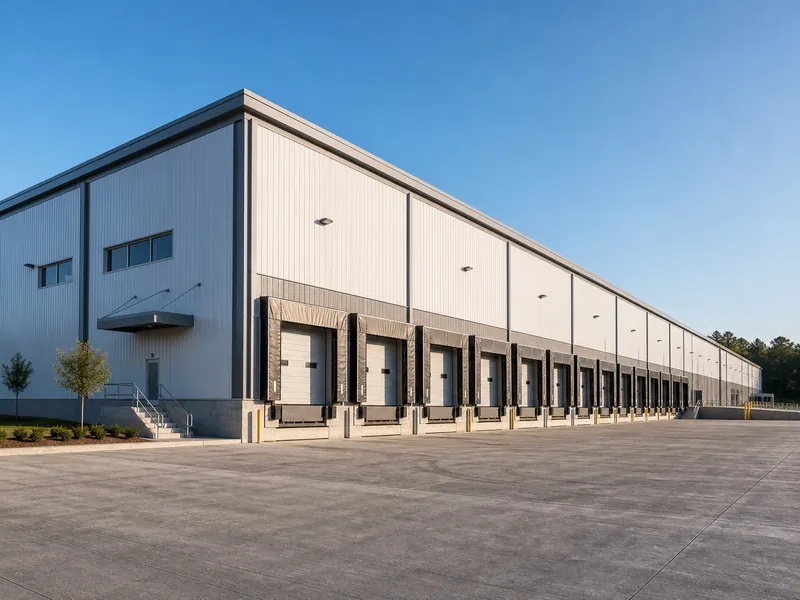
Image credit: Evgeniy Surzhan on Unsplash. Free-license photo used because the source article image is a stock agency photo.
Sources
- Construction Dive, "AI reshapes construction teams more often than it cuts jobs: report": https://www.constructiondive.com/news/construction-ai-reshape-teams-replace-jobs/833612/
- Berkeley Research Group, "AI in Construction Report 2026": https://media.thinkbrg.com/wp-content/uploads/2026/10/09105705/AI-in-Construction-Report-2026.pdf
Let's connect
For organizations planning commercial, industrial, or infrastructure work, we will review the project and recommend the appropriate delivery approach.

Join our team
If you hold yourself to careful, accountable work, you already work the way we do.