

news +insights
Turner Opens Its AI Safety Tool to the Entire Construction Industry, Free of Charge
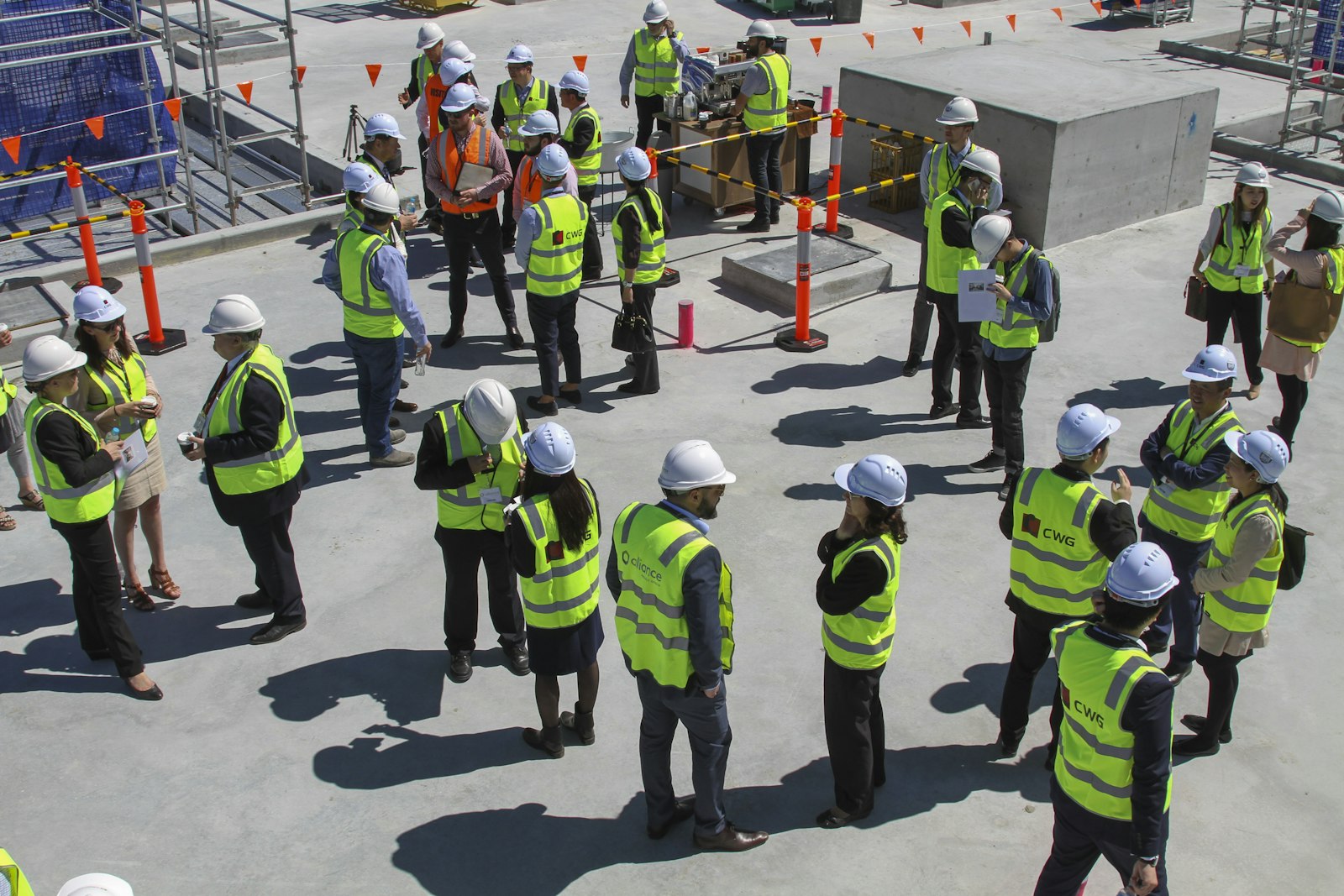
On May 4, 2026, during its 22nd annual Safety Week, Turner Construction made a move that drew attention well beyond its own project teams: the New York City-based contractor opened its AI-powered jobsite safety tool, SafeT Coach, to the entire construction industry at no cost. According to Turner's official announcement, any contractor, field supervisor, or craft worker in the United States can now access the tool from a mobile device on the jobsite — without a Turner affiliation and without a fee.
For an industry where safety tools have historically required licensing agreements, subscription fees, or integration into proprietary project management platforms, the move is notable. And the underlying capability, while straightforward in concept, addresses one of the most persistent gaps in construction safety management: getting the right guidance to the right person at the right moment in the field.
What SafeT Coach Does
SafeT Coach is designed to function as a virtual safety consultant accessible at the point of work. Turner's description outlines two primary use modes:
- Plain-language questions: Workers or supervisors type or speak a safety question, and the tool responds with guidance grounded in Turner's Environmental Health and Safety (EHS) standards — not the broader internet. The tool does not pull from general web sources; responses are based on Turner's internal EHS framework and OSHA standards.
- Photo analysis: Users upload a jobsite photo, and the tool identifies potential hazards, prioritizes risk levels, and recommends controls in real time — producing output such as a potential hazard table, suggested mitigation steps, and coaching prompts for safety conversations.
Additional documented capabilities include generating permit checklists, policy citations, jobsite signage, and safety plan drafts, as well as helping supervisors frame safety observations for morning briefings. The tool is explicitly framed as decision support, not enforcement — designed to reinforce a coaching culture rather than a punitive one.
The tool was built on OpenAI's ChatGPT framework and a forthcoming version will also be available on Google's Gemini platform, giving users a choice of underlying AI service.
Development and Validation
SafeT Coach originated from Turner's internal AI Innovation Challenge and was developed through a collaborative design process involving more than 80 stakeholders — supervisors, craft workers, and safety professionals. According to Turner, it was further validated through extended jobsite pilots and an independent external review by a risk management partner before the public release. During its internal deployment, the tool logged more than 25,000 interactions across Turner staff, trade partners, and field teams.
Steve Spaulding, Turner's Chief Environmental, Health, and Safety Officer, offered the clearest statement of intent: "Nothing we build will ever be as important as the people who build it. SafeT Coach shortens the distance between uncertainty and action — so when someone in the field has a question, the answer is already in their hands."
The Field Safety Problem It Addresses
The construction industry's fatality rate remains among the highest of any U.S. sector. BLS data cited in earlier reporting recorded 1,034 construction deaths in 2024. Established safety protocols — safety plans, toolbox talks, pre-task analysis, permit-to-work systems — exist on virtually every commercial construction site, yet incidents still occur when field conditions change rapidly and the guidance workers need is not immediately accessible.
That is the gap SafeT Coach targets. A superintendent encountering an unfamiliar rigging condition, a foreman needing to verify fall protection requirements for a non-standard work platform, or a worker uncertain about confined space protocol for an unexpected situation can query the tool immediately rather than waiting for a safety manager to arrive or searching through manuals.
SmartBrief's coverage of Construction Safety Week 2026 noted that during the week, Turner job sites displayed QR codes allowing workers to download the app directly — making the tool immediately visible and accessible to craft workers across active projects.
Why This Matters to the Industry
Turner is one of the largest general contractors in the United States by revenue, with project teams across approximately 150,000 workers and 40,000 companies engaged as trade partners. The company estimates that the tool's public release puts more informed safety decisions in the hands of the more than 8 million workers on U.S. construction sites.
The broader significance, however, is not just about one tool. SafeT Coach's public launch reflects a shift in how leading contractors are beginning to approach construction technology: not as a competitive differentiator to be proprietary, but as industry infrastructure that improves outcomes across the supply chain. Turner's trade partners benefit from a better-informed workforce. Owners benefit from lower incident rates and reduced project delays. The industry benefits from normalization of data-driven, real-time safety decision support.
Implications for Owners, Developers, and Contractors
- General contractors: SafeT Coach can be adopted at no cost and deployed to field teams across active projects immediately. The practical starting point is integrating it into daily safety briefings and pre-task planning — not replacing existing safety programs but extending them to moments when safety staff cannot be physically present.
- Subcontractors: Smaller firms that lack dedicated safety staff on every crew now have access to the same quality of guidance that larger contractors build into their internal protocols. The photo analysis feature is particularly practical for trades encountering site-specific conditions not covered in standard toolbox talks.
- Owners and developers: Owners who specify AI-assisted safety tools in their contractor qualification criteria — or who adopt them as a project requirement — can begin pointing contractors to SafeT Coach as a baseline. The tool's grounding in OSHA standards makes it compatible with any owner safety program.
- Safety professionals: The tool does not replace safety managers — it extends their reach. Safety managers can use SafeT Coach to pre-load commonly asked questions from their specific project types and review the tool's responses to ensure alignment with project-specific safety plans.
What to Watch Next
- Adoption metrics: Turner has indicated it will track usage and outcomes; data on how widely SafeT Coach is adopted beyond Turner's own trade partners will be a meaningful indicator of industry uptake
- Competitor responses: Whether other major GCs (Skanska, Hensel Phelps, McCarthy, DPR) develop or release similar tools publicly, or partner with safety technology platforms to offer comparable functionality
- Insurance and liability implications: As AI safety tools log documented interactions, questions about how that documentation affects workers' compensation and OSHA recordable incident analysis will emerge
- Integration with project management platforms: SafeT Coach currently runs as a standalone mobile tool; integration with Procore, Autodesk Build, or other field platforms would significantly increase routine adoption
Bottom Line
Turner Construction's decision to release SafeT Coach to the entire industry at no cost is one of the more practically significant construction technology events of 2026. It puts AI-powered, field-accessible safety guidance in reach of every contractor — large or small — working on U.S. construction sites, and it does so by grounding the tool in established safety standards rather than generic AI outputs. The 25,000 interactions logged during the internal pilot demonstrate genuine field utility; the public release expands that utility to the 8 million workers who drive the U.S. construction economy.
Sources:

Let's connect
For organizations planning commercial, industrial, or infrastructure work, we will review the project and recommend the appropriate delivery approach.

Join our team
If you hold yourself to careful, accountable work, you already work the way we do.