
news +insights
USDA Fertilizer Grants Back $1.34B in Plant Projects, Including Bartow, FL
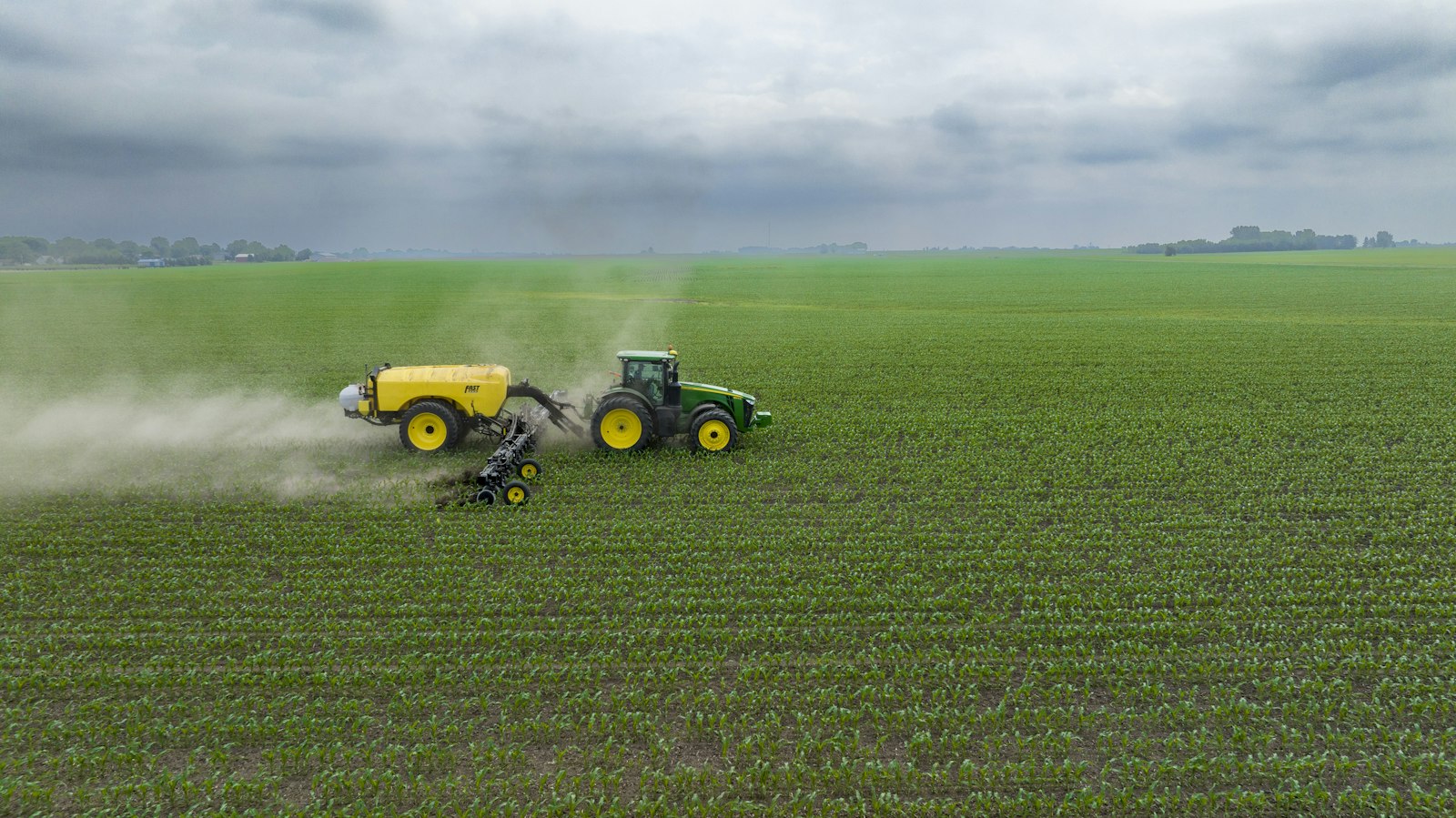
USDA fertilizer grants totaling about $573 million will back eight manufacturing projects worth more than $1.34 billion, including a $50.6 million plant expansion in Bartow, Florida. The awards are the first selections under USDA's new Fertilizer Investment and Expansion for Long-Term Domestic Supply (FIELDS) Program, announced on Thursday, October 22 (DTN; AgWeb).
What Happened
Vice President J.D. Vance and Agriculture Secretary Brooke Rollins announced the selections, with Vance speaking at an event in North Platte, Nebraska (AgWeb). Federal grants make up about $573 million of the total, and private investment covers the rest (DTN).
USDA announced the $500 million FIELDS program in July. This round adds more than $73 million on top of that amount, drawn from the earlier Fertilizer Production Expansion Program after USDA pulled funds back from projects in that program that lacked signed agreements (AgWeb). "This is not money required from Congress," Rollins said, describing it as "a rural development project and one that we are able to immediately deploy funds on" (AgWeb).
The program follows a spring price spike linked to the war with Iran, which disrupted fertilizer shipments through the Strait of Hormuz. DTN Fertilizer Trends data puts anhydrous ammonia about $149 per ton, or roughly 18 percent, above a year earlier (DTN).
The Eight USDA Fertilizer Grant Projects
DTN reported the federal share and total cost for each selection (DTN):
- TalusAg: about $99.8 million toward a $270.2 million project deploying 20 modular ammonia units at 11 sites in Iowa, Kentucky, Minnesota, Tennessee, Nebraska, Illinois and South Dakota, producing about 130,000 tons of anhydrous ammonia a year.
- Peace Valley: about $19.9 million toward a $50.6 million expansion in Bartow, Florida, producing about 250,000 tons a year of products containing nitrogen, phosphorus, potassium and sulfur.
- PCI Nitrogen: about $100 million toward $200 million in upgrades in Pasadena, Texas, and St. Helens, Oregon, for about 148,280 tons a year of ammonium sulfate and urea.
- Intrepid Potash: about $139 million toward a $265 million new sulfate of potash facility near Carlsbad, New Mexico, for about 220,000 tons a year.
- AdvanSix: about $47.4 million toward a $98.1 million modernization and expansion in Hopewell, Virginia, for about 84,000 tons of anhydrous ammonia a year.
- SUL4R-PLUS Illinois: about $34.9 million toward $69.7 million for a new line and infrastructure in Marissa, Illinois, for about 100,000 tons of sulfur fertilizer a year.
- True Organic Products: about $15.3 million toward $30.6 million at plants in Helm, California; Boardman, Oregon; and Arlington, Arizona, for about 142,805 tons a year made from agricultural byproducts.
- Agriculture Project Holdco: about $116.9 million toward $360 million at facilities in Lewis, Kansas, and Fair Oaks, Indiana, converting dairy manure into about 4,100 tons of liquid ammonium nitrate a year.
Rollins said the projects cover 22 manufacturing locations in 16 states and should add more than 1 million tons of annual domestic fertilizer production once operating (AgWeb). DTN's text describes the projects as spanning as many as 18 states, while the locations it lists cover 16 (DTN). Southeast AgNet put total capacity at about 1.08 million tons a year (Southeast AgNet).
Where Things Stand
The selections are not final awards. The projects still have to complete the federal funding process, and USDA's projected price effects depend on the facilities becoming operational (Southeast AgNet). No construction start or completion dates were given (AgWeb).
USDA's analysis projects that, once running, the plants could cut nitrogen prices 4.4 percent and potash prices 5.3 percent, raise domestic nitrogen production 3.7 percent and raise domestic potash production nearly 40 percent. USDA notes that four companies control about 77 percent of North American nitrogen capacity and two control more than 90 percent of phosphate capacity (DTN). The Fertilizer Institute used the announcement to press for permitting reform. "Permitting reform is essential to strengthening America's fertilizer supply chain," said TFI President and CEO Corey Rosenbusch (DTN).
Implications for Owners, Developers, Contractors and Subs
- Heavy industrial scopes. The list includes a greenfield potash facility, modular ammonia units at 11 sites, new production lines and modernization of existing plants. That means process piping, tanks, structural steel, electrical and controls work under hazardous materials rules.
- Florida work in Polk County. The Peace Valley expansion in Bartow is the only Florida project and adds about 250,000 tons a year of capacity (Southeast AgNet).
- Permitting is the gate. Industry groups are pushing for permitting reform, and schedules for new chemical capacity often hinge on air and environmental permits more than on construction duration.
- Grant compliance. Federally funded industrial work can carry procurement, reporting and documentation requirements that contractors should price in from the start.
The awards add to a broad wave of U.S. industrial building. Our coverage of the $3.4 trillion manufacturing pipeline tracks how much of that wave has reached construction.
What to Watch
- Final grant agreements for each of the eight selections.
- Permit filings and contractor selection for the new Intrepid Potash facility near Carlsbad and the TalusAg modular sites.
- Whether fertilizer prices ease as projects come online, as USDA projects.
Bottom Line
USDA's first FIELDS selections put about $573 million of federal money behind $1.34 billion in fertilizer plant work across at least 16 states, including Peace Valley's Bartow expansion in Florida. The projects still need final agreements and permits, but they point to a steady stream of mid-size industrial process work over the next few years.
Key Questions
How much is the USDA fertilizer grant program investing?
USDA's FIELDS Program selected eight fertilizer projects for about $573 million in federal grants, supporting more than $1.34 billion in total investment, announced October 22, 2026 (DTN).
Which Florida fertilizer plant received a USDA FIELDS grant?
Peace Valley's fertilizer plant in Bartow, Florida, was selected for about $19.9 million toward a $50.6 million expansion expected to produce about 250,000 tons a year (Southeast AgNet).
What is the largest USDA FIELDS fertilizer grant?
Intrepid Potash's new sulfate of potash facility near Carlsbad, New Mexico, received the largest federal share at about $139 million toward a $265 million project (DTN).
When will the USDA fertilizer projects be built?
USDA has not disclosed construction or completion dates for the eight FIELDS projects, which still must complete the federal funding process (Southeast AgNet).
Related Coverage
- $500B in U.S. Factories Under Construction as $3.4T Pipeline Waits
- Hudbay and Mitsubishi Approve $2.07B Copper World Mine Near Tucson
- U. S. Steel Approves Nearly $3B Hot Strip Mill at Edgar Thomson Plant
Image credit: James Baltz, via Unsplash.
Sources
- DTN/Progressive Farmer, "Trump Administration Champions Funding for 8 New Fertilizer Investments": https://www.dtnpf.com/agriculture/web/ag/crops/article/2026/10/22/trump-administration-champions-8-new
- AgWeb, "'A Farmer-First Step': USDA Commits $1.34B to Expand Domestic Fertilizer Supply": https://www.agweb.com/news/farmer-first-step-usda-commits-1-34b-expand-domestic-fertilizer-supply
- Southeast AgNet, "USDA Announces $1.3 Billion Fertilizer Investment, Including Florida Expansion": https://southeastagnet.com/2026/10/26/usda-announces-1-3-billion-fertilizer-investment-including-florida-expansion

Let's connect
For organizations planning commercial, industrial, or infrastructure work, we will review the project and recommend the appropriate delivery approach.

Join our team
If you hold yourself to careful, accountable work, you already work the way we do.