
news +insights
Trump Says Large Data Centers Must Make Their Own Electricity
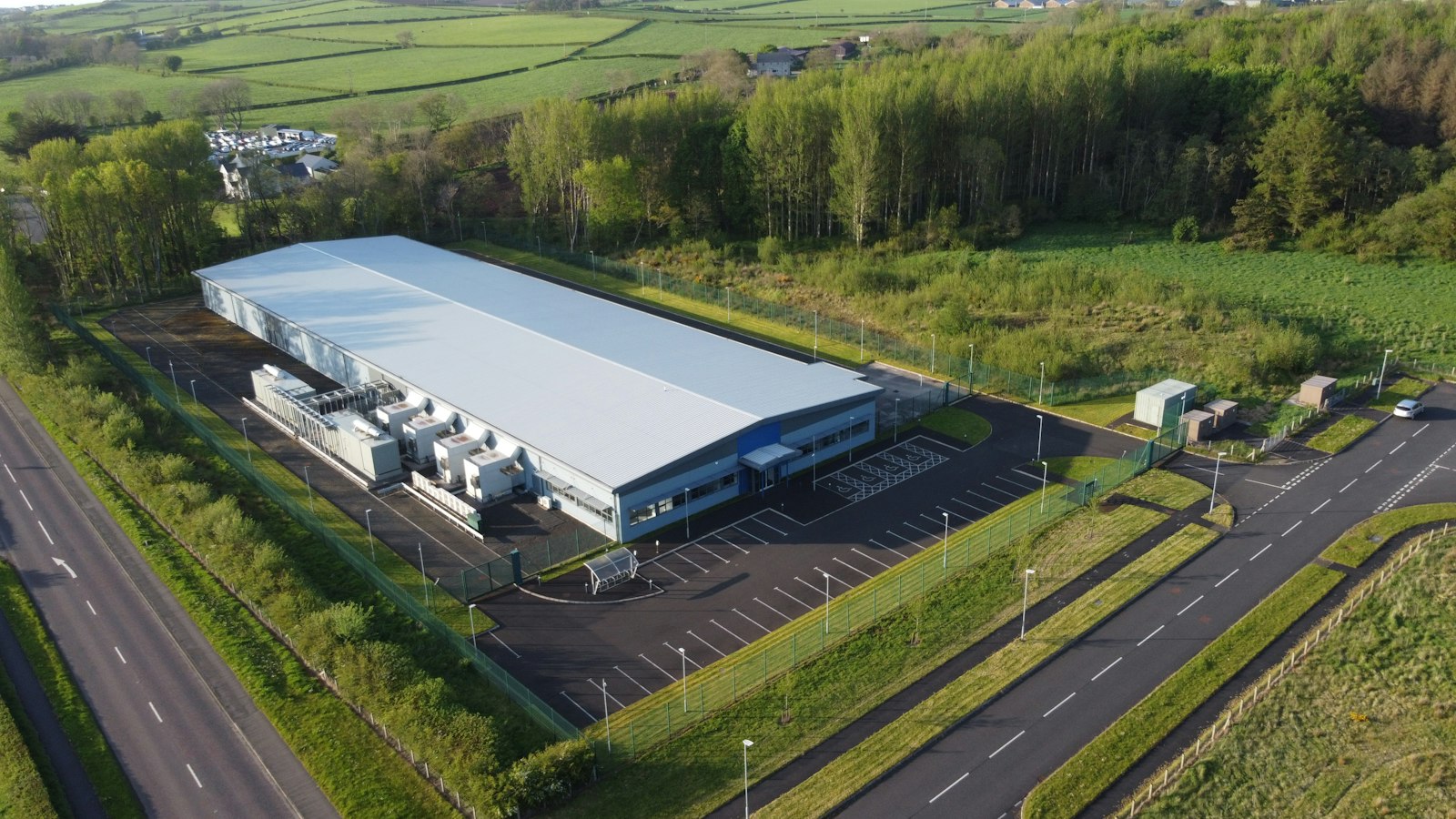
President Donald Trump said on Wednesday, October 21, that new and large data centers are "mandated by me to make their own electricity" and should give or sell any surplus power to the local community or grid. In the same social media post he urged developers to pay host communities a "dividend" to win local support. It is not yet clear whether the statement will be followed by an executive order or any other formal action (Bisnow; Spectrum News).
What Happened
The statement came in a Truth Social post early Wednesday (Bisnow). Trump wrote that new and large data centers, "in some cases gigantic," must produce their own power and give or sell the excess back to the local community, and argued that the approach could hold electricity prices down and possibly bring them substantially lower (Bisnow). He added that "if companies want to make their Data Centers popular, pay the community," pointed to projects that were unpopular until "a financial deal is struck," and closed with a call to "MAKE DEALS, and get them built" (Bisnow).
Both Bisnow and Spectrum News reported that it was not immediately clear how the demand would be carried out (Bisnow; Spectrum News). Neither outlet reported a response from the White House or from data center companies (Spectrum News).
Context: Power Is Already the Bottleneck
Self-supplied power is not a new idea for the industry. Developers are already pursuing on-site, or behind-the-meter, generation because grid connections can take years to secure (Bisnow). Some states and regional grid operators have pushed rules that require data centers to bring their own generation as a condition of grid access (Bisnow). Earlier this month, however, the Federal Energy Regulatory Commission rejected an effort to impose that kind of requirement on the country's largest grid system (Bisnow).
Major tech companies also signed a Ratepayer Protection Pledge in March, committing to cover the full cost of power delivery and the grid upgrades their projects require, though what counts as "full cost" remains open to interpretation (Bisnow). Bisnow pointed to Meta's Hyperion campus in Louisiana as an example of a project being co-developed with power plants tied into local transmission (Bisnow).
WCG has covered how power availability is now shaping where and how these campuses get built, from the national picture in the data center power crisis to Bain's estimate that the AI buildout hinges on power and electrical labor.
Community Payments and Local Opposition
Developers often point to tax revenue and offer community benefits such as funding local institutions, buying fire trucks or rebuilding a bowling alley, but direct cash payments to residents are rare (Bisnow). Even cash has not guaranteed approval. Bisnow reported that residents of Hazle Township, Pennsylvania, rejected a proposed Amazon Web Services campus this month despite a promised $10,000 cash dividend for every resident (Bisnow).
The local debate is intensifying. On Tuesday, the Memphis City Council voted down a temporary moratorium on data centers, even though residents who spoke at the meeting strongly opposed the facilities (Spectrum News). A Washington Post-ABC-Ipsos poll found 66 percent of Americans oppose building new data centers, and critics worry about higher electric bills and heavy water use (Spectrum News). Spectrum News estimated that there are no fewer than 3,000 data centers in the United States (Spectrum News).
The statement is a shift in tone. At an Ohio rally earlier in October, Trump criticized data center opponents as wanting to "end up being backwards and poor" and warned that projects would go to China if blocked (Spectrum News). He has generally framed data center development as a matter of national security in an AI race with China (Bisnow).
The Political Backdrop
The post arrived less than two weeks before the midterm elections (Spectrum News). Data center opposition and its effect on household utility bills have become a campaign issue, and in August the National Republican Senatorial Committee warned tech and AI firms that Democrats were making data centers the "centerpiece" of their campaign against Sen. Jon Husted in Ohio (Bisnow). Todd Eisenstadt, research director at American University's Center for Environmental Policy, told Spectrum News that the issue may now be a defining one in the election (Spectrum News).
New York is working through its own version of the debate. The state has paused state environmental permits for new hyperscale data centers and has published a community investment benchmark of $1 million per megawatt, with power supply rules still pending, as WCG reported in the update on New York's data center pause.
Implications for Owners, Developers, Contractors and Subs
- Developers and owners: If self-generation becomes a federal expectation, site selection shifts further toward land that can host on-site plants, fuel supply and substations, and project budgets carry generation assets alongside the data halls.
- General contractors: Campuses that pair data halls with on-site generation are larger, more complex jobs that combine building, power plant and utility scopes. Contractors with energy and heavy industrial experience stand to benefit.
- Electrical and mechanical subs: On-site generation, switchgear, transformers and interconnection work add to an electrical labor market that is already stretched by the data center buildout.
- Local governments: A call for community dividends could change how host agreements are negotiated, though the Hazle Township vote shows cash alone may not overcome opposition (Bisnow).
What to Watch
- Whether the White House issues an executive order, agency guidance or other formal action to implement the statement (Bisnow).
- How FERC, regional grid operators and state utility commissions respond, given FERC's decision earlier this month on the largest grid system (Bisnow).
- Local votes on data center moratoriums and zoning, including how the midterm results shape them.
Bottom Line
The president's statement puts federal weight behind an approach many developers are already taking out of necessity: bring your own power. Until there is a formal mechanism, it is a signal rather than a rule, but it points to bigger, more power-heavy campuses and more negotiation with host communities.
Related Coverage
- The Data Center Power Crisis: How AI Infrastructure Is Reshaping U.S. Construction and the Electrical Grid
- Update: New York Data Center Pause Holds as Cost Rules Take Shape
- Bain: $6.5 Trillion AI Buildout Hinges on Power and Electrical Labor
- Grid Equipment Factory Wave: Seven U.S. Plant Projects Total $1.84 Billion
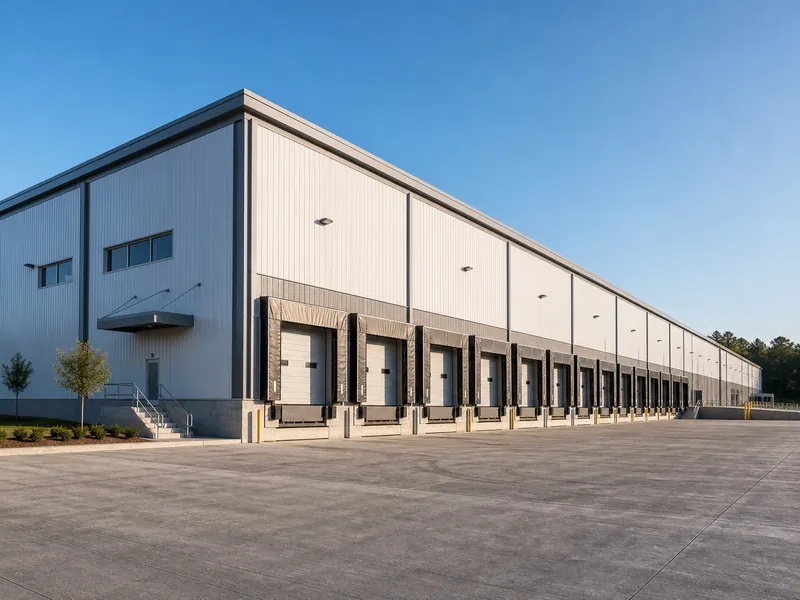
Image credit: Geoffrey Moffett on Unsplash. Free-license photo used because no acceptable source image was available.
Sources
- Bisnow, "Trump: Data Centers 'Mandated' To Supply Own Electricity, Should Pay 'Dividend' To Communities": https://www.bisnow.com/news/national/data-center-community-relations/trump-data-centers-mandated-to-supply-own-electricity-should-pay-dividend-to-communities
- Spectrum News, "Trump suggests data centers pay for their own electricity": https://spectrumlocalnews.com/us/snplus/politics/2026/10/21/trump-suggests-data-centers-pay-for-their-own-electricity

Let's connect
For organizations planning commercial, industrial, or infrastructure work, we will review the project and recommend the appropriate delivery approach.

Join our team
If you hold yourself to careful, accountable work, you already work the way we do.