
news +insights
The Data Center Power Crisis: How AI Infrastructure Is Reshaping U.S. Construction and the Electrical Grid
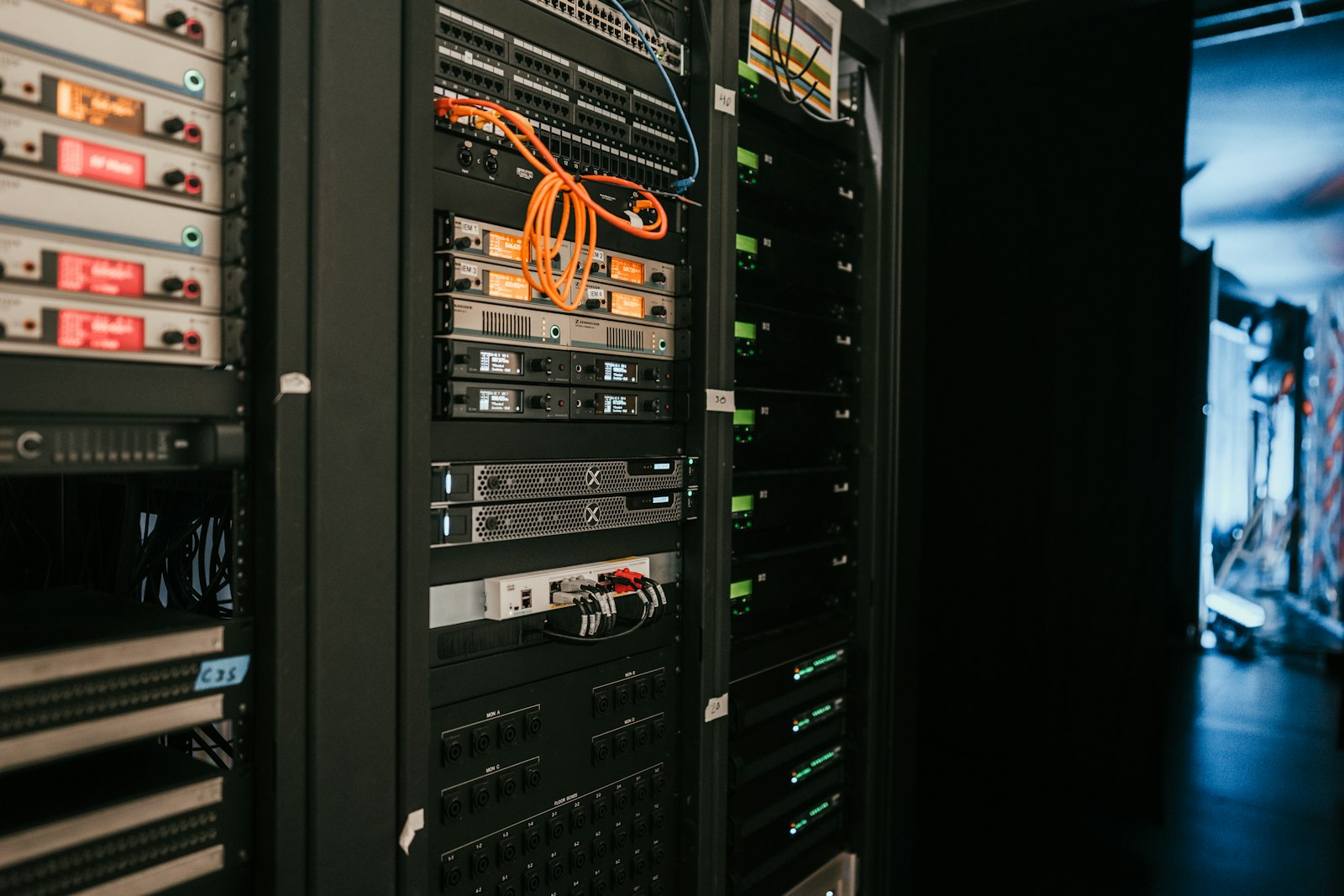
In April 2026, U.S. data center construction recorded $2.4 billion in new starts — a monthly figure that would have been exceptional in any prior year, yet ranked only 20th-highest since January 2020. That context captures the moment the industry is in. According to ConstructConnect's June 2026 Data Center Report, year-to-date data center construction spending through April reached $49.5 billion — compared to just $13.6 billion in the same period a year earlier. The gap is not a rounding error. It reflects a structural transformation of the U.S. construction market driven almost entirely by artificial intelligence infrastructure demand.
Spending Figures That Reframe the Entire Nonresidential Market
The scale of the data center construction surge is most striking when placed in context. U.S. Census Bureau data for April 2026 shows data center construction spending reached a seasonally adjusted annual rate of $50.7 billion — a figure that has now surpassed spending on all transportation infrastructure (airports, rail terminals, marinas) and is approaching warehouse construction as the dominant industrial use of construction dollars. Total U.S. construction spending for April stood at $2,172.4 billion annually, and the data center category alone has moved from a marginal line item to a primary driver of the nonresidential building sector's performance.
ConstructConnect's 12-month moving average for data center construction starts reached $9.8 billion per month through April 2026 — more than 300 percent above year-ago levels. In the six months from October 2025 through March 2026, the industry completed or started 140 new data centers valued at $92.1 billion combined. Ninety-four additional projects valued at $73.1 billion are in the near-term pipeline with anticipated start dates before year-end.
Construction Costs Are Rising as Fast as Starts
The volume surge is accompanied by a sharp escalation in per-project costs. ConstructConnect's report documents that the average cost of a data center over the trailing 12 months reached $475 million — up from $177.9 million a year earlier, a 167 percent increase. The shift reflects a fundamental change in the type of data center being built: hyperscale AI training and inference facilities require dramatically more power density, cooling infrastructure, and structural capacity than the previous generation of cloud computing campuses.
Cost-per-square-foot figures confirm the trend. The median construction cost in 2026 stands at $445 per square foot, up 7.4 percent from full-year 2025. But the average cost per square foot — skewed by the largest hyperscale projects — is $746 per square foot, up 45 percent from a year ago. Industry data compiled by Programs.com shows that mid-point construction costs rose from $183 per square foot in 2020 to $415 in 2025, a compound annual growth rate approaching 18 percent — and 2026 is tracking to continue that acceleration.
The Power Grid Problem: Infrastructure That Cannot Be Built Fast Enough
The defining constraint of the AI data center buildout is not chips, land, or financing — it is electricity. A single AI training facility can require 100 to 500 megawatts of continuous power, comparable to the electricity demand of a small city. The U.S. Department of Energy projects data centers could consume up to 12 percent of total U.S. electricity by 2028, up from 4.4 percent in 2023. Global data center power demand is on pace to reach 84 gigawatts by 2027, a 50 percent jump from 2023 levels.
This power demand is driving the second major construction trend embedded in the data center boom: power infrastructure spending. ConstructConnect data shows power infrastructure construction starts rose 21.2 percent in the first quarter of 2026 compared to the same period in 2025, with the sector projected to finish the year more than 30 percent above 2025 levels. Regulated electric utilities — historically valued as slow-growth defensive stocks — are entering the most significant capital expenditure cycle since the post-war electrification of the U.S. economy, according to VaaSBlock's analysis of utility capital plans.
The power supply bottleneck is reshaping where data centers can be built. Northern Virginia — the global epicenter of data center concentration — has faced sustained power constraint as utility approvals, transmission capacity, and generation expansion have struggled to keep pace. In Virginia, data centers already consume 26 percent of all electricity generated in the state; the Electric Power Research Institute projects that share could climb to nearly 60 percent by 2030. Phoenix, Atlanta, central Ohio, and Iowa face similar grid pressures as hyperscalers expand outside the Northern Virginia corridor.
New Markets and New Projects
The geographic story is shifting. Data Center Knowledge's June 2026 developments summary reports that Texas overtook Northern Virginia as the world's top primary data center market in May 2026. In June, CloudBurst Data Centers broke ground on a 1.2 gigawatt flagship campus in the San Marcos and New Braunfels area of Central Texas — one of the largest single-site data center projects ever announced in North America. Vantage Data Centers is planning a 1.4 gigawatt campus in Shackelford County, Texas, valued at $25 billion with an anticipated 2028 completion.
Other major projects in the active pipeline include Meta's first gigawatt data center in New Albany, Ohio — the Prometheus campus — currently under construction with an on-site 200-megawatt natural gas power generation project expected operational by November 2026. Applied Digital Corporation is planning a $3.6 billion, 300-acre AI campus in Boyce, Louisiana. Nationwide, ConstructConnect's near-term pipeline of 94 projects valued at $73.1 billion is concentrated in the South, with Texas, North Carolina, Virginia, and Arkansas leading; Utah is the primary contributor from the West, while North Dakota, Indiana, and Ohio anchor Midwest investment.
Regulatory and Community Resistance Is Growing
The buildout is not without friction. In the first four months of 2026 alone, more than 70 data center projects were rejected or restricted by local governments — more than in all of 2025 combined. A poll found 71 percent of Americans would oppose a data center near their home. Oklahoma enacted the Data Center Consumer Ratepayer Protection Act, requiring large AI projects to cover their own infrastructure costs rather than passing them to residential ratepayers. Virginia revised permitting guidance to challenge the assumption that hyperscale backup generators are rarely used. North Carolina advanced legislation to prevent utilities and ratepayers from absorbing financial risks if projected data center demand fails to materialize.
For construction professionals, the regulatory landscape adds a new layer of project risk management. Projects that navigate local approval may face grid interconnection timelines that extend two to five years beyond typical commercial construction schedules. Industry estimates indicate it currently takes approximately eight years to build enough electrical infrastructure to power new data centers without adding strain to the existing grid.
The Investment Backdrop
The capital behind the buildout is unprecedented. U.S. businesses invested $44.7 billion in data center construction in the first quarter of 2026 alone — a 28 percent year-over-year increase and the strongest single quarter on record. Full-year spending for 2026 is forecast to approach $700 billion, an 81 percent jump over 2025. Private equity accounted for 72 percent of all U.S. data center deals in 2025, with combined announced investment commitments by Amazon, Microsoft, Google, Meta, and Oracle exceeding $300 billion for 2025 and 2026 combined. Through 2030, developers and technology companies together plan to start construction on projects valued at approximately $2.4 trillion.
For the broader U.S. construction industry, the data center supercycle is both a structural opportunity and a market distorter. Labor, electrical switchgear, transformers, structural steel, cooling equipment, and fiber optic cabling are being absorbed by hyperscale projects at a rate that constrains supply for other sectors. The power infrastructure construction wave it is generating — projected to grow over 30 percent this year — will require every major investor-owned utility to simultaneously execute capital programs of historic scale while managing grid reliability for existing customers. The buildout is redefining what construction-sector growth looks like in the United States.
Related Coverage
- Data Center Construction Boom Reaches $32.9 Billion
- Megaprojects Hold One in Four Nonresidential Construction Dollars as August Sets Record
- July Construction Spending Shows How Much Data Centers and Highways Are Carrying the Market
- Bain: $6.5 Trillion AI Buildout Hinges on Power and Electrical Labor
Sources
- ConstructConnect, June 2026 Data Center Report (May 27, 2026)
- U.S. Census Bureau, Monthly Construction Spending April 2026 (June 1, 2026)
- Data Center Knowledge, New Data Center Developments: June 2026 (June 3, 2026)
- U.S. Department of Energy, Clean Energy Resources to Meet Data Center Electricity Demand (June 4, 2026)
- Programs.com, Measuring the Data Center Boom: Facts and Statistics 2026 (May 2026)
- VaaSBlock, The AI Data Center Buildout Is a Power Grid Problem (June 2, 2026)

Let's connect
For organizations planning commercial, industrial, or infrastructure work, we will review the project and recommend the appropriate delivery approach.

Join our team
If you hold yourself to careful, accountable work, you already work the way we do.