
news +insights
Lockheed Martin Invests $300M to Expand Grand Prairie Munitions Plant
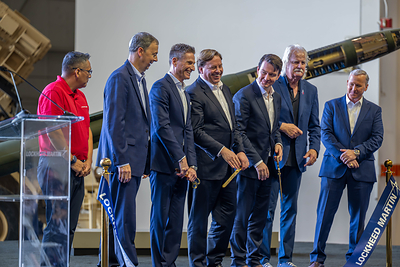
Lockheed Martin is putting $300 million into its Grand Prairie, Texas, munitions plant, adding 100,000 square feet of new space and converting 85,000 square feet of offices into production floor as part of a plan the company says will create 6,000 U.S. jobs, including 2,000 in Texas, according to a Lockheed Martin release issued October 14.
What Happened
Lockheed announced the expansion from Dallas on October 14, framing it as part of a broader push to raise missile output for the Department of War Lockheed Martin. Once the work is done, the Grand Prairie site will cover more than 735,000 square feet Dallas Innovates.
The physical scope has two parts. The first is 100,000 square feet of new space. The second is the conversion of roughly 85,000 square feet of former office space into advanced manufacturing areas for automation, digital manufacturing and high precision machining Lockheed Martin. The company said part of that conversion is already finished: in a few months it turned former offices into production space and installed more than 30 high precision machines that now turn out thousands of components a week. A photo caption in the release describes a ribbon cutting for a "nearly 200,000 square foot" expansion, a figure that rounds the 185,000 square feet of new and converted space described in the text.
Lockheed expects to have nearly 100 new advanced machines across the facility by the end of 2026 ExecutiveBiz.
The Hadrian Automation Cell
The most unusual piece of the project is a highly automated, 24 machine cell that Hadrian, a Torrance, California manufacturer, will bring into the Grand Prairie plant. It is expected to be operating in early 2027, and Lockheed's own production workers will run it ExecutiveBiz. Dallas Innovates reported that the cell combines CNC machines, robotics and Hadrian's AI based manufacturing software, and is intended to produce specialized metal missile components faster than standard methods Dallas Innovates.
The two companies signed a seven year agreement in 2025. Hadrian operates four factories totaling just under 3 million square feet, two in Torrance and newer sites in Arizona and Alabama Lockheed Martin. ExecutiveBiz noted that Hadrian raised $1.37 billion in August and has also opened a Navy funded plant in Cherokee, Alabama, for submarine components ExecutiveBiz. "The warfighter can't wait on peacetime timelines," Hadrian CEO Chris Power said in the release.
What the Plant Builds
Grand Prairie supports all of Lockheed's Missiles and Fire Control programs, including PAC-3 MSE, THAAD, the Precision Strike Missile (PrSM) and JATM. Components made there ship to final assembly plants in Camden, Arkansas, and Troy, Alabama Lockheed Martin. Nearly 800 production employees work at the site, which made 250,000 parts in 2025.
Demand behind the expansion is backed by recent contracts. Dallas Innovates reported that Lockheed won a seven year contract worth up to $35 billion in June to quadruple THAAD interceptor production, and that the Army awarded a contract worth up to $1.2 billion for PrSM Increment 2 in September Dallas Innovates. Lockheed CEO Jim Taiclet said in April that framework agreements with the Department of War, which cover the four Grand Prairie programs, would expand production to three to four times current levels ExecutiveBiz.
Where Things Stand
Grand Prairie is one piece of a larger capital program. Lockheed plans to invest $8 billion to $9 billion through 2030 to scale munitions production and to modernize or expand more than 20 U.S. facilities Lockheed Martin. Michael P. Duffey, Under Secretary of War for Acquisition and Sustainment, said in the release that the project is "more than just a new facility; it is a stronger supply chain and a more resilient industrial base."
None of the sources named a general contractor, architect or engineer for the building work, and Lockheed did not give a completion date for the new 100,000 square feet. The release also did not say when the 6,000 jobs would be filled.
Implications for Owners, Developers, Contractors and Subs
- Office to plant conversions are real work. Turning 85,000 square feet of offices into precision machining space means heavier floor loads, new power distribution, compressed air, process cooling and tighter environmental control. That is a different trade mix than a typical tenant fitout.
- Defense work favors speed. Lockheed converted space and installed more than 30 machines in a matter of months. Contractors chasing this sector should expect compressed schedules, phased occupancy and work inside an operating plant.
- Automation shifts the scope. A 24 machine automated cell brings foundations, utility drops, data networks and robot safety zones that need early coordination with the equipment vendor.
- The pipeline is wide. With more than 20 Lockheed sites slated for modernization or expansion, and similar programs underway at other primes, defense manufacturing remains one of the steadier sources of industrial construction work.
What to Watch
- Whether Lockheed names additional sites among the more than 20 facilities in its $8 billion to $9 billion program.
- Installation and startup of the Hadrian cell ahead of its early 2027 target.
- Award activity on PAC-3, THAAD and PrSM, which drives how fast the added space fills.
Bottom Line
The Grand Prairie project is modest in dollars next to some defense megaprojects, but it shows how quickly primes are adding capacity: new space, converted offices and automated cells, all on tight timelines. It follows other recent defense plant investments covered here, including the B-21 assembly expansion at Plant 42 and the wave of solid rocket motor plant construction.
Related Coverage
- Air Force, Northrop Break Ground on $4.5B B-21 Assembly Expansion
- America's Defense Industrial Base Is Under Construction: Inside the $3+ Billion Solid Rocket Motor Building Wave
- Lockheed Martin Advances $51 Million Owego Expansion Creating 100 New Manufacturing Jobs
- $500B in U.S. Factories Under Construction as $3.4T Pipeline Waits
Image credit: Lockheed Martin, ribbon cutting for the Grand Prairie expansion. Image from the source article.
Sources
- Lockheed Martin, "Lockheed Martin Expands Advanced Munitions Manufacturing in Texas, Driving Thousands of New American Jobs": https://news.lockheedmartin.com/2026-10-14-Lockheed-Martin-Expands-Advanced-Munitions-Manufacturing-in-Texas,-Driving-Thousands-of-New-American-Jobs
- Dallas Innovates, "Lockheed Martin Invests $300M to Expand Missile Production in Grand Prairie, Plans 2,000 New Texas Jobs": https://dallasinnovates.com/lockheed-martin-invests-300m-to-expand-missile-production-in-grand-prairie-plans-2000-new-texas-jobs/
- ExecutiveBiz, "Lockheed Martin, Hadrian Partner on Automated Machining at Grand Prairie": https://www.executivebiz.com/articles/lockheed-martin-grand-prairie-munitions-expansion-hadrian
Let's connect
For organizations planning commercial, industrial, or infrastructure work, we will review the project and recommend the appropriate delivery approach.

Join our team
If you hold yourself to careful, accountable work, you already work the way we do.