

news +insights
America's Defense Industrial Base Is Under Construction: Inside the $3+ Billion Solid Rocket Motor Building Wave

Updated October 12, 2026: This article has been updated twice since it was first published on May 26, 2026. The October 12 update, in the first section below, covers construction progress at L3Harris in Camden, Arkansas and at Castelion's Project Ranger in New Mexico, the postponed L3Harris Missile Solutions IPO, and new solid rocket motor facilities from L3Harris, Northrop Grumman, General Dynamics and Firehawk Aerospace. The October 10 update covers the September 29 groundbreaking of the Avio USA plant in Hurt, Virginia. The original article follows both updates.
October 2026 Update: Where the Rest of the Building Wave Stands
Since this article was published in May, most of the projects it covers have moved from announcements to active jobsites. Some schedules have shifted, and several new solid rocket motor facilities have been announced or opened.
L3Harris Camden, Arkansas: Over $1 Billion, Shells Going Up
L3Harris now says more than $1 billion is designated for the Camden campus, well above the "nearly half a billion dollar" figure cited at the November 2025 groundbreaking and in our original article L3Harris. As of October 1, civil earthwork for more than 20 building pads was about 90 percent complete, and crews were running utilities to each building area and starting layout, slab foundations and metal building shells L3Harris.
- Next few months: slabs and full metal building assembly on multiple buildings, plus installation of eight new propellant cure ovens L3Harris.
- Equipment: long-lead process equipment is in final design review, with key deliveries starting later in 2026 L3Harris.
- Turnover: the first completed buildings are planned for release to production teams in mid-2027. When the campus is finished, L3Harris expects its large solid rocket motor capacity to increase sixfold L3Harris.
- PAC-3 buildings: in June, L3Harris announced two more self-funded buildings at Camden for PAC-3 propulsion. One is a cast, cure and final assembly building of about 75,000 square feet, and the other is a case preparation building of about 70,000 square feet L3Harris via Business Wire.
Across its Alabama, Arkansas and Virginia sites, L3Harris says it is building about 60 new facilities and adding more than one million square feet of manufacturing space L3Harris. That includes a $25 million, 130,000-square-foot addition in Huntsville, Alabama, announced June 1 L3Harris. On September 29, Lockheed Martin awarded L3Harris a THAAD propulsion contract valued at more than $6 billion over seven years, and L3Harris said it will build a new facility for THAAD solid rocket boost motors without naming a location L3Harris.
L3Harris Virginia and the Missile Solutions IPO
We found no new public construction milestones for the $1.27 billion Virginia Advanced Propulsion Facilities in Orange County since the April announcement. One financing assumption in our original article has changed. L3Harris has paused the planned second-half-2026 IPO of its Missile Solutions business and is now targeting mid-2027. The $1 billion Department of War investment remains in place as convertible preferred securities Washington Technology.
Castelion Project Ranger: Most Buildings Up, Funding for More
Our original article reported a plan to finish all 21 buildings by the end of 2026. On July 1, Castelion said 15 of the 21 first-phase buildings were complete and on schedule, with more than 250 workers on site and construction continuing in phases into 2027 Rio Rancho Observer. In August the company raised about $1 billion in equity and credit. It said about $250 million has been committed or spent on the first two phases and that the new money will fund phases three and four, which add buildings and production capacity. Castelion expects the campus to be operational by the end of 2026, with Blackbeard production starting in 2027 Albuquerque Journal.
New Facilities Since May
- Northrop Grumman, Elkton, Maryland: opened a 57,000-square-foot Propulsion Innovation Center on September 8. The center is part of a $100 million site investment and raises solid rocket motor design and manufacturing capacity at Elkton by 25 percent Northrop Grumman.
- General Dynamics Ordnance and Tactical Systems, Camden, Arkansas: reported on September 28 that its solid rocket motor manufacturing campus is nearing completion and has already produced and static-fired motors General Dynamics OTS.
- Firehawk Aerospace, Lawton, Oklahoma: more than $50 million committed to a rocket propellant facility that is under construction. The first buildings are to be commissioned this fall, with low-rate production planned for summer 2027 KSWO.
Two things for builders stand out. Camden, Arkansas is becoming a second solid rocket motor cluster to rival Virginia, with L3Harris and General Dynamics both building there. And the cost of the work keeps rising: the Camden figure has roughly doubled since groundbreaking, and the Project Ranger build has expanded into additional phases. Process equipment, cure ovens and energetics-rated buildings remain the long-lead items to watch.
Update: Avio USA Plant Breaks Ground in Hurt, Virginia
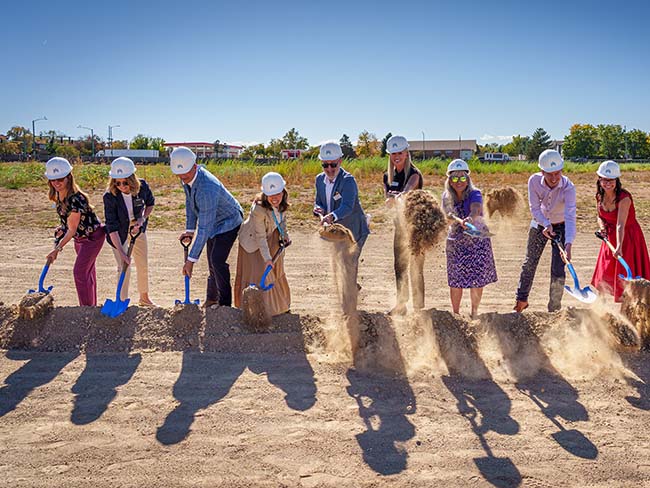
The plant is being built at the Southern Virginia Multimodal Park in Hurt, in Pittsylvania County. HITT describes a facility of approximately 900,000 square feet that will produce thousands of solid rocket motors a year for U.S. tactical missile programs, and says it is being developed to support programs for Lockheed Martin and Raytheon HITT Contracting. Trade coverage reports that the project includes more than 35 separate structures for protective construction, environmental controls and administrative space Construction Dive.
- General contractor: HITT Contracting HITT Contracting.
- Groundbreaking: September 29, 2026 HITT Contracting.
- Schedule: construction complete in late 2028, with production starting in early 2029 HITT Contracting.
- Investment: described as $500 million in the announcement from the office of Rep. John McGuire Office of Rep. John McGuire. The original article below reported the project at $537.6 million.
- Size: sources differ. HITT gives approximately 900,000 square feet HITT Contracting, while the congressional release gives 860,000 square feet Office of Rep. John McGuire.
- Jobs: more than 1,000, according to the congressional release Office of Rep. John McGuire. The HITT release also cites roughly 1,500 technical jobs in Southern Virginia HITT Contracting.
Avio USA chief executive James Syring said the company intends to operate as an independent merchant supplier serving multiple defense prime contractors HITT Contracting. For builders, the groundbreaking moves the Avio project from an announced investment to an active jobsite, and the late 2028 completion target defines the period in which specialty trades in Southern Virginia will be in demand.
For years, defense analysts warned that the United States lacked the manufacturing capacity to sustain a high-intensity conflict. Artillery shells, precision missiles, and solid rocket motors — the propulsion systems at the heart of nearly every modern weapon system — were being produced at peacetime rates while global demand surged. Now, billions of dollars in construction have begun to address that gap, and the projects underway in 2026 represent one of the most concentrated periods of defense manufacturing facility construction since World War II.
L3Harris: $1.27 Billion in Virginia
In April 2026, L3Harris Technologies announced plans to spend $1.27 billion expanding its solid rocket motor manufacturing campus in Orange County, Virginia. The investment, confirmed by Virginia Governor Abigail Spanberger and announced April 15, will establish the company's Virginia Advanced Propulsion Facilities — a multi-building complex that will more than double manufacturing space at a site that already hosts 256,000 square feet of production space.
"The reason we wanted the $1 billion as an anchor investor is to give us confidence that we can invest today," L3Harris Chairman and CEO Christopher Kubasik said at the company's investor day in February 2026. The Department of Defense has pledged $1 billion in support of L3Harris' new Missile Solutions business — the entity that will operate the Virginia campus — with that commitment convertible to stock when the business pursues an initial public offering in the second half of 2026.
The new campus will include dozens of new facilities totaling hundreds of thousands of square feet — the company did not disclose a specific total — and will create more than 350 jobs over five years. The facilities will provide mixing, grinding, casting, and final assembly for solid rocket motor production under multiple DoD programs, including propulsion for Javelin anti-tank missiles and Stinger air defense systems. L3Harris described its construction partners as working "with a sense of urgency to get these facilities vertical and new production lines humming," according to Virginia Business.
The Orange County announcement builds on a May 2025 groundbreaking at the same site, where L3Harris broke ground on five new robotically-enabled SRM facilities under a Defense Production Act Title III cooperative agreement. Those five facilities — focused on the Javelin program — are expected to be completed in late 2026 with production starting in early 2027. The new $1.27 billion Virginia Advanced Propulsion Facilities project is a separate, larger undertaking scheduled to follow.
Virginia's SRM Cluster: Three Companies, $2+ Billion
L3Harris is not building alone in Virginia. Italy-based Avio announced in December 2025 that it had selected Hurt, Pittsylvania County, Virginia for a $537.6 million solid rocket motor manufacturing facility. The facility will produce SRMs for defense, tactical propulsion, missile systems, and commercial space applications. Virginia approved an incentive package providing up to $97.7 million in special appropriations based on an investment of more than $500 million and the creation of more than 1,000 jobs, according to Avio's February 23, 2026 announcement. Virginia Governor Spanberger also signed legislation establishing the Solid Rocket Motor Manufacturing Grant Fund providing Avio grant installments of up to $6 million per fiscal year from 2027 to 2046.
A third defense manufacturer, specialty chemical maker Solstice Advanced Materials, announced plans in January 2026 to spend over $220 million expanding production of ballistic fiber — a material used in body armor, vehicle protection systems, and missile components — at its facility in Colonial Heights, Virginia.
Combined, these three projects represent more than $2 billion in defense-related advanced manufacturing construction in a single state, in a single year. Virginia has deliberately pursued this cluster, using targeted incentives, state manufacturing grant funds, and the state's existing defense industrial heritage to attract investment from multiple companies simultaneously.
Castelion's Project Ranger: 1,000 Acres in New Mexico
Virginia is not alone. In January 2026, Castelion — a California-based defense technology company focused on hypersonic systems — formally broke ground on Project Ranger, a 1,000-acre manufacturing campus in Sandoval County, New Mexico, outside Rio Rancho. The project represents more than $220 million in private investment and is designed to support high-cadence serial production of hypersonic strike systems for the U.S. Army.
"The main goal of the project is to eliminate a key bottleneck in U.S. hypersonic weapons programs, namely the lack of industrial capacity for large-scale production," Castelion CEO Brian Hargis said in the company's January 21, 2026 press release. The campus will include facilities for solid rocket motor manufacturing, static testing, and final assembly of hypersonic weapons. Castelion estimated the project will generate $650 million in economic impact for New Mexico over the next decade and create 300+ high-paying manufacturing jobs.
Construction is phased. The first building was scheduled for completion by summer 2026, with all 21 planned buildings completed by the end of 2026 — an aggressive schedule driven by Army deployment timelines for operational hypersonic weapons systems later this decade.
Federal Investment Backing the Construction Wave
The facilities being built are not speculative. The Defense Production Act Title III program — which provides cooperative agreements to expand domestic production capacity — has committed $191 million in nine investments to the solid rocket motor industrial base since December 2024, according to a May 15, 2026 Department of War release. In fiscal year 2026 alone, the DPA Purchases Office has made investments totaling $482.6 million across multiple defense manufacturing programs. These commitments give manufacturers the demand certainty needed to justify billions in facility construction — and give lenders and investors confidence that production revenues will follow when the buildings are complete.
The broader defense industrial base is also expanding SRM capacity at L3Harris's Camden, Arkansas campus, where the company broke ground in November 2025 on a "nearly half a billion dollar" expansion involving over 20 new buildings. L3Harris is simultaneously constructing or upgrading more than 60 facilities nationwide related to solid rocket motor and propulsion production.
What This Means for Construction
Defense manufacturing construction is specialized work. These facilities require controlled environments, structural systems capable of withstanding energetic material testing, blast separation between production cells, specialized ventilation and fire suppression, and security infrastructure that civilian industrial facilities do not require. General contractors with DoD facility experience, security clearances, and familiarity with defense construction standards are in high demand as this wave accelerates. For the broader industry, the defense industrial base buildout is providing a meaningful demand floor for nonresidential construction as the semiconductor megaproject wave cools.
Sources
Virginia Business — L3Harris plans $1.27B expansion in Orange, creating 350 jobs (April 15, 2026)
Avio — Virginia Approves Incentive Package for New Avio USA SRM Factory (February 23, 2026)
HITT Contracting: HITT Breaks Ground on Avio USA Plant (September 29, 2026)
L3Harris: Arkansas Advanced Propulsion Facilities Build-Out Accelerates (October 1, 2026)
L3Harris: L3Harris Continues Expansion of Solid Rocket Motor Facilities in Huntsville (June 1, 2026)
L3Harris: L3Harris Receives THAAD Propulsion Contract Valued at $6 Billion (September 29, 2026)
Washington Technology: L3Harris presses pause on Missile Solutions IPO plan (July 30, 2026)
Rio Rancho Observer: Project Ranger site continues to move forward at full speed (July 1, 2026)
KSWO: Firehawk Aerospace CEO outlines plans for Lawton rocket propellant facility (August 11, 2026)
Let's connect
For organizations planning commercial, industrial, or infrastructure work, we will review the project and recommend the appropriate delivery approach.

Join our team
If you hold yourself to careful, accountable work, you already work the way we do.