

news +insights
Wholesale Prices Jump 1.3% in September, Up 6.3% From a Year Ago

U.S. wholesale prices rose 1.3% in September, the largest monthly gain since March 2022, and were up 6.3% from a year earlier, according to Producer Price Index (PPI) data the Labor Department released this morning. Energy drove most of the jump, with diesel a major factor, which puts fresh pressure on construction bids, equipment operating costs and materials pricing heading into the fourth quarter.
What Happened
The Bureau of Labor Statistics published the September PPI at 8:30 a.m. Eastern on October 15, as scheduled (U.S. Bureau of Labor Statistics). The index for final demand rose 1.3% from August, well above the 0.6% increase economists had forecast and up from a 0.5% gain the prior month (Investing.com). It was the largest monthly increase since March 2022 (Transport Topics).
On an annual basis, producer prices rose 6.3% in the 12 months through September, up from 5.6% in August and the biggest yearly increase since December 2022 (Transport Topics). Forecasters had expected an annual reading of 5.3% (Investing.com).
The report followed the September Consumer Price Index released on October 14, which also showed inflation accelerating as gasoline prices climbed (Transport Topics). Consumer prices rose 3.7% from a year earlier, the highest reading in four months (Seoul Economic Daily).
What Is Confirmed
- Goods: Prices for final demand goods rose 2.6%, the largest increase since the series was first calculated in December 2009 (Investing.com).
- Energy: Final demand energy prices climbed 10.8%, and gasoline rose 20.3% (Investing.com). Higher energy costs followed a Middle East conflict that tightened oil supply and pushed crude prices up (Seoul Economic Daily).
- Diesel: Nearly half of the September increase in intermediate demand goods was tied to higher diesel prices (Seoul Economic Daily).
- Services: Final demand services rose 0.8%, the largest gain since April. Trade services margins rose 1.4%, and transportation and warehousing services jumped 3.4% (Investing.com).
- Core prices: Excluding food and energy, producer prices rose 0.7% for the month, up from 0.2% in August, and 5% from a year earlier, up from 4.6% (Transport Topics). A narrower measure that also strips out trade services rose 0.5% (Seoul Economic Daily).
- Retail sales: Released the same morning, retail sales rose 0.8% in September, ahead of forecasts. Excluding autos and gasoline, sales rose just 0.2% (Investing.com), which suggests fuel costs are absorbing more of household spending (Seoul Economic Daily).
Analysts at Vital Knowledge said in a note that "energy being this high for this long is inevitably bleeding into the underlying economy" (Investing.com).
What Is Not Yet Known
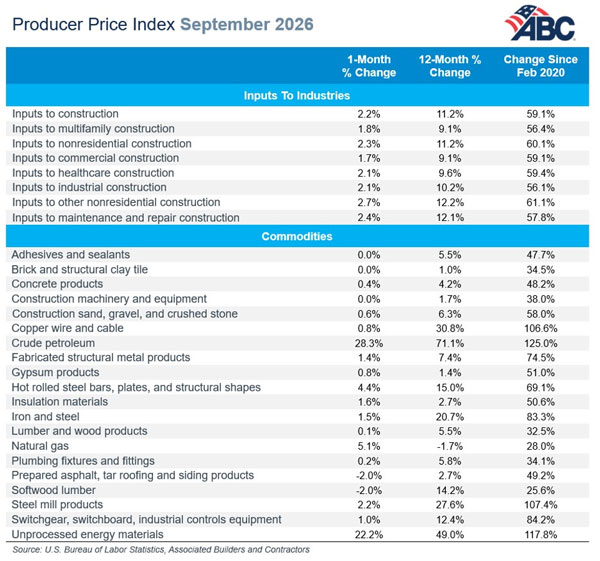
The coverage reviewed for this report did not yet include the detailed construction indexes inside the September release, such as inputs to nonresidential construction, steel mill products, aluminum, copper wire or ready-mix concrete. Industry groups usually publish their own breakdown of those series after the release. For context, the final demand construction index was unchanged in August, when overall final demand prices rose 0.4% (U.S. Bureau of Labor Statistics). Whether construction pricing caught up with the broader September jump is still to be confirmed. This is a developing story.
What It Means for Owners and Contractors
Energy feeds construction costs through several channels at once: diesel for equipment and generators, freight for materials deliveries, and the energy used to produce steel, cement, asphalt and other inputs. A 3.4% one-month rise in transportation and warehousing services and a diesel-driven surge in intermediate goods point to higher delivered costs, even before any change in base material prices shows up.
- Open bids and pricing: Contractors pricing work now should check fuel, freight and asphalt assumptions against current quotes rather than last quarter's numbers, and shorten how long bid prices are held where possible.
- Escalation language: Owners and contractors negotiating contracts for projects that start in 2027 should review fuel and materials escalation clauses. Clear indexes and trigger points reduce disputes later.
- Financing costs: Markets now put the odds of another Federal Reserve rate increase at the October 27 and 28 meeting at roughly one in three (Investing.com), up from under 18% a week earlier according to CME FedWatch (Seoul Economic Daily). Higher rates raise carrying costs for construction loans and can affect project feasibility for owners and developers still finalizing budgets.
- Budget contingency: Inflation has been above the Fed's 2% target for about five and a half years (Transport Topics). Owners planning capital projects should carry contingency that reflects current cost trends, not historical averages.
The September data adds to cost pressure already reported across the country. The Federal Reserve's October Beige Book described rising steel, equipment, fuel and insurance costs for builders, covered here in Fed Beige Book: Construction Mixed as Costs and Trade Shortages Persist.
What to Watch
- Trade association breakdowns of construction input prices from the September PPI, expected in the coming days.
- The Federal Reserve's October 27 and 28 policy decision and any change in borrowing costs.
- Diesel and crude oil prices, which drove much of the September increase.
- Whether energy costs continue to spread into materials, freight and subcontractor pricing in the October data.
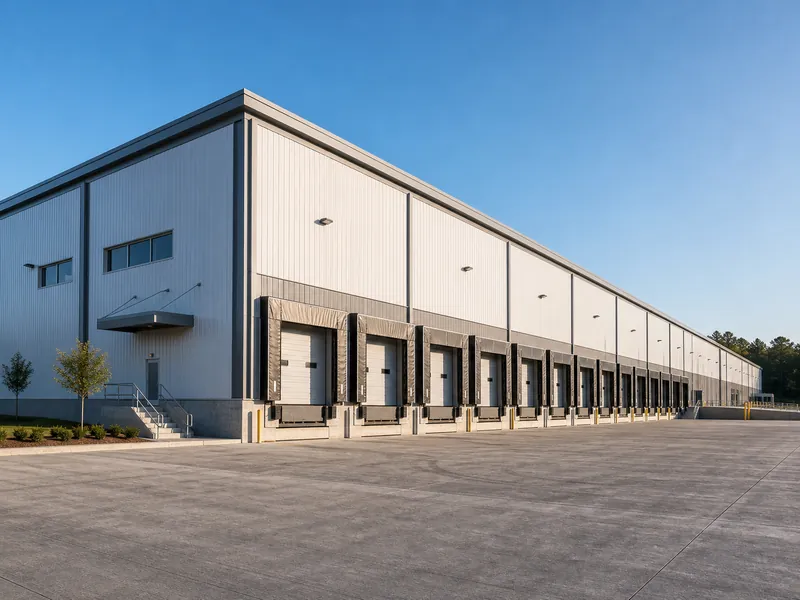
Image credit: Gerold Hinzen on Unsplash. Free to use under the Unsplash License.
Sources
- U.S. Bureau of Labor Statistics, "Producer Price Index Home": https://www.bls.gov/ppi/
- Transport Topics (Associated Press), "Wholesale inflation rises 6.3% as gas prices soared": https://www.ttnews.com/articles/ppi-inflation-september-2026
- Investing.com, "U.S. producer prices rise by 1.3% month-on-month in September": https://in.investing.com/news/economic-indicators/us-producer-prices-rise-by-13-monthonmonth-in-september-5635547
- Seoul Economic Daily, "U.S. Producer Prices Jump 1.3% in September, Most in Four Years": https://en.sedaily.com/international/2026/10/15/us-producer-prices-jump-13-percent-in-september-most-in


Let's connect
For organizations planning commercial, industrial, or infrastructure work, we will review the project and recommend the appropriate delivery approach.

Join our team
If you hold yourself to careful, accountable work, you already work the way we do.