

news +insights
Fed Beige Book: Construction Mixed as Costs and Trade Shortages Persist

The Federal Reserve's October 2026 Beige Book, released October 14, describes a national economy growing unevenly, with manufacturing doing most of the lifting, construction and real estate mixed across regions, persistent shortages of skilled trade workers, and input costs pushed higher by oil, diesel, tariffs and insurance Federal Reserve. For contractors, the regional reports for New York and the Southeast add specific signals on construction wages, steel and mechanical equipment pricing, and the continuing pull of data center work Federal Reserve Bank of New York.
What the Beige Book Is
The Beige Book is a summary of anecdotal reports gathered by the 12 regional Federal Reserve Banks from businesses, bankers and other contacts. It is published eight times a year ahead of Federal Open Market Committee meetings. This edition reflects information collected on or before October 5, 2026 Federal Reserve. It is not a statistical release, but it is one of the clearest views of what business owners are seeing on the ground, and it is read closely for direction on costs, labor and demand.
The National Picture
Growth was mixed across the country. Two Districts reported moderate growth, three reported modest growth, four reported slight growth and three reported little or no change Federal Reserve.
- Manufacturing led. The Dallas District reported robust, broad-based manufacturing growth, and six other Districts reported modest to moderate growth from manufacturers Federal Reserve.
- Consumers were cautious. Consumer spending was largely flat, auto sales were flat to slightly lower, and higher-income households drove most spending Federal Reserve.
- Employment was little changed. Labor supply mostly met demand, but shortages persisted for specialized, technical and skilled trade workers. Five Districts reported some firms trimming staff through attrition or slower hiring as they gained productivity from AI Federal Reserve.
- Prices rose moderately. Three Districts called price growth robust and one called it modest. Higher oil prices showed up in every District report, and fuel surcharges passed higher diesel costs through supply chains. Contacts in multiple Districts also cited continued price pressure from other commodities, tariffs and insurance Federal Reserve.
- More increases expected. Firms said they expect further price increases as contracts expire and are renegotiated Federal Reserve.
Construction and Real Estate by Region
Construction did not move in one direction nationally. The District summaries show a split:
- Chicago: Construction, real estate and business spending declined slightly, and financial conditions tightened modestly Federal Reserve.
- Minneapolis: Construction rose modestly while commercial real estate was flat Federal Reserve.
- Atlanta: Residential real estate grew moderately, and commercial real estate and lending rose at a modest pace Federal Reserve.
- San Francisco: Commercial real estate was stable, while residential real estate weakened slightly Federal Reserve.
- Boston: Home sales showed new weakness Federal Reserve.
- Kansas City: Rising diesel prices and shipping costs were the main concern, squeezing profit margins Federal Reserve.
New York District: Construction Steady, Wages Running Hotter
The New York Fed reported that construction activity held steady after several months of strong growth, and that wages in construction rose more strongly than in other sectors Federal Reserve Bank of New York. Employment across the District was steady to slightly higher, with construction among the sectors adding jobs. Skilled trades were the scarcest workers reported Federal Reserve Bank of New York.
Cost pressure was a consistent theme. Selling price increases rose to the high end of a moderate range, and input costs kept climbing quickly. Tariffs were widely cited as a cost driver for manufacturers, wholesalers and retailers, and energy and fuel costs squeezed margins. Health insurance renewals brought steep premium increases along with higher deductibles and copays. Firms did not expect price pressure to ease soon Federal Reserve Bank of New York.
Manufacturing in the District grew moderately. Manufacturers reported longer delivery times and worse supply availability, and said tariffs were raising input costs and disrupting cross-border trade, especially with Canada. Notably for builders of industrial space, tariff uncertainty led some customers to delay capital projects Federal Reserve Bank of New York.
On real estate, commercial activity remained strong overall, though property sales slowed as higher interest rates cut demand. Industrial demand stayed strong, driven largely by data centers. Housing activity was little changed, with tight inventory and rising mortgage rates keeping many owners in place, while rental markets strengthened Federal Reserve Bank of New York.
Atlanta District: Steel and Mechanical Price Increases, Data Center Lending
The Atlanta Fed, whose District includes Florida, reported that steel and mechanical equipment prices for construction were raised more often during the period. Diesel price increases lifted transportation costs, and freight demand tied to data center projects strained shipping capacity Federal Reserve Bank of Atlanta.
Industrial vacancies rose slightly as new buildings opened, while data center construction kept driving growth. Construction and land development loans grew, again led by data center buildouts. Multifamily demand edged up and vacancies fell, but landlords still offered widespread rent concessions. Office supply and demand were steady, and retail vacancy did not change Federal Reserve Bank of Atlanta.
On housing, home sales improved moderately across the District, but Florida stood out: homes there sold below asking price more often than elsewhere in the Southeast, and sellers offered discounts and incentives. Buyer confidence was weak for entry-level and move-up homes, and some builders expect mortgage rate buydowns to remain a lasting sales tool Federal Reserve Bank of Atlanta.
Employers in the Southeast continued to struggle to fill specialized, technical and skilled trade roles. Typical annual raises ran around 2 to 3 percent, with extra pay pressure for skilled workers. Benefit and insurance costs rose sharply, and business premiums for auto, liability and health coverage kept climbing Federal Reserve Bank of Atlanta. Manufacturing was flat overall, but growth in data center construction, industrial component fabrication and advanced manufacturing offset slight declines elsewhere Federal Reserve Bank of Atlanta.
Implications for Owners, Developers, Contractors and Subs
- Escalation risk is not fading. Oil and diesel costs, tariffs and insurance were cited across Districts, and firms expect more increases as contracts renew. Contractors should revisit escalation clauses, material price validity windows and fuel surcharge exposure on bids that run into 2027.
- Steel and mechanical equipment deserve attention. The Atlanta report specifically flags more frequent price increases for construction steel and mechanical equipment. Early procurement and allowances for these packages can protect margins on Florida and Southeast work.
- Labor costs are rising fastest in the trades. The New York District reported construction wages outpacing other sectors, and every region continues to report shortages of skilled trade workers. Labor availability, not only labor rates, should be a factor in schedule commitments.
- Insurance and benefits are a growing overhead line. Steep health premium renewals and higher auto and liability premiums show up in both regional reports. These costs belong in overhead and markup reviews.
- Industrial demand is concentrated. Data centers are carrying industrial real estate demand in both the New York and Atlanta Districts, while some manufacturing customers in the Northeast are delaying capital projects because of tariff uncertainty. Owners and builders should expect strength in power-intensive work alongside caution in traditional plant spending.
- Florida housing is softer. Price discounts, incentives and weak entry-level demand point to a more cautious residential market in Florida than elsewhere in the Southeast.
What to Watch
The Beige Book feeds into the Federal Open Market Committee's next rate discussion. Watch the next round of producer price data for confirmation of the steel, equipment and fuel pressures described here, and the next Beige Book for whether New York's construction activity resumes growth after holding steady.
Bottom Line
The October Beige Book shows a construction market that is holding up but splitting by region and sector. Data center work and manufacturing are carrying demand, while costs for fuel, steel, equipment, insurance and skilled labor keep rising. For contractors in New York and Florida, the message is to price carefully, protect against escalation and plan around tight trade labor.
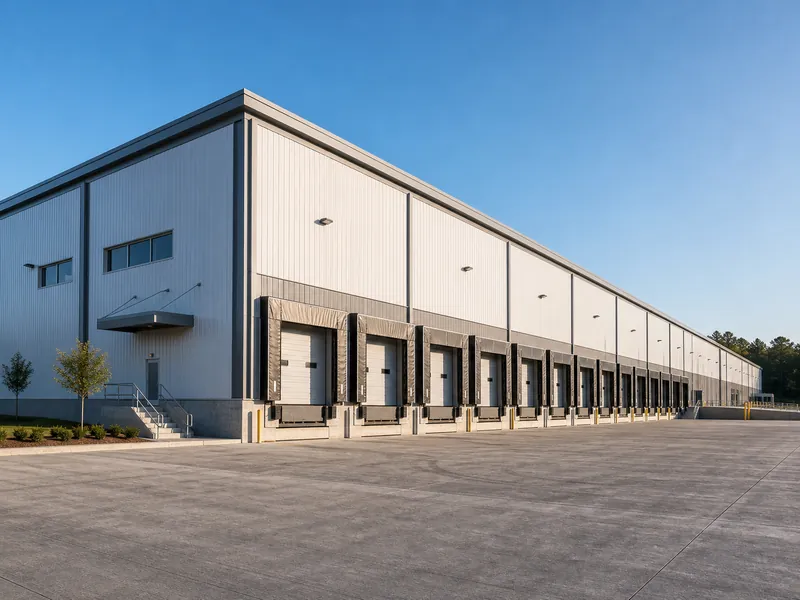
Image credit: Alex Bierwagen on Unsplash. Free-license photo used because the Federal Reserve report pages do not include an image.
Sources
- Federal Reserve, "Beige Book, October 2026: National Summary": https://www.federalreserve.gov/monetarypolicy/beigebook202610-summary.htm
- Federal Reserve, "Beige Book, October 2026: Federal Reserve Bank of New York": https://www.federalreserve.gov/monetarypolicy/beigebook202610-new-york.htm
- Federal Reserve, "Beige Book, October 2026: Federal Reserve Bank of Atlanta": https://www.federalreserve.gov/monetarypolicy/beigebook202610-atlanta.htm



Let's connect
For organizations planning commercial, industrial, or infrastructure work, we will review the project and recommend the appropriate delivery approach.

Join our team
If you hold yourself to careful, accountable work, you already work the way we do.