

news +insights
Dodge Momentum Index Rises 2.4% in September as Institutional Planning Leads
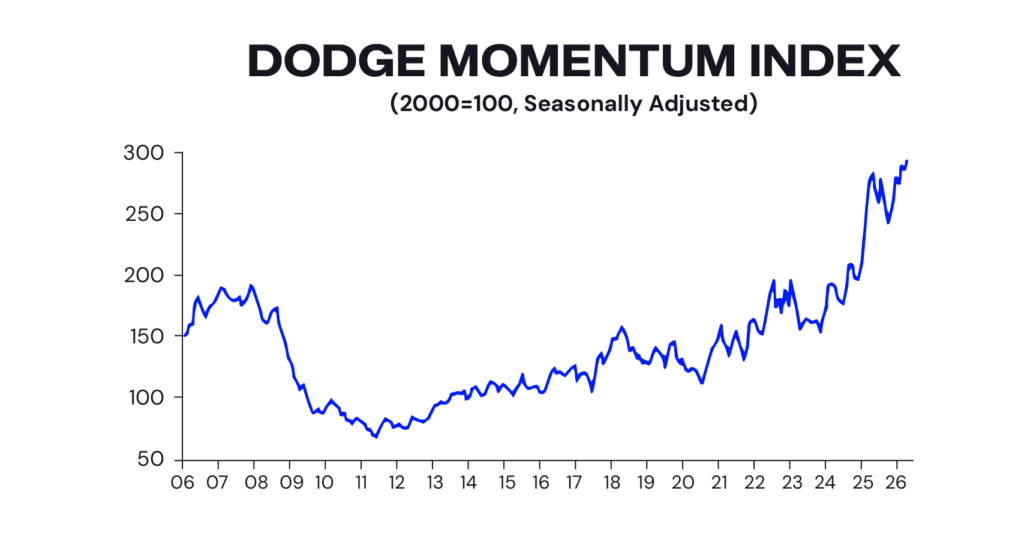
The Dodge Momentum Index rose 2.4% in September to 288.0, as a 9.4% jump in institutional planning more than offset a 1.3% decline on the commercial side. The reading, released October 7, also came with a downward revision to August, which now stands at 281.3 Dodge Construction Network. The index tracks nonresidential building projects entering planning, and in September the growth came from schools, hospitals and public buildings while data center planning slowed Construction Dive.
What Happened
Dodge reported that the overall index finished September 3.7% above its level a year earlier. The two halves of the index moved in opposite directions. Institutional planning was up 17.2% from September 2025, while commercial planning was down 3.0% over the same period Dodge Construction Network.
The commercial figure hides a wider gap. Dodge said that if data center projects are removed, commercial planning would be down 14.9% from a year ago, a comparison the firm tied to a surge of activity in late 2025 Dodge Construction Network. Trade coverage of the release made the same point: data centers still account for most commercial planning activity even after recent softer months Construction Dive.
The Sector Split
Within the commercial category, planning strengthened during the month for retail, hotels, office buildings and parking garages. Those gains were more than offset by slower data center and warehouse planning Dodge Construction Network.
On the institutional side, growth was led by education, healthcare and public buildings Dodge Construction Network. Sarah Martin, director of economic research at Dodge, said institutional planning led the month, and that construction spending in the sectors outside data centers should be marginally stronger in late 2027 as planning grows Construction Dive.
Largest Projects Entering Planning
Dodge counted 45 projects valued at $100 million or more entering planning in September Dodge Construction Network. The largest listed in each category were:
- Commercial: the $480 million Project North data center in Jermyn, Pennsylvania, and two $473 million data centers, EDCAUS15 and EDCAUS16, in Bastrop, Texas Dodge Construction Network.
- Institutional: the $346 million Duke Raleigh Hospital addition in Raleigh, North Carolina; the $325 million Spartanburg Regional Heart & Vascular Hospital in Spartanburg, South Carolina; and the $319 million WakeMed Hospital in Wendell, North Carolina Construction Dive.
All three of the largest institutional projects are hospitals in the Carolinas, and all three of the largest commercial projects are data centers. That is a narrow slice of the 45 large projects, but it shows where the biggest single commitments were made during the month.
Where Things Stand
The index is built on the three-month moving value of nonresidential building projects entering planning, and Dodge says it leads nonresidential construction spending by 12 to 18 months Dodge Construction Network. Read that way, September planning points to work that would show up in spending figures from roughly late 2027 into early 2028, which is consistent with the timing Martin described Construction Dive.
One month does not make a trend, and the August revision is a reminder that these readings move after first publication. Still, the direction is worth noting. Data centers still make up most commercial planning activity. In September, though, the growth came from building types that are funded by bond issues, health system capital budgets and public appropriations.
Implications for Owners, Developers, Contractors and Subs
- Owners and developers: institutional owners entering planning now are doing so alongside a larger group of peers. Projects that reach the market together compete for the same design teams, construction managers and specialty trades, so early engagement on schedule and procurement carries more weight.
- General contractors: firms with healthcare, K-12, higher education and public building experience have a planning pipeline that is growing faster than the commercial pipeline outside data centers. Qualifications and preconstruction capacity in those sectors are worth reviewing now, well ahead of bid dates.
- Subcontractors: mechanical, electrical and plumbing trades that have been stretched by data center work may see more balanced demand if institutional projects advance while data center and warehouse planning cools. The same trades are central to hospital work, so capacity will stay tight in markets with both.
- Commercial builders: the 14.9% year-over-year decline in commercial planning outside data centers is the number to watch. Modest monthly gains in retail, hotel, office and parking have not yet closed that gap.
What to Watch
- Whether institutional planning holds its gain in the October reading or gives part of it back.
- Whether data center and warehouse planning stabilizes after the September decline.
- Further revisions to the August and September figures in the next release.
Bottom Line
September planning data shows a market that is broadening at the margins. Institutional work led the month, commercial planning outside data centers remains well below last year, and the largest projects are still concentrated in hospitals and data centers. For builders, the practical read is to look closely at sector and geography instead of the headline number.
Related Coverage
- Planning Index Up 6.9% and Starts Up 25.6%: Reading Past the Megaprojects
- Dodge Momentum Index Surges 6% in April 2026 as Nonresidential Planning Finds Its Footing
- Dodge Momentum Index Signals Market Slowdown
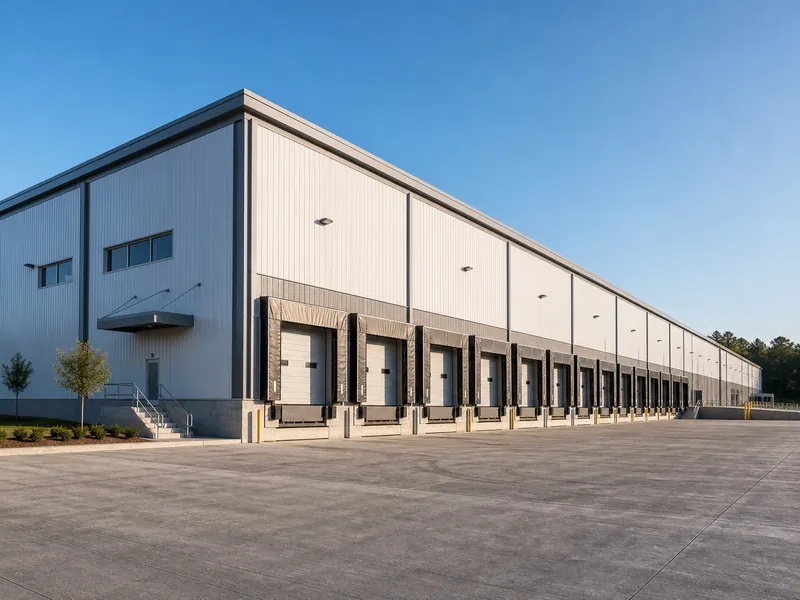
Image credit: Dodge Construction Network. Image from the source article. Dodge Construction Network.
Sources
- Dodge Construction Network, Dodge Momentum Index Grows 2% in September: https://www.construction.com/dodge-momentum-index-grows-2-in-september/
- Construction Dive, Education, healthcare projects boosted construction planning in September: https://www.constructiondive.com/news/education-healthcare-projects-boosted-construction-planning-september/832535/

Let's connect
For organizations planning commercial, industrial, or infrastructure work, we will review the project and recommend the appropriate delivery approach.

Join our team
If you hold yourself to careful, accountable work, you already work the way we do.