
news +insights
Dodge Momentum Index Surges 6% in April 2026 as Nonresidential Planning Finds Its Footing
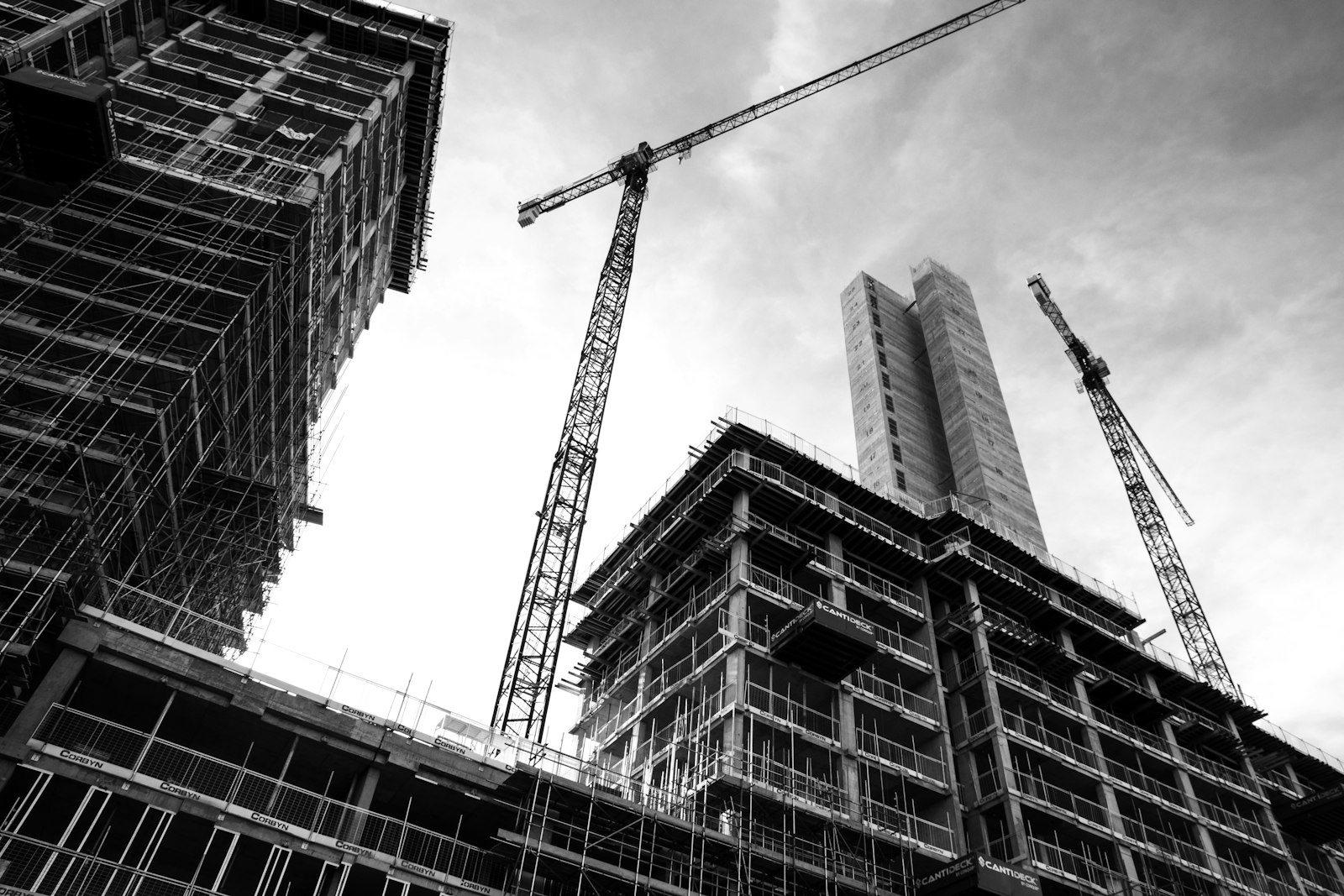
A closely watched leading indicator for U.S. nonresidential construction moved sharply higher in April, offering the first meaningful sign of stabilization after a three-month slide. The Dodge Momentum Index (DMI) increased 6.2% in April 2026 to a reading of 264.2 (2000=100), up from a downwardly revised March reading of 248.8, according to Dodge Construction Network. The gain was driven by an 8.1% rise in commercial planning and a 1.5% improvement in institutional planning momentum.
What Happened
The April DMI report, published May 7, 2026, marked the index's first substantive monthly gain since the first quarter of the year. On a year-over-year basis, the DMI was up 14.1% compared to April 2025, with the commercial segment up 37.2% (or 5.8% excluding data centers) and the institutional segment up 28.8%. Those year-over-year figures reflect a market that, despite near-term turbulence, is entering a planning pipeline significantly larger than it was 12 months ago.
Within commercial building, planning activity grew across traditional office, data centers, warehouses, hotels, and parking garages, while retail store planning slowed. On the institutional side, education and healthcare planning re-accelerated after pulling back in March, while recreational, public, and religious planning slowed. A total of 44 projects valued at $100 million or more entered planning during the month.
The Largest Projects Entering the Pipeline
The biggest projects entering planning in April were dominated by data centers and major institutional facilities. The three largest individual commercial projects were the $500 million Google Data Center (Building One) in Buffalo, West Virginia; the $470 million Stargate Data Center (Freebird Phase 2) in Burlington, Texas; and the $450 million Jay Data Center in Jay, Maine. On the institutional side, the largest projects included the $256 million Navy Seal Museum in San Diego, California; the $178 million Lurie Children's Hospital in Downer's Grove, Illinois; and a $175 million Unaccompanied Housing improvement project at Naval Base Coronado in California.
What the DMI Measures — and Why It Matters
The Dodge Momentum Index tracks nonresidential building projects at the moment they enter planning — before design contracts are signed, permits are pulled, or shovels touch ground. The DMI has historically led nonresidential construction spending by 12 to 18 months, making it one of the most reliable forward signals available to contractors, subcontractors, and materials suppliers.
When the index rises, it typically means owners and developers are committing resources to design and feasibility work — a stage that often precedes construction contracts by a year or more. A 6% single-month gain after a prolonged plateau is meaningful: it suggests that at least some project-level uncertainty lifted during April, and that owners who had paused or deferred planning decisions moved forward.
The Nuance: Data Centers Are Still Doing the Heavy Lifting
Dodge researchers were measured about the breadth of the improvement. Sarah Martin, Director of Economic Research at Dodge Construction Network, said: "After three months of slowing momentum, nonresidential planning began to find its footing in April. Data centers remain the largest driver behind growth in the Dodge Momentum Index, but several other sectors appeared to stabilize over the month."
That distinction matters. When data centers are removed from the commercial segment, year-over-year growth drops from 37.2% to 5.8%. The artificial intelligence infrastructure build-out — driven by hyperscale tenants including Google, Microsoft, and the OpenAI-backed Stargate consortium — is generating planning activity at a scale that can single-handedly move a national index. The broader commercial and institutional markets are growing, but at a more moderate pace.
Headwinds That Persist
Martin also noted that macroeconomic risks remain weighted to the downside, with labor shortages, higher material costs, and supply chain disruptions weighing on owner confidence in the near-term. Those pressures have been particularly acute in 2026, as tariff-driven cost increases on structural steel, aluminum, and copper wire have pushed input costs ahead of bid prices in many markets, compressing contractor margins and prompting some owners to delay final investment decisions.
The 14.1% year-over-year DMI gain does not mean construction starts will rise 14% in late 2026 or early 2027. Projects that enter planning do not all proceed to construction, and the lead time between planning and groundbreaking varies significantly by project type. However, a consistently elevated DMI reading — even one concentrated in data centers — does translate to a larger pool of projects available for design and construction work over the next several quarters.
Implications for Construction Professionals
- General contractors and design-build firms should track the data center and hyperscale facility pipeline closely. While power infrastructure, site work, and specialty MEP trades are in highest demand, large data center projects generate substantial conventional construction volume in steel erection, concrete foundations, and building enclosure work.
- Institutional contractors will note that education and healthcare planning re-accelerated in April after a month of pullback. Both sectors are supported by long-term structural demand — aging school buildings, population growth, and post-pandemic healthcare capacity investment — making them more stable planning categories than commercial real estate.
- Subcontractors and specialty trades should note that the 12-to-18-month DMI lead means April's surge primarily signals workload in the second half of 2027, not the immediate term. Near-term backlog will depend more heavily on projects already in design or procurement.
- Materials suppliers and distributors can use the year-over-year DMI as a rough proxy for forward demand. A 14% gain in planning activity is broadly constructive for materials pricing and supply chain positioning into 2027.
What to Watch Next
The May DMI report (due in early June 2026) will indicate whether April's gain was the start of a durable recovery or a one-month correction within a broader slowdown. Key sectors to monitor include warehouse and distribution (which stabilized in April after a difficult 2025), life sciences laboratory construction (which entered 2026 with a significant planning pipeline), and healthcare, where hospital systems have been advancing construction programs despite financing headwinds. The trajectory of tariff policy will also matter: any de-escalation in U.S.-China trade tensions could unlock owner confidence and accelerate project commitments that have been in a holding pattern.
Bottom Line
April's 6.2% DMI gain is an encouraging data point, but not a green light. The nonresidential construction planning market stabilized in April after three months of softening — driven meaningfully by data center investment and aided by modest re-acceleration in education and healthcare. For construction professionals, the practical read is straightforward: the forward pipeline is growing, but it remains concentrated in a handful of sectors, and the macroeconomic environment remains uncertain enough that project timelines and budget approvals can shift quickly. Teams that are well-positioned in data center, institutional healthcare, and public sector work are best placed to benefit from the trend now evident in the planning data.
Sources: Dodge Construction Network — DMI April 2026 Press Release; Dodge Construction Network — February 2026 Starts Report; Construction Dive — Data Centers Prop Up Construction Planning

Let's connect
For organizations planning commercial, industrial, or infrastructure work, we will review the project and recommend the appropriate delivery approach.

Join our team
If you hold yourself to careful, accountable work, you already work the way we do.