

news +insights
Tampa Theatre Reopens After $24.5M Restoration Ahead of Its Centennial
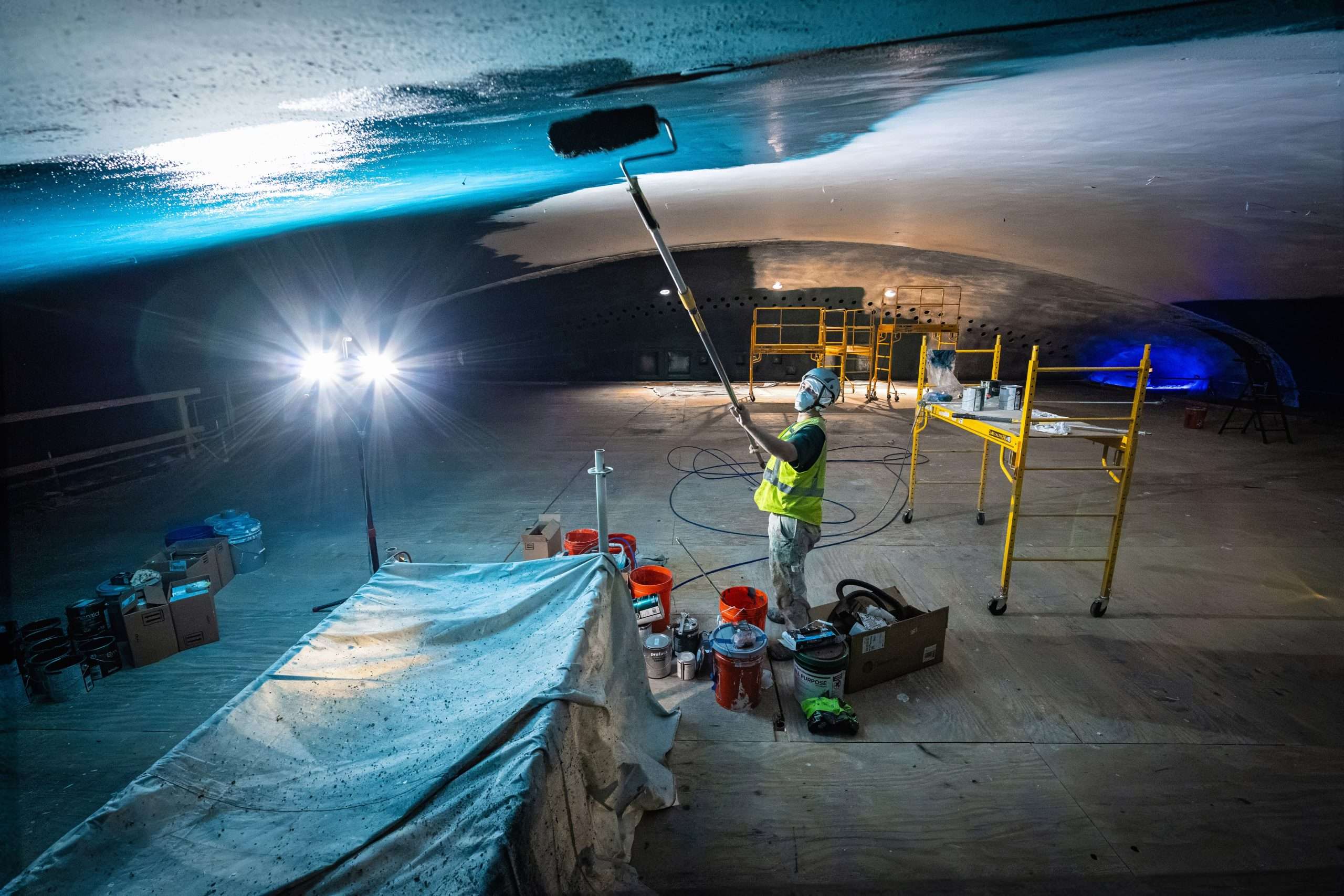
Tampa Theatre reopened its historic Duncan Auditorium this weekend after a seven-month, $24.5 million restoration timed to the building's 100th anniversary on October 15, 2026. The first phase of the theater's Second Century Campaign restored decorative paint and plaster to their 1926 appearance, upgraded infrastructure and theater technology, added an elevator and created a new education wing. A second phase is estimated for completion in 2028.
What Happened
The theater at 711 N. Franklin Street in downtown Tampa welcomed patrons back on Saturday, October 10, with a screening for annual members, followed by a free public open house on Sunday, October 11, with doors at 1 p.m., according to WUSF. Classic films are scheduled Monday through Wednesday evenings, and the centennial celebration on Thursday, October 15, is sold out.
The $24.5 million project restored the Duncan Auditorium, modernized theater technology and improved critical infrastructure, per WUSF. The work is phase one of what the theater calls its Second Century Campaign.
Scope of the Work
The auditorium was scheduled to close from March 10 through the end of September 2026 for infrastructure upgrades, restoration of decorative paint and plaster, and preservation of original fixtures and furnishings, according to Tampa Theatre. Because the restoration required access to every surface of the ornate walls and the starry ceiling, the first step was a multi-level scaffold that filled the room.
The theater's construction updates document the range of trades involved, per Tampa Theatre:
- Plaster repair on the sky ceiling, the orchestra-level ceiling and the auditorium facades, including casting and mold making to reproduce damaged ornament.
- Repainting of the ceiling's night sky and detailed decorative painting on the facades.
- Plumbing and electrical repairs in the historic auditorium, including reworked plumbing lines beneath a new elevator.
- Protection of seating and fixtures under plastic sheeting, and removal of the stage curtain.
Backstage, older equipment now sits alongside new rigging, and the phase added an elevator, Bay News 9 reported. A smaller venue in the building, the John T. Taylor Screening Room, stayed open for films and events throughout construction, per Tampa Theatre.
What the Restoration Found
EverGreene Architectural Arts led the restoration, according to WUSF, which noted the firm's prior work on the U.S. Capitol Rotunda. Forensic paint analysis showed that the auditorium's colors had drifted from the original scheme over a century of repainting and dust. Some surfaces believed to be red were originally blue, and some blues were originally green.
"So for the first time since 1926, it's going to look like it did in 1926," Tampa Theatre President and CEO George Levesque told WUSF. Cleaning also revealed that terracotta roof tiles, long assumed to be a single color, were painted in about five different colors.
The Education Wing
Part of the funding went to a two-floor education center with dedicated film studies classrooms, which opens in the fall, per WUSF. The theater says more than 3,000 square feet of underused office and storage space on the Florida Avenue side of the building was cleared and demolished to create the classrooms, per Tampa Theatre. The third floor, formerly old offices and a small apartment used for storage, is now part of that wing, according to Bay News 9.
Background and Next Phase
The theater opened on October 15, 1926. The City of Tampa saved it from demolition in 1973, and it is listed on the National Register of Historic Places, per Bay News 9. The station describes the current work as part of a 10-year restoration effort.
Phase two, estimated for completion in 2028, will add a third public programming space and restore the theater's Mighty Wurlitzer organ, according to WUSF. Bay News 9 reported that upcoming work also includes converting unused office space into a lounge, per Bay News 9.
The sources differ slightly on cost. WUSF and the theater give $24.5 million for phase one, while Bay News 9 describes the phase as costing more than $20 million. Neither the theater's project page nor the news reports name the general contractor, the architect of record or the funding sources.
Implications for Owners, Developers, Contractors and Subs
The project is a useful reference for owners of historic and institutional buildings because of how it was sequenced. The theater combined finish restoration, which is what the public sees, with infrastructure work that is far easier to do while the room is already closed and scaffolded: plumbing, electrical, rigging and accessibility improvements. Owners who plan a decorative restoration without addressing the systems behind the finishes risk reopening the same surfaces a few years later.
Three points stand out for owners planning similar work.
- Investigate before you specify. The paint analysis changed the color scheme for the entire room. Forensic investigation of finishes, plaster condition and concealed systems early in design reduces change orders once scaffolding is up and the schedule is fixed.
- Access drives the schedule. A full-room scaffold is a major cost and a critical-path item. Once it is in place, every trade that needs it should be sequenced to use it, which argues for combining scopes into one closure.
- A fixed opening date removes float. The work was tied to a centennial date that could not move. Projects with a hard public deadline need early procurement of specialty restoration trades and contingency time for conditions discovered after demolition and cleaning.
For contractors and subcontractors, the job illustrates how historic theater and assembly work divides. Specialty conservators handle decorative paint and ornamental plaster, while general building trades carry the mechanical, electrical, plumbing, elevator and life safety scopes around them. Coordination between the two groups, along with dust control and protection of original fabric, is where these projects are won or lost. Firms with experience working around fragile finishes are well placed as more early twentieth century theaters and civic buildings reach the age where full restoration is due.
Keeping part of the building in operation is also worth noting. The theater kept its smaller screening room open during the closure, which preserved some revenue and audience continuity. That requires clear separation of construction and public areas, and it should be planned into logistics and egress from the start.
What to Watch
- The fall opening of the education center and its classrooms.
- Design and procurement for phase two, including the third programming space and the Wurlitzer organ restoration, targeted for 2028.
- Conversion of unused office space into a lounge.
- Fundraising progress for the remainder of the Second Century Campaign.
Bottom Line
Tampa Theatre met its centennial deadline with a $24.5 million first phase that paired a forensic restoration of the auditorium with infrastructure, rigging, accessibility and classroom work. A second phase is planned through 2028. The project is a practical model for sequencing finish restoration and building systems work in a single closure.
Image credit: Tampa Theatre. Image from the source article.
Sources
- WUSF, "Historic Tampa Theatre will raise the curtain on a $25 million restoration": https://www.wusf.org/arts-culture/2026-10-09/historic-tampa-theatre-raise-curtain-25-million-restoration
- Bay News 9, "Tampa Theatre set to celebrate 100 years, show off changes": https://baynews9.com/fl/tampa/news/2026/10/07/tampa-theatre-set-to-celebrate-100-years--show-off-changes
- Tampa Theatre, "Second Century Construction Progress": https://tampatheatre.org/about/second-century-construction-progress/



Let's connect
For organizations planning commercial, industrial, or infrastructure work, we will review the project and recommend the appropriate delivery approach.

Join our team
If you hold yourself to careful, accountable work, you already work the way we do.