
news +insights
New York Energy Planning Board to Launch Grid Investment Plan on December 9
New York's State Energy Planning Board will meet on December 9, 2026, to begin work on an Energy Infrastructure Development Plan, a new long-range process meant to guide where and when the state invests in generation, transmission, storage and local grid alternatives. An interim plan is due in 2027 and the first comprehensive plan is due by December 2029.
What Happened
The New York State Energy Research and Development Authority announced on October 8, 2026, that the Energy Planning Board will convene on December 9 to launch the Energy Infrastructure Development Plan process, according to NYSERDA. The agency describes the plan as part of the broader State Energy Plan and says its purpose is to produce an actionable plan for the infrastructure needed to modernize the power grid and meet the energy demands of economic growth.
The meeting is scheduled for 2:00 p.m. at the Albany Capital Center, Meeting Room 2B/2C, 55 Eagle Street in Albany, per NYSERDA. It is open to the public in person and virtually. In-person attendance requires registration because capacity is limited.
The announcement follows a Climate Week directive from Governor Kathy Hochul under her CHARGE agenda, which stands for Clean, Highly Affordable, Reliable Grid Expansion, as reported by FingerLakes1.com. The state describes that agenda as covering consumer costs, energy company accountability, clean energy development at scale, grid modernization and jobs, and it names a Ratepayer Protection Plan, transmission buildouts and an 8.4 gigawatt "Nuclear Backbone" among its initiatives, per NYSERDA.
What the Plan Is Meant to Do
The State Energy Plan has long been the document that guides resource development in New York. The new plan extends that role into investment planning, with the stated aim of steering energy system investments over the coming decades so that they are cost-effective and placed in the right locations at the right times, according to NYSERDA.
The agency lists three objectives for the board:
- Advance a system that meets system requirements, customer needs and state policy goals at reasonable cost.
- Use state tools such as neighborhood-scale alternatives, distributed solar and energy storage.
- Coordinate development of new utility-scale clean generation and transmission.
The scope is broad. The board will look at power generation, transmission, energy storage and local alternatives as the state prepares for rising demand, per FingerLakes1.com.
What It Will Draw On
The board is not starting from a blank page. The plan will rely on analyses the state and the grid operator already produce, according to NYSERDA:
- State Energy Plan Pathways Analysis: modeling of whether supply and delivery systems can meet forecast needs through 2040 under several possible futures.
- Coordinated Grid Planning Process: prior work that identified cost-effective grid upgrades for future demand and supply.
- Clean Energy Zones: work to identify where grid upgrades could support new clean power.
- Reliability studies: the Reliability Needs Assessment, the quarterly Short-Term Assessment of Reliability and related work that identifies where reliability solutions are needed.
The process will set coordination checkpoints with other planning efforts, in particular the New York Independent System Operator's Comprehensive System Planning Process, especially when assumptions and demand forecasts are being set, per NYSERDA. Its analysis is expected to weigh risks including fuel price swings, extreme weather, siting disputes, rising capital costs and shifts in consumer preferences.
The state says the work will proceed in phases across successive planning cycles, gradually bringing bulk power and distribution planning together and coordinating with natural gas system needs, according to FingerLakes1.com.
Who Is Involved
Doreen M. Harris, president and CEO of NYSERDA, chairs the board. In the announcement she described the plan as a way to fold infrastructure investment planning into the State Energy Plan and produce a coordinated, data-informed approach to what the governor calls an "all-of-the-above" energy strategy, per NYSERDA.
Public Service Commission Chair Rory M. Christian said the effort builds on the Coordinated Grid Planning Process, Clean Energy Zones, long-term gas planning and proactive planning proceedings. Rich Dewey, president and CEO of the New York Independent System Operator, said the electric system is at a pivotal point, with rising demand and aging resources, and said the grid operator will contribute its independent expertise and system planning work, according to NYSERDA.
Two legislators also commented. State Senator Kevin Parker said communities should see tangible benefits such as cleaner air, good jobs and reliable power, and should not simply host new infrastructure. Assemblymember Didi Barrett, who noted that she is the only elected official on the board, said the plan should reflect affordability, reliability and transparency, per NYSERDA.
What the Announcement Does Not Do
The announcement starts a planning process. It does not approve any specific power plant, transmission line or storage installation, FingerLakes1.com noted in its coverage. The same report points out that the announcement contains no new regional demand forecast, no list of projects selected for investment and no estimate of household savings. Affordability and reliability are stated goals of the process, not results it has demonstrated.
The schedule beyond the first meeting is also thin. The state has committed to an interim plan in 2027 and a first comprehensive plan by December 2029, and it says industry stakeholders and the public will have multiple chances to participate and comment, per NYSERDA. No dates for those later comment opportunities have been published, according to FingerLakes1.com.
Implications for Owners, Developers, Contractors and Subs
For anyone planning a large electric load in New York, this process is worth following from the start. Manufacturers, cold storage and food processing operators, hospitals, campuses and data center developers all depend on available grid capacity, and interconnection timing increasingly drives site selection and project schedules. A state plan that sets out where transmission and generation investment should go, and when, will shape which regions can serve new load first.
Owners and developers should note three practical points.
- No near-term change to project approvals. Nothing in the announcement alters current permitting, siting or interconnection rules. Projects in design or procurement today proceed under existing processes.
- Forecast assumptions matter. The plan's coordination checkpoints focus on assumptions and demand forecasts. Large load additions that are reflected in those forecasts are more likely to be planned for. Owners with expansion plans have a reason to make their expected demand known to their utility.
- Distribution and gas are in scope over time. The state says later cycles will integrate distribution planning and coordinate with gas system needs. That bears directly on facility decisions about electrification, on-site generation and storage.
For contractors and subcontractors, the plan points to a long pipeline of utility-scale work without yet defining it. Transmission upgrades, substations, storage installations and generation projects carry heavy civil, structural, electrical and site scopes, and the risks the board says it will study, including rising capital costs and siting disputes, are the same ones that affect bids and schedules. Electrical contractors and firms with utility experience are the most directly affected, but general contractors building for large power users will feel the results through service availability and utility lead times.
What to Watch
- The December 9 board meeting in Albany, including how the board defines the process and the schedule for public and industry comment.
- The interim plan expected in 2027, which should give the first indication of regional investment priorities.
- How demand forecasts are set at the coordination checkpoints with the grid operator.
- Whether later planning cycles name specific corridors, zones or project types.
- The first comprehensive plan, due by December 2029.
Bottom Line
New York is setting up a formal, multi-year process to plan grid investment across generation, transmission, storage and local alternatives. It does not fund or approve projects today, but it will influence where capacity is built over the next several decades. Owners with significant power needs and contractors who build energy infrastructure have reason to follow the December 9 meeting and the comment opportunities that come after it.
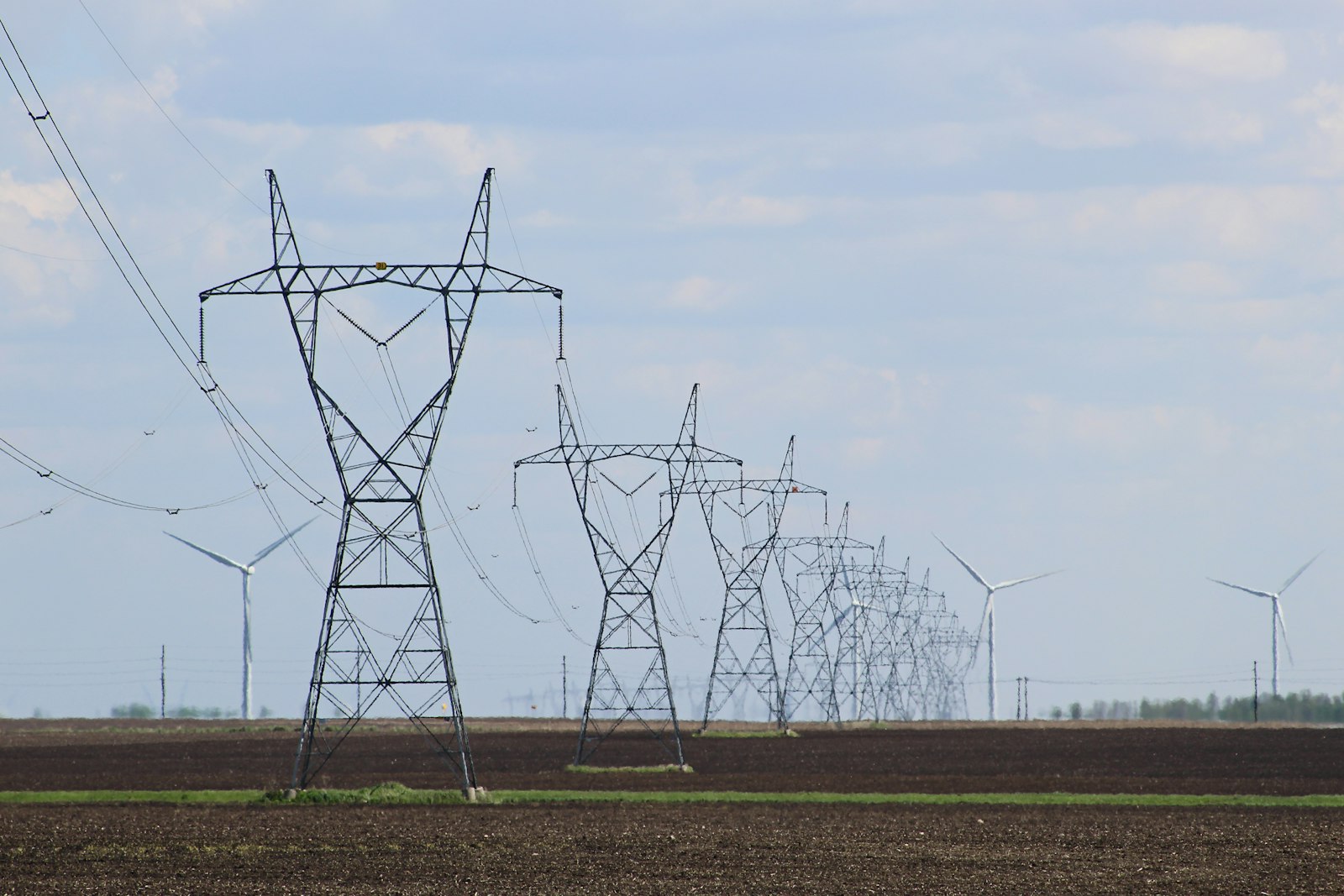
Image credit: American Public Power Association via Unsplash. Free-license photo used because the source articles carry no usable project image.
Sources
- NYSERDA, "State Energy Planning Board Meeting Announced": https://www.nyserda.ny.gov/About/Newsroom/2026-Announcements/2026-10-08-NYSERDA-Announces-SEPB-Mtg-Kick-Off-New-Energy-Infrastructure-Dev-Plan-Process
- FingerLakes1.com, "New York sets Dec. 9 meeting to begin long-term grid investment plan": https://www.fingerlakes1.com/2026/10/11/new-york-sets-dec-9-meeting-to-begin-long-term-grid-investment-plan/



Let's connect
For organizations planning commercial, industrial, or infrastructure work, we will review the project and recommend the appropriate delivery approach.

Join our team
If you hold yourself to careful, accountable work, you already work the way we do.