

news +insights
New York Opens $225M Clean Water for Housing Grants for Municipalities
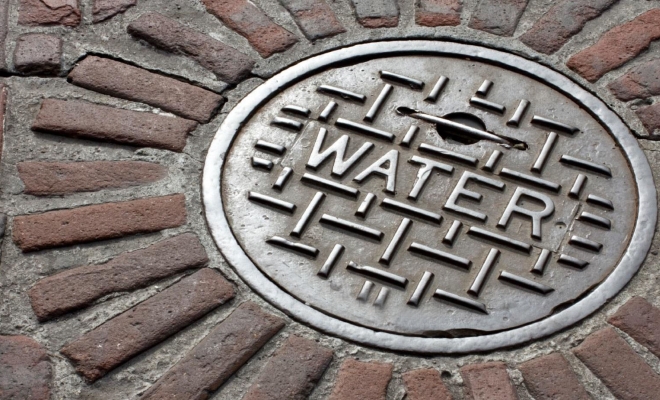
New York State opened a $225 million Clean Water for Housing grant program on Friday, October 23, 2026, offering municipalities up to $30 million each for drinking water, sewer and stormwater projects that are holding back new housing, with money awarded first come, first served until it runs out (Office of the Governor).
The program is administered by the New York State Environmental Facilities Corporation (EFC) and is now accepting applications. Because funds are awarded on a rolling basis rather than through a single competitive round, timing matters: communities with engineering reports and environmental reviews already in hand are positioned to move first. This is a developing story, and award announcements will follow as applications are approved.
What Happened
Governor Kathy Hochul announced the program Friday morning from Albany. Of the $225 million total, $175 million is available to eligible applicants statewide and $50 million is set aside for rural municipalities, where aging or undersized water systems can stop development before it starts (Office of the Governor).
The state framed the program as a way to remove a common barrier to building. "No family should be unable to buy a home because their community's water and sewer systems can't support housing growth," Hochul said in the announcement (Office of the Governor).
The announcement lands in a busy week for state water funding. Earlier this week the state announced nearly $500 million in water infrastructure grants as part of a $3.75 billion water plan, a round we covered in New York Awards Nearly $500M in Water Grants, $52M to Finger Lakes. The state says it has provided $10.6 billion to local water projects since 2021 (Office of the Governor).
What Is Confirmed
EFC's program page sets out the core terms (NYS Environmental Facilities Corporation):
- Grant size: up to $30 million per award, covering up to 75 percent of eligible project costs.
- Who can apply: municipalities certified as Pro-Housing Communities by New York State Homes and Community Renewal (HCR), and counties that document the project is needed to promote housing or is located within a certified Pro-Housing municipality.
- Certification timing: a municipality may apply before it is certified, but HCR must approve certification before an award is made.
- Who cannot apply: private for-profit developers and nonprofit housing developers are not eligible applicants.
- Award limit: a municipality may submit applications for more than one project but may receive no more than two awards.
- Eligible work: installing, extending, reconstructing or upgrading public drinking water, sewer or stormwater systems to relieve capacity constraints that impede housing development, improvement or rehabilitation.
- Eligible costs: planning, design, permitting, engineering, construction, site preparation, excavation, equipment, labor, materials and other reasonable costs directly tied to the project.
- Schedule requirements: projects should begin construction within one year of award, and the related housing development should begin within two years of award.
- Application package: a project description and budget, an engineering report, environmental review documentation, and an explanation of how the project addresses an infrastructure constraint affecting housing.
EFC reviews complete applications on a rolling basis until funds are exhausted, and its Community Assistance Teams offer one on one consultations to help municipalities prepare submissions (NYS Environmental Facilities Corporation).
How the Pro-Housing Link Works
Eligibility is tied to the Pro-Housing Communities Program, which Hochul created by Executive Order 30 in July 2023 and which HCR administers. Certified localities gain exclusive access to up to nearly $1 billion in discretionary state funding, and the state reports that more than 460 communities are now certified (Office of the Governor).
The new grants extend that approach to the pipes and plants beneath a project. HCR Commissioner RuthAnne Visnauskas said reliable water, sewer and stormwater systems are "central to supporting our housing growth agenda" (Office of the Governor).
The program also fits alongside other recent state housing measures. The FY27 Enacted Budget included $250 million in capital funding for affordable homes and reforms to the State Environmental Quality Review Act (SEQRA), which we examined in New York SEQRA Environmental Reforms Accelerate Housing and Infrastructure 2026. The budget also completes the state's $25 billion five year housing plan, which targets 100,000 affordable homes created or preserved; the state reports more than 87,000 to date (Office of the Governor). EFC is separately accepting applications for $45 million in Green Resiliency Grants.
What It Means for Owners and Contractors
For developers, the program targets a problem that often surfaces late in due diligence: a site that is zoned and financeable but cannot get adequate water or sewer capacity. Developers cannot apply directly, so the path runs through the host municipality or county. Owners with stalled residential or mixed use projects should ask local officials now whether the community is certified, or is pursuing certification, and whether a capacity constraint affecting their site could be packaged into an application.
For civil, utility and site contractors, the schedule terms are the key detail. Requiring construction to start within one year of award means grant funded work should move from award to bid relatively quickly. Typical scopes will include main extensions, pump station and treatment upgrades, stormwater improvements and related sitework, the same kinds of public projects that municipal utilities have been delivering across the state, such as the Village of Webster's $16 million wastewater plant upgrade.
The 75 percent cost share also matters. Municipalities will need to cover the remaining share from local funds or other sources, which may influence which projects advance. For general contractors and vertical builders, the second requirement, that housing start within two years of award, links the utility work directly to near term residential construction pipelines in the communities that win funding.
Engineering firms are likely to see early demand, since an engineering report and environmental review documentation are required parts of the application. Municipalities that lack those documents will need them before they can compete for first come, first served dollars.
What Is Not Yet Known
- No application deadline has been announced; funding remains available until it is fully awarded.
- EFC has not published a definition of "rural municipality" on its program page.
- No awards have been announced, and the state has not said how quickly the first approvals will come.
- The announcement does not break out expected funding by region, including the Finger Lakes and Western New York.
What to Watch
Watch for the first award announcements, which will show how fast the rolling pool is being committed and which regions are moving first. Also watch for additional Pro-Housing certifications, since certification is the gateway to this money and to the broader pool of discretionary state funds. Contractors who track municipal bid boards should expect grant funded water and sewer projects to begin appearing as awards are made and the one year construction clock starts.
Related Coverage
- New York Awards Nearly $500M in Water Grants, $52M to Finger Lakes
- New York SEQRA Environmental Reforms Accelerate Housing and Infrastructure 2026
- Village of Webster Completes $16M Wastewater Plant Upgrade
- Hochul Commits $9.5M to Rockville Centre Water Plant and Ballfield Projects
Image credit: Office of the Governor of New York State. Image from the source article.
Sources
- Office of the Governor of New York State, "Governor Hochul Helps Unlock Housing Through $225 Million in Water Infrastructure Grants": https://www.governor.ny.gov/news/governor-hochul-helps-unlock-housing-through-225-million-water-infrastructure-grants
- NYS Environmental Facilities Corporation, "Clean Water for Housing": https://efc.ny.gov/clean-water-housing

Let's connect
For organizations planning commercial, industrial, or infrastructure work, we will review the project and recommend the appropriate delivery approach.

Join our team
If you hold yourself to careful, accountable work, you already work the way we do.