
news +insights
Data Center Noise: Researcher Says 4.5-Foot Walls Needed to Block Low Hum
Blocking the low-frequency hum from large data center cooling equipment would take walls about 4.5 feet thick, according to new guidance from Saint Louis University biologist Kasey Fowler-Finn, who also recommends setbacks of at least 1,500 feet from homes, far more than many local codes require. The guidance arrives as noise becomes the leading complaint in lawsuits against operating data centers, including one in North Tonawanda, New York Construction Dive.
What the Research Says
Fowler-Finn released model guidance in September based on research she says she has conducted since 2001 Construction Dive. Her central point is that data center noise behaves differently from ordinary industrial noise. Traffic and typical industrial sound is broadband and mid to high frequency, while large data centers concentrate sound in low frequencies St. Louis Public Radio. "Data center hums [are] concentrated in single frequencies and they really stand out from background noise," she said Construction Dive.
The frequency determines what it takes to stop the sound Construction Dive:
- About 1,000 Hz, roughly a vacuum cleaner: a 4-inch wall is enough.
- 63 Hz, typical of large HVAC and cooling systems: walls about 4.5 feet thick.
- 20 Hz: walls about 14 feet thick.
Ordinary building materials do little against low-frequency sound, which passes through walls and windows and can cause vibration and rattling in nearby structures Construction Dive. Traffic noise may be inaudible past about 300 feet, while a data center hum can travel 800 feet or more, with the greatest impact area cited at about 3,000 feet St. Louis Public Radio. Sound falls about 6 decibels each time the distance from the source doubles Construction Dive.
Setbacks and Testing
Data centers are often permitted under industrial setbacks of 100 to 600 feet; Fowler-Finn recommends at least 1,500 feet Construction Dive. St. Louis recently adopted rules requiring 600-foot setbacks for major data centers from schools, residences and parks, along with annual third-party noise reports and acoustically treated enclosures around noisy equipment. Fowler-Finn called the setback "woefully insufficient" St. Louis Public Radio.
On measurement, she says standard A- and C-weighted decibel readings are a starting point but should be paired with third-octave band testing from 20 to 200 Hz. In her guidance she warns that "A facility can be compliant on paper while still delivering audible" low-frequency noise to neighbors Construction Dive.
Why It Matters Now
Of about six lawsuits filed this year against operating data centers, five cited noise as the main problem, with cases pending in Vineland, New Jersey; Dowagiac, Michigan; North Tonawanda, New York; and Hood County, Texas Construction Dive. Residents sued in late July over noise from Microsoft's Fairwater data center in Mount Pleasant, Wisconsin, which became operational in June Construction Dive.
A September survey by Science for Georgia and Quiet Communities found that more than 80 percent of people living near a data center can hear it inside their homes, more than 70 percent said it interfered with their ability to relax, and almost 70 percent have considered moving Construction Dive. Fowler-Finn, citing World Health Organization findings, links chronic noise to sleep disruption and cardiovascular risk St. Louis Public Radio.
Developers point to permit conditions. David Daneshforooz, CEO of TerraWatt, which is developing a data center next to The Armory in Midtown St. Louis, said "our permit imposes tougher restrictions on this site, beyond the city's general noise rules," and called them "enforceable requirements of the project's approval, not voluntary promises" St. Louis Public Radio. That project was approved before St. Louis's new rules took effect and is governed by its conditional use permit St. Louis Public Radio.
The noise question adds to local pressure on data center siting in New York, where several communities have weighed pauses, including a proposed two-year moratorium in Buffalo.
Implications for Owners, Developers, Contractors and Subs
- Acoustic design belongs in site selection. Distance is the most effective control for low-frequency noise. Owners should test setbacks against nearby homes before buying land, not after design.
- Mechanical selection drives the outcome. Cooling equipment, generators and their frequency profiles should be specified with acoustics in mind, and enclosures and barriers budgeted early.
- Expect stricter permit conditions. Annual third-party noise reporting, low-frequency testing and larger buffers are likely to appear in local approvals. Contractors may be asked to support baseline and post-construction measurements.
- Compliance is not the same as acceptance. Meeting a decibel limit may not prevent complaints or litigation if the hum is audible indoors.
- Opportunities for specialty trades. Acoustic consultants, enclosure fabricators and mass barrier construction are likely to see more demand on mission-critical projects.
What to Watch
- Whether municipalities adopt low-frequency testing and longer setbacks in data center zoning.
- Outcomes of the pending noise lawsuits, including North Tonawanda.
- Equipment makers' responses with quieter cooling designs.
Bottom Line
Low-frequency noise is becoming one of the biggest community objections to data centers, and the physics make it hard to fix with walls alone. Owners and builders who plan for distance, quieter equipment and better testing up front will have an easier path through local approvals.
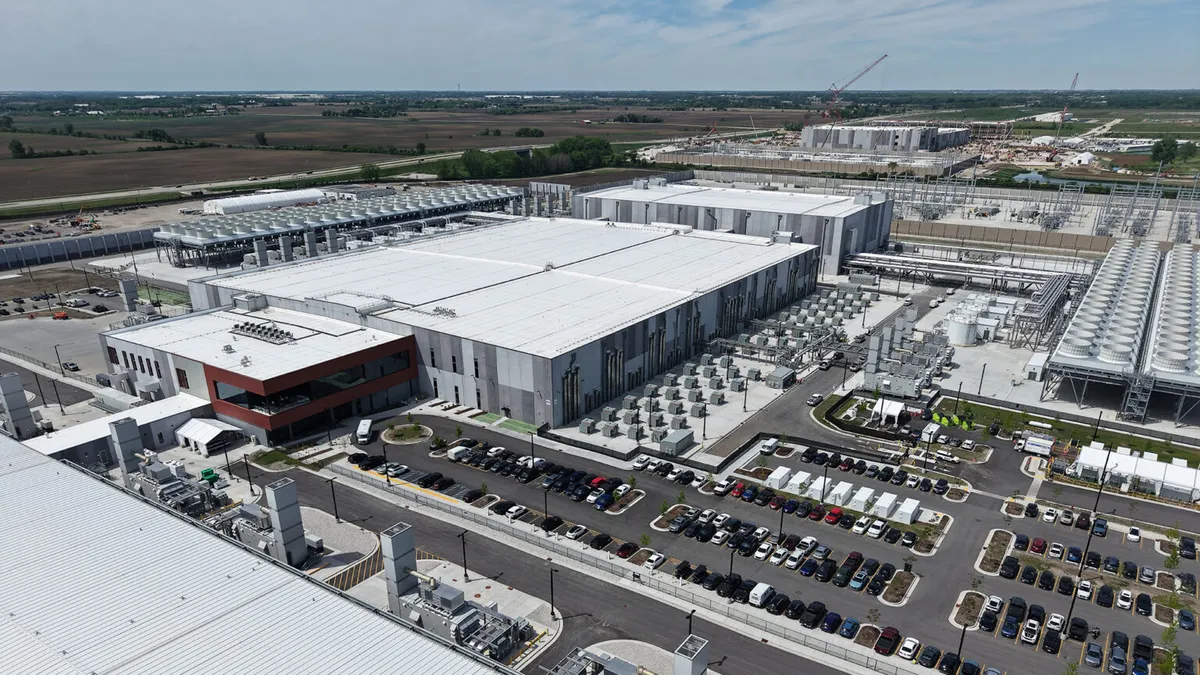
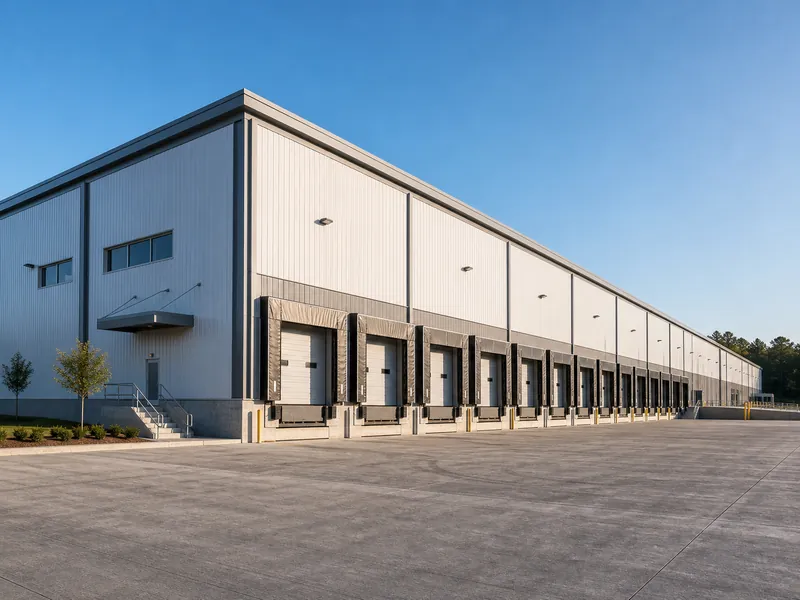
Image credit: Courtesy of Microsoft. Image from the source article. Construction Dive.
Sources
- Construction Dive, 4.5-foot-thick walls needed to absorb data center noise: researcher: https://www.constructiondive.com/news/thick-walls-needed-absorb-data-center-noise-research/831999/
- St. Louis Public Radio, How data center noise is different from regular noise pollution, according to a St. Louis scientist: https://www.stlpr.org/health-science-environment/2026-09-24/st-louis-scientist-data-center-noise-pollution

Let's connect
For organizations planning commercial, industrial, or infrastructure work, we will review the project and recommend the appropriate delivery approach.

Join our team
If you hold yourself to careful, accountable work, you already work the way we do.