

news +insights
Constitution Pipeline Revival Advances at FERC as New York Fights in Court
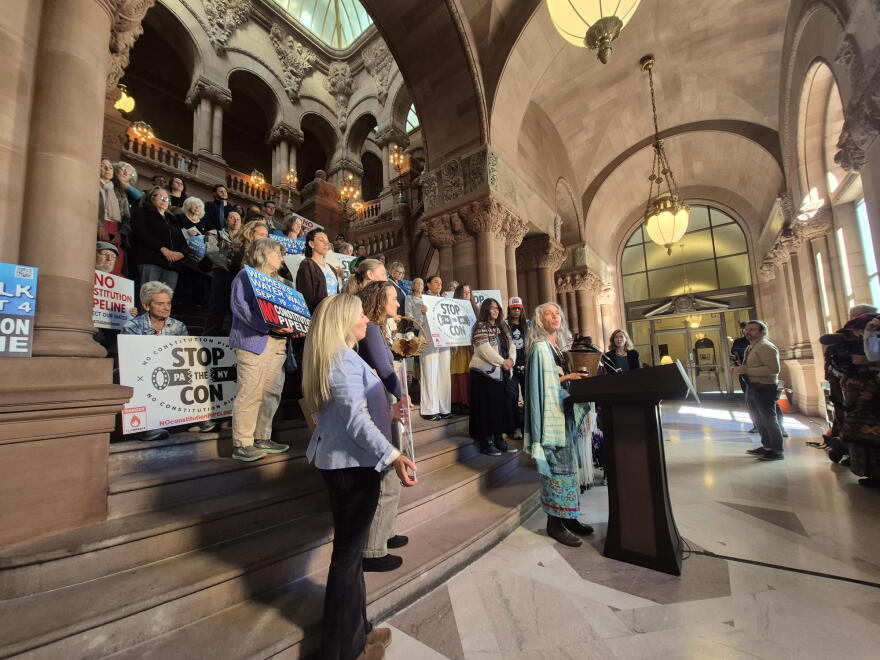
The federal government is moving to revive the Constitution Pipeline, a natural gas line from Pennsylvania into upstate New York, and New York State is fighting it in federal court. The Federal Energy Regulatory Commission issued a new environmental assessment in September finding that approval would not significantly affect the "quality of the human environment," and has scheduled the completion of its review for November WXXI News.
What Happened
The pipeline, developed by Constitution Pipeline LLC, a subsidiary of the Williams Companies, would run about 125 miles with a 30-inch diameter from Susquehanna County, Pennsylvania, to the Wright Interconnect station in Schoharie County, New York All Otsego. Another report puts the length at 124 miles, with 99 miles of construction in New York Pipeline Technology Journal.
New York has filed a federal lawsuit arguing that the federal government is trying to get around the state's permitting process. A federal judge has consolidated the state's case against FERC with two lawsuits from environmental groups, and the case is on hold until the federal review is complete WXXI News.
Ken Lovett, a spokesperson for Gov. Kathy Hochul, said the Department of Environmental Conservation "sent back the application three times to the developer for lack of completeness," after which the developer withdrew it WXXI News. Earlier in October, activists finished a 108-mile walk along the proposed route and rallied at the State Capitol WXXI News.
How the Project Got Here
- 2014: FERC originally approved the project All Otsego.
- 2016: The New York State Department of Environmental Conservation denied its water quality permits All Otsego.
- 2019: FERC ruled that the 2016 decision held "no legal significance" All Otsego.
- 2020: Williams canceled the project after years of legal and regulatory fights Pipeline Technology Journal.
- May 2025: The developer refiled for a state water quality certification, then withdrew the request in November 2025 All Otsego.
- December 19, 2025: The developer asked FERC to reissue its certificate and reaffirm the earlier waiver ruling All Otsego.
- January 2026: The DEC filed a protest with FERC, arguing that reissuing the certificate would strip the state of its authority under Section 401 of the Clean Water Act Pipeline Technology Journal.
- September 2026: FERC issued its new environmental assessment WXXI News.
The revival has been tied to broader federal and state energy negotiations. In May 2025, the federal government linked the state's reconsideration of Williams pipeline projects to a deal that lifted a federal stop on the Empire Wind offshore wind farm, and the DEC later approved a water permit for Williams' separate Northeast Supply Enhancement project Pipeline Technology Journal.
The Arguments
The developer has cited "persistently high natural gas and electricity prices" in seeking to move ahead All Otsego, and Williams says the line would cut consumer costs by billions of dollars and increase gas supply to New York and New England WXXI News. Critics question those benefits, and Bloomberg reported in July that the project faces a lack of customers WXXI News. The DEC found the route would affect hundreds of streams as well as wetlands and forests WXXI News. Gov. Hochul said in January, "I will fight any attempt to circumvent our state's authority or undermine our clean water laws" All Otsego.
Implications for Owners, Developers, Contractors and Subs
- Pipeline work in upstate New York remains uncertain. Even with a favorable federal review, the state's lawsuit means construction timing cannot be planned with confidence.
- State permits are the deciding factor. The dispute centers on whether New York keeps its Clean Water Act authority. The outcome will affect how future energy and infrastructure projects are permitted in the state.
- Energy costs drive the debate. Industrial owners and developers watching gas prices and supply in eastern New York have a stake in how this is resolved.
- Linear projects carry heavy environmental scope. Stream crossings, wetland work and forest clearing require specialized environmental compliance and restoration contractors.
What to Watch
- FERC's final action, scheduled for November.
- Movement in the consolidated federal case once the review is complete.
- Any new filings from Williams on schedule, customers or construction plans.
Bottom Line
The Constitution Pipeline is back on the federal agenda six years after it was canceled, with FERC's review set to wrap up in November. New York's lawsuit, now on hold, will decide whether the state's water permitting authority can stop it again.
Image credit: Samuel King / New York Public News Network. Image from the source article. WXXI News.
Sources
- WXXI News, The Trump administration wants to revive the Constitution Pipeline. New York is fighting back: https://www.wxxinews.org/new-york-public-news-network/2026-10-09/trump-constitution-pipeline-new-york
- All Otsego, Constitution Revives 125-Mile Pipeline Push, Faces Criticism: https://www.allotsego.com/constitution-revives-125-mile-pipeline-push-faces-criticism/
- Pipeline Technology Journal, New York Moves to Block Revival of Constitution Pipeline: https://www.pipeline-journal.net/news/new-york-moves-block-revival-constitution-pipeline


Let's connect
For organizations planning commercial, industrial, or infrastructure work, we will review the project and recommend the appropriate delivery approach.

Join our team
If you hold yourself to careful, accountable work, you already work the way we do.