
news +insights
The 2026 U.S. Manufacturing Construction Boom: EV Plants, Drug Facilities, and the Race to Build
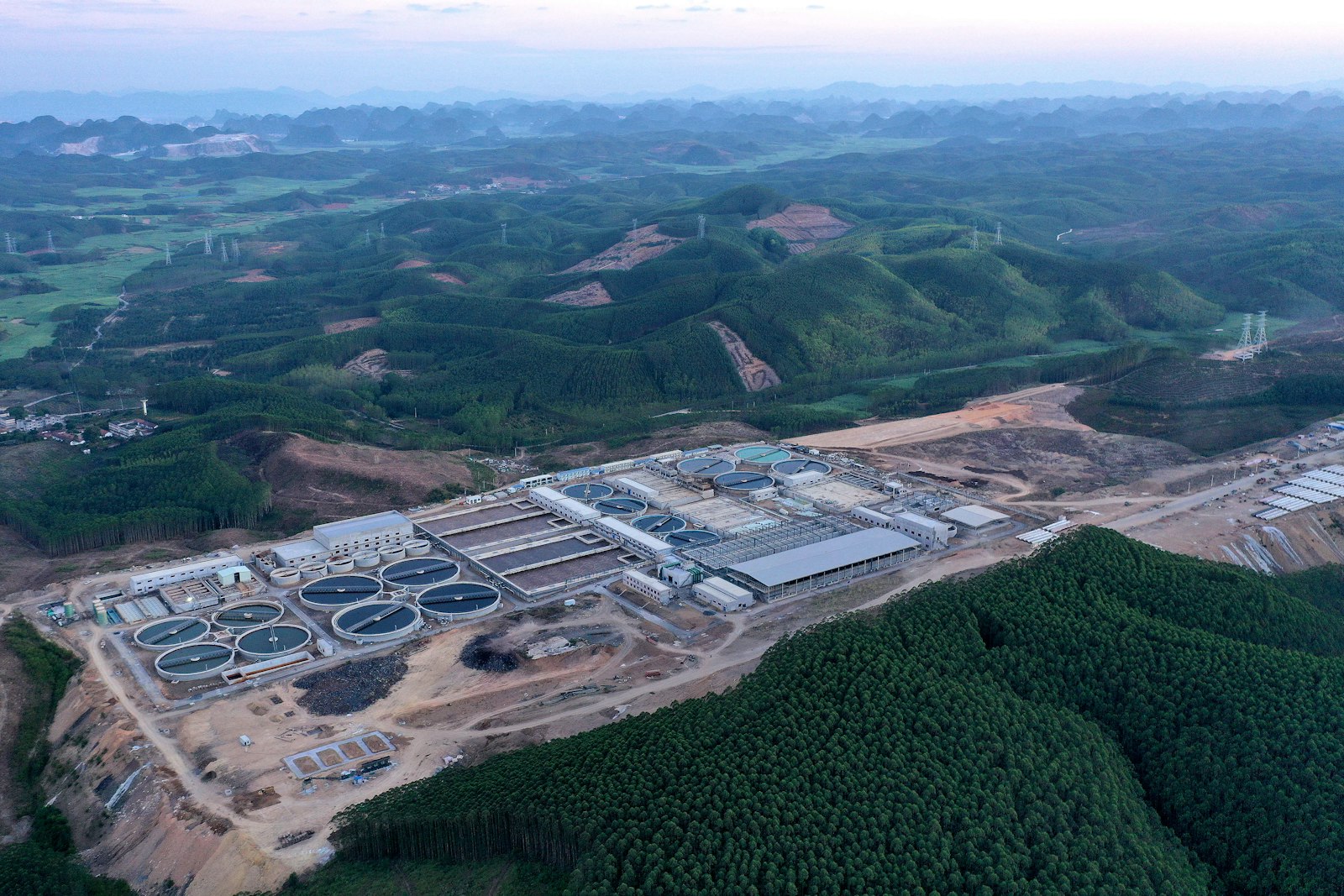
For years, reshoring and domestic manufacturing investment generated headlines far in advance of actual construction activity. In 2026, that lag is closing. Across the automotive, pharmaceutical, semiconductor-adjacent, and industrial sectors, major projects that were announced in 2023 and 2024 are now breaking ground, pouring concrete, and raising structural steel — creating one of the broadest manufacturing construction pipelines the U.S. has seen in decades.
Construction Dive's January 2026 review of major factory projects identified several programs with construction activity this year. Here is a cross-section of the most significant.
Automotive and Battery Manufacturing
Rivian (Stanton Springs, Georgia) broke ground on its 2,000-acre electric vehicle manufacturing campus in September 2025. Vertical construction on the buildings was expected to begin in spring 2026, with the factory's first phase — targeting 300,000 vehicles annually — expected to open in late 2028. The project secured a $4 billion+ DOE loan in April 2026, and the company's CEO confirmed that production capacity for the first phase was actually increased to 300,000 vehicles from the original plan — a 50 percent increase reflecting stronger demand projections for the company's R2 midsize SUV.
Stellantis is investing $13 billion across five U.S. states over the next several years. In Indiana, a new four-cylinder engine facility is slated to begin production in 2026. In Illinois, a previously closed assembly plant is being retooled for two new Jeep vehicle lines, with production starting in 2027. Michigan plants are being prepared for range-extended electric vehicles and next-generation models, according to Construction Dive's reporting. The company expects to expand U.S. production capacity by 50 percent over four years.
Pharmaceutical Manufacturing Construction
No single company is driving more U.S. manufacturing construction activity in 2026 than Eli Lilly. The Indianapolis-based pharmaceutical company has committed to a $27 billion investment in four new U.S. manufacturing facilities — what it calls the largest pharmaceutical manufacturing investment in U.S. history.
- Huntsville, Alabama: A $6 billion active pharmaceutical ingredient (API) manufacturing facility focused on small molecules and peptide medicines, including oral GLP-1 drugs. Construction is set to begin in 2026 and generate more than 3,000 construction jobs, with completion expected by 2032.
- Houston, Texas: A $6.5 billion plant expected to be operational within five years of construction start.
- Richmond, Virginia: A $5 billion cancer drug manufacturing facility, with a five-year completion horizon.
The fourth facility location was described by Lilly as "another U.S. site on the horizon." The Alabama investment alone will create 450 permanent high-value positions, according to the company.
Steel Manufacturing
A $5.8 billion ultra-low carbon steel production facility is planned for Louisiana, spanning 1,700 acres and utilizing electric arc furnace (EAF) technology that produces 70 percent fewer emissions compared to traditional blast furnaces. This type of facility represents the leading edge of industrial construction — complex site work, specialized mechanical systems, and significant infrastructure tie-ins for power and rail.
Why This Matters for the Construction Industry
Manufacturing construction is among the most labor-intensive and technically demanding segments of the market. A single gigafactory or pharmaceutical plant can support thousands of construction workers across multiple trades over a multi-year build cycle. The downstream effects include demand for structural steel, industrial HVAC, process piping, electrical systems, and a broad range of specialty subcontractors.
Newsweek's December 2025 analysis of U.S. megaprojects identified manufacturing, energy infrastructure, and data centers as the three dominant categories driving the 2026 construction pipeline — with construction values consistently in the multi-billion-dollar range and multi-year execution timelines that provide durable workload for builders.
One important note for market watchers: the same CHIPS Act and Inflation Reduction Act incentives that are driving this pipeline also create execution complexity. Projects that depend on federal funding — CHIPS grants for semiconductor facilities, DOE loans for EV manufacturers — can experience delays if funding terms are renegotiated or conditions change. The Rivian DOE loan amendment in April 2026 is one example. Builders should track not just project announcements but financial close and notice-to-proceed milestones before committing resources.
Semiconductor-Adjacent Manufacturing: Micron's $200 Billion U.S. Commitment
While the CHIPS Act's semiconductor fab investments (such as TSMC's $165 billion Arizona program and Samsung's Taylor, Texas complex) are often discussed separately, Micron Technology's U.S. expansion is directly tied to major construction activity in 2026. Micron has committed to a $200 billion investment — $150 billion in fabrication facilities and $50 billion in R&D — across Idaho and New York. Construction of the New York fab campus began in January 2026. Production at the Idaho site is expected to begin in 2027. The company aims to produce 40 percent of its DRAM in the U.S. and projects 90,000 direct and indirect jobs from the combined programs. Micron received $6.4 billion in CHIPS Act funding.
Texas Instruments is also moving forward with an $11 billion, 300-millimeter semiconductor fabrication facility in Lehi, Utah, with construction and early production targeted for 2026 — creating approximately 800 direct jobs and thousands of indirect roles.
The Construction Industry Takeaway
The 2026 manufacturing construction wave is broad-based in a way that the post-2008 recovery was not. It spans automotive, pharmaceutical, semiconductor, and industrial steel — with geographies distributed across the Southeast, Midwest, Mountain West, and Gulf Coast. The programs are typically multi-year, involve complex coordination between GCs and highly specialized subcontractors, and often require navigating federal incentive compliance requirements alongside standard construction management obligations.
For general contractors with industrial and manufacturing experience, the market conditions are unusually favorable. The key risk — as demonstrated by Samsung's construction halt and subsequent resumption in Taylor, Texas — is that projects dependent on federal incentives can pause mid-execution if funding terms change. Experienced builders will want to understand the incentive structures underlying each project before committing significant preconstruction resources.
Sources
- Construction Dive — Major Factory Construction Projects to Watch in 2026
- BioProcess International — Eli Lilly to Build $6bn Manufacturing Facility in Alabama
- Atlanta Journal-Constitution — Rivian to Boost EV Production at Georgia Plant
- Newsweek — 10 Megaprojects Begin Construction Across U.S. Next Year
Let's connect
For organizations planning commercial, industrial, or infrastructure work, we will review the project and recommend the appropriate delivery approach.

Join our team
If you hold yourself to careful, accountable work, you already work the way we do.