

news +insights
$45 Billion Under Construction: Inside the U.S. Battery Manufacturing Build-Out
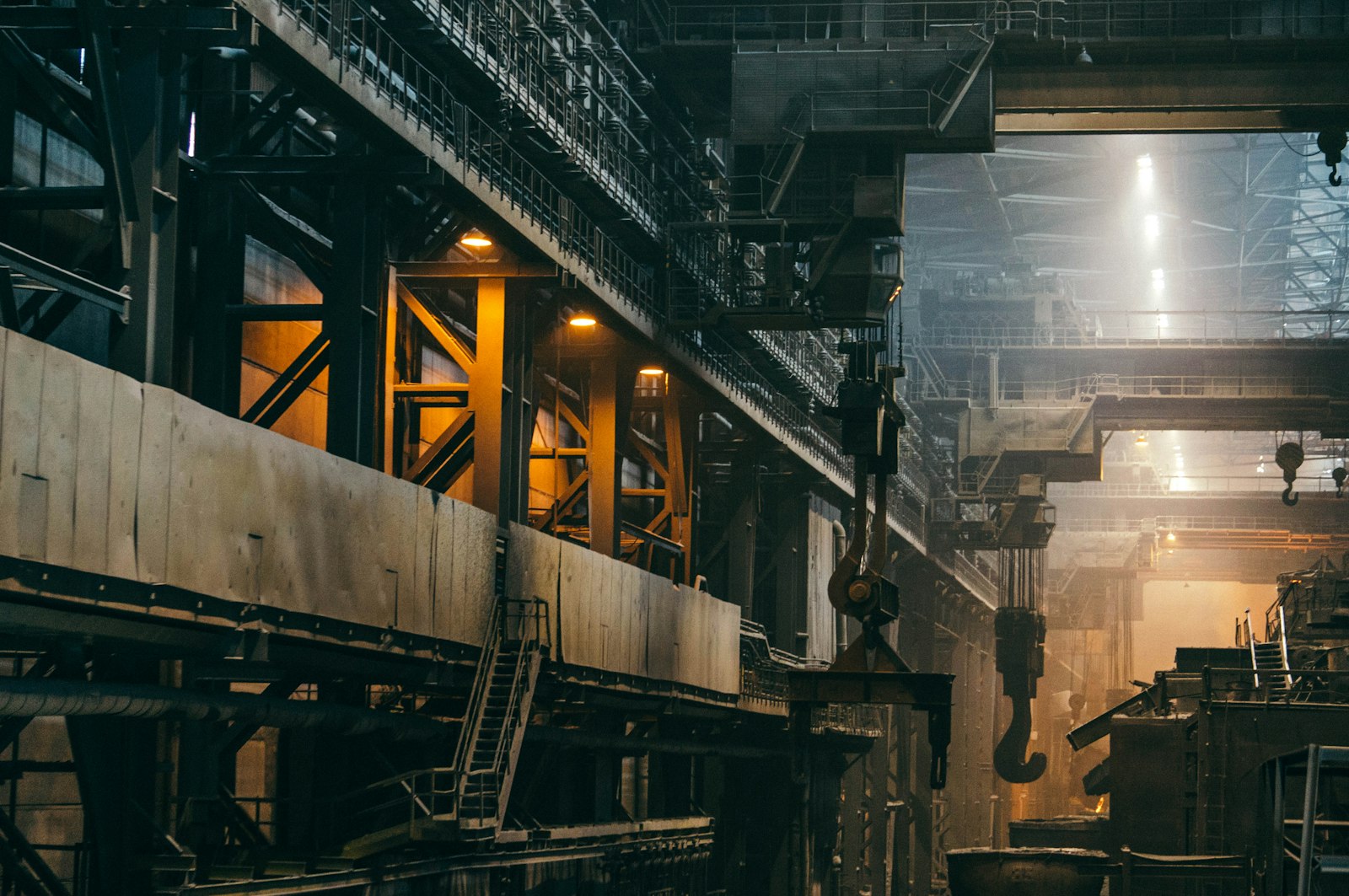
The United States is in the midst of an industrial construction surge that is reshaping the manufacturing map. According to data released by Industrial Info Resources in May 2026, there are $63 billion worth of active and planned battery manufacturing projects across the country, with $45 billion of that total currently under construction. The scale of the build-out—measured in square footage, crane counts, and labor demand—rivals any construction sector in the national economy right now.
The projects span a broad range of battery chemistries, end-use applications, and geographies, reflecting a market that has grown more complex since the earliest wave of EV-focused gigafactories broke ground in the early 2020s. The newest wave includes not only electric vehicle battery plants but also manufacturing facilities for grid-scale battery energy storage systems (BESS), residential backup power units, and batteries for data center backup power—a diversification that is reshaping how these industrial facilities are designed and sited.
The Pivot: From EV Batteries to Energy Storage
The most significant trend in the current construction cycle is the partial shift from EV battery production toward stationary energy storage manufacturing. Several major automakers and battery producers are retooling or redirecting new construction capacity in response to slower-than-anticipated EV demand growth and surging demand for grid-scale storage, particularly driven by renewable energy integration and the electricity needs of data centers.
Ford announced the formation of its Ford Energy unit and is investing approximately $2 billion to convert a former EV battery plant in Glendale, Kentucky into a commercial battery energy storage system (BESS) manufacturing facility, designed for a production capacity of at least 20 gigawatt-hours (GWh) per year with a target of first production in 2027. A separate Ford plant under construction in Marshall, Michigan—expected to open in 2026—will manufacture smaller residential lithium-iron-phosphate (LFP) battery units. Both plants use LFP chemistry, which eliminates the need for nickel and cobalt and lowers production costs significantly.
General Motors, through its joint venture with Samsung SDI, is building a $3.5 billion battery plant in Indiana that will produce both EV batteries and LFP cells for energy storage. Construction is expected to wrap up by the end of 2027. A separate GM joint venture with LG Energy Solution is retooling its Spring Hill, Tennessee plant—originally an EV battery facility—to produce LFP cells for grid storage, with a $70 million retooling commitment and a construction timeline targeting completion by the end of 2026.
Expansion Projects Moving Forward
Not all of the activity is a pivot. Several major facilities are expanding or completing construction specifically to serve EV production. Panasonic is pressing forward with a $4 billion expansion of its De Soto, Kansas plant near Kansas City, which produces battery cells for Tesla EVs. Full production at the expanded plant is targeted for 2027. Toyota is also boosting production capacity at its battery plant in Liberty, North Carolina—the company's only battery facility outside Japan—adding new production lines for hybrid, plug-in hybrid, and electric vehicle models.
Rivian, having secured final approval for a $6.6 billion Department of Energy loan in January 2025, has moved forward with construction of a major EV manufacturing campus in Stanton Springs, Georgia, with construction ramping through 2026 and vehicle production targeted for 2028. Hyundai's Metaplant America near Savannah, Georgia—a $7.4 billion investment and the largest economic development project in state history—began operations in late 2024 and is continuing to ramp production into 2025 and 2026.
Geography of the Build-Out
The construction activity is concentrated in a handful of regions. The Great Lakes Corridor—spanning Michigan and Ohio—hosts some of the largest LFP battery manufacturing investments, accounting for more than $15 billion in announced projects. The Southeast, particularly Georgia and Tennessee, has emerged as the primary hub for EV and battery assembly, with more than $20 billion in committed investments. The Southwest, including Texas and Arizona, is seeing significant investment in system integration and energy storage facilities.
Federally, the Department of Energy issued a Notice of Funding Opportunity in March 2026 totaling $500 million in cooperative agreements to expand U.S. critical minerals processing and battery manufacturing, with the goal of reducing dependence on foreign supply chains for key battery components by up to 15 percent by 2030. The NOFO specifically targets domestic production of lithium, nickel, cobalt, graphite anodes, iron phosphate cathodes, and assembled battery cells—the upstream components that determine where new manufacturing investment eventually flows.
Construction Implications
Battery manufacturing facilities are among the most demanding industrial construction projects in the current market. A typical gigafactory involves millions of square feet of controlled-environment manufacturing space, extraordinarily precise mechanical and electrical systems, complex cleanroom-class ventilation, heavy foundations capable of supporting multi-ton equipment, and extensive utility infrastructure—including high-voltage electrical service, water treatment systems, and compressed dry air networks. The facilities also require specialized fire suppression systems designed for lithium battery fire risks, an emerging area of code development.
The construction timelines are aggressive. Most of the projects currently under construction are targeting completion windows between 2026 and 2028, driven by market pressure, federal loan conditions, and state incentive timelines. For the construction industry, the battery manufacturing pipeline represents a sustained, high-value segment of the industrial market—one that is still expanding even as individual projects are completed, because the underlying demand for domestic battery production capacity is expected to grow well into the 2030s.
Sources
Industrial Info Resources – Projects Under Construction Lead U.S. to $45 Billion Worth of Battery Manufacturing Investments (May 2026) | Gigafactory Summit USA – Why EV Plants Are Going Off-Road (April 2026) | Ward's Auto – A Look at 2025: Where 5 Major Auto Manufacturing Projects Stand (February 2025) | Construction Dive – Major Factory Construction Projects to Watch in 2026 (January 2026) | Pillsbury Law – DOE Announces Funding Opportunity for Advanced Battery Supply Chain (February 2026) | Atlas Policy – Tracking the State of U.S. EV Manufacturing (September 2024)

Let's connect
For organizations planning commercial, industrial, or infrastructure work, we will review the project and recommend the appropriate delivery approach.

Join our team
If you hold yourself to careful, accountable work, you already work the way we do.