
news +insights
University at Buffalo's $1.64 Billion Building Boom: Engineering Halls, AI Centers, and a South Campus Renaissance
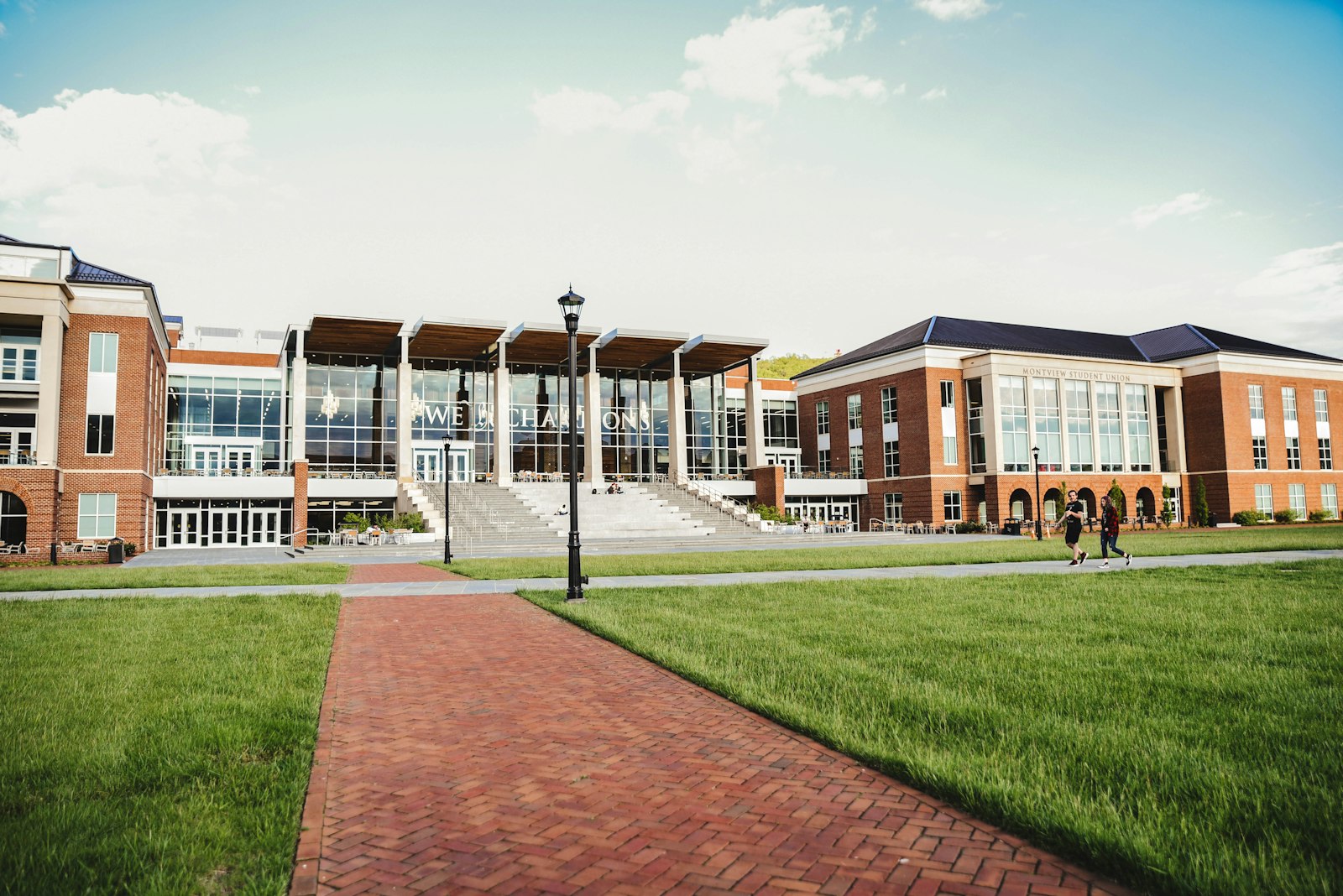
The University at Buffalo has undertaken what it describes as one of the most significant periods of campus growth in its history. Over the next decade, UB plans to invest $1.64 billion in its built environment across both its North Campus in Amherst and its historic South (Main Street) Campus in Buffalo proper. Projects range from a new engineering hall already rising from the ground to future interdisciplinary research buildings, an AI center, and major renovations of landmark buildings that have not seen serious investment since the mid-20th century.
Agrusa Hall: The Flagship Project Already Under Construction
The most advanced project in the pipeline is Russell L. Agrusa Hall, a new engineering and applied sciences building on the North Campus. UB broke ground on the $111 million facility in September 2024, with construction starting in earnest in December 2025 after the Furnas parking lot that occupied the site was cleared. The building is funded through a combination of a $68 million state capital appropriation announced by Governor Hochul in 2022 and a $40 million personal commitment from alumnus Russell L. Agrusa, a retired software executive, half of which is designated for construction and half for academic programs.
LeChase Construction is the construction manager; Page Architects is the design firm. The building will include collaborative learning spaces, maker spaces, prototyping and fabrication suites, club and co-curricular space, and modern labs designed to accommodate the School of Engineering and Applied Sciences (SEAS), whose enrollment has grown 46 percent since 2013 to approximately 7,500 students. When complete, it will represent a visible anchor for the engineering quadrant of the North Campus.
South Campus: Clark Hall and Parker Hall
On the South Campus, two major renovations are in the pipeline for construction begins in 2027. Clark Hall, the 1930s-era recreation facility, will receive a $93 million renovation designed by Diamond Schmitt Architects. Plans include a 15,500-square-foot addition with a new full-size gymnasium, a renovated fitness center, a new dance studio with skylights, and student health services accessible from the Main Street campus. Clark Hall is scheduled to close at the end of spring semester 2026 to prepare for construction, with completion targeted for fall 2030.
Parker Hall, built in 1945 as the original engineering building, will undergo a $110 million complete renovation designed by Perkins Eastman. The project will introduce a geothermal wellfield beneath the current parking lot, creating an energy hub designed to provide carbon-free heating and cooling not only to Parker but to several adjacent historic buildings. The School of Social Work will relocate to Parker from the North Campus upon completion, and the architecture school will retain upgraded fabrication and studio space. The project is set to bid later in 2026, with construction starting in 2027 and completion scheduled for fall 2030.
AI, Research, and Empire AI
Beyond the physical buildings, UB is positioning itself as a statewide hub for artificial intelligence research. Plans call for an AI & Society Building and a separate 170,000-square-foot Interdisciplinary Research Building — both slated for the North Campus, co-located to foster collaboration. In April 2024, Governor Hochul announced UB as the home of New York's Empire AI consortium, a public-private partnership establishing a powerful AI supercomputing center at UB. The consortium's initial computing infrastructure is temporarily housed in the downtown campus while the permanent North Campus facility is designed and built.
An additional renovation of Lockwood Library, one of the most-used facilities on campus, is also part of the pipeline, as is work on the Cooke-Hochstetter science complex and the health sciences complex on South.
What This Means for Western New York Construction
ConstructConnect noted that the UB program, when combined with work at Buffalo State University and other SUNY institutions, represents more than $300 million in active college construction projects in the Buffalo area. UB alone has pledged more than $25 million annually for recurring maintenance work — roofs, utilities, sidewalks — in parallel with the headline capital projects. The overall pipeline is a decade-long source of work for general contractors, specialty subcontractors, and design professionals across Western New York, with projects spanning structural, mechanical, electrical, plumbing, geothermal, and technology infrastructure disciplines.
Sources

Let's connect
For organizations planning commercial, industrial, or infrastructure work, we will review the project and recommend the appropriate delivery approach.

Join our team
If you hold yourself to careful, accountable work, you already work the way we do.