

news +insights
State DOT Construction Season 2026: Billions in Highway and Bridge Work Hit the Ground Simultaneously
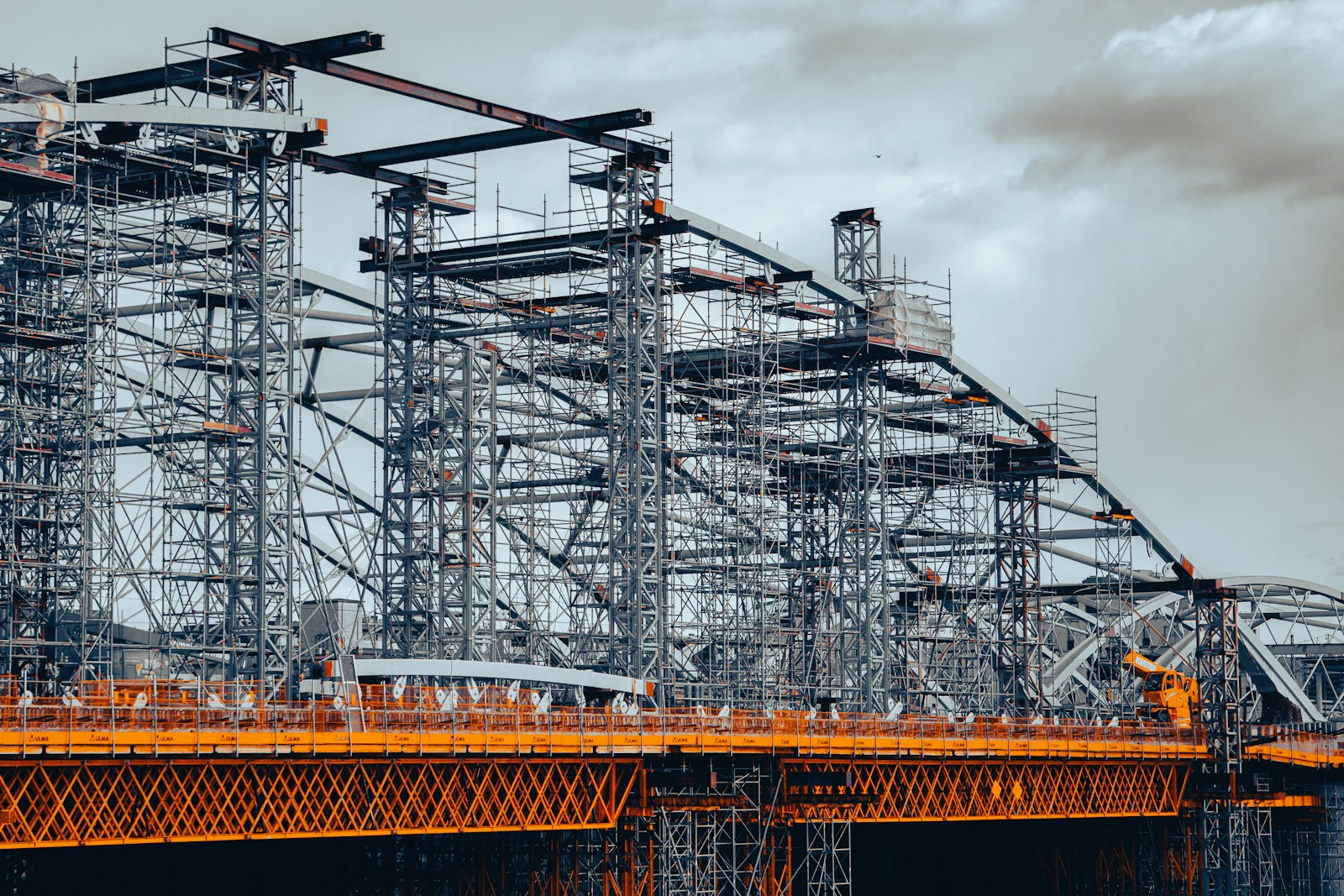
Spring construction season is underway, and five state departments of transportation have collectively unleashed among the most concentrated packages of highway and bridge investment in recent memory. Ohio alone is running a record-breaking $3.4 billion program. Texas is advancing a $4.5 billion interstate rebuild. Utah is deploying $2.8 billion, Wisconsin is executing a $1.7 billion urban corridor, and Minnesota is running more than 200 projects. The cumulative effect on labor markets, contractor capacity, and materials demand across the Midwest and Sun Belt is substantial.
What Is Happening
In April 2026, Construction Dive reported on simultaneous construction season kickoffs from transportation agencies in five states, reflecting a multi-year pattern of federally-backed infrastructure investment channeled through state programs. The activity is underpinned in part by the IIJA's bridge formula program, through which the American Road and Transportation Builders Association (ARTBA) confirms as of December 2025 that states have collectively committed $15 billion toward over 7,350 bridge projects -- nearly 57 percent of the $26.5 billion available over the five-year period -- with $8.5 billion already reimbursed for completed work.
State-by-State Highlights
Ohio -- Record $3.4 Billion Season
Ohio DOT is executing what it calls its largest construction season ever, with $3.4 billion worth of work across 977 new projects. According to Construction Dive, the program targets 739 bridges and approximately 4,562 miles of roadway. Major undertakings include a $280 million job on I-90 in Cuyahoga County involving pavement replacement and five bridge rebuilds, a $274 million expansion of U.S. Route 33 from two to four lanes between Athens and the Ohio River, and a $157 million state Route 8 high-level bridge replacement in Summit County.
Ohio Gov. Mike DeWine stated in ODOT's announcement: "As a state that makes and moves things, we must have a safe transportation system that is well maintained."
Texas -- $4.5 Billion I-35 Capital Express Central
Texas is advancing the I-35 Capital Express Central, a $4.5 billion undertaking to transform 79 miles of I-35 in Williamson, Travis, and Hays counties -- one of the largest active highway reconstruction programs in the country. Construction Dive notes that 2026 work includes reconstructing the I-35 bridges over Lady Bird Lake in Austin. Additional 2026 TxDOT projects include a $157 million Grand Parkway expansion in west Harris County and a $125 million widening of I-20 near Abilene.
Utah -- $2.8 Billion, 176 New Projects
The Utah DOT will start 176 new construction projects worth $2.8 billion this year. The largest single project is the 2100 North Freeway in Utah County -- a $621 million freeway-to-freeway connector that will build 14 new bridges and nearly 2 miles of shared-use paths linking the Mountain View Corridor to I-15. Other major undertakings include a $385 million interchange at 1800 North and I-15 in Davis County and a $361 million new interchange on the 5600 South project in Roy and Riverdale.
Wisconsin -- $1.7 Billion I-94 East-West Corridor
Wisconsin DOT's 2026 season spans more than 400 highway improvement projects. The anchor project is the approximately $1.7 billion I-94 East-West reconstruction between 70th Street and 16th Street near Milwaukee -- 3.5 miles including the Stadium Interchange and five service interchanges, which broke ground in late 2025 and continues through the 2026 season. Additional active projects include the approximately $1.2 billion I-41 system interchange reconstruction at Appleton and DePere and the $218 million reconstruction of U.S. Route 51 in Dane County.
Minnesota -- More Than 200 Projects
The Minnesota Department of Transportation announced over 200 road and bridge projects for the 2026 season, plus 51 additional projects at airports, water ports, railroad crossings, and transit facilities. Signature projects include the $195 million four-year Highway 65 reconstruction in Blaine, a $114.8 million underpass in Moorhead, and completion of the $76 million I-94 expansion between Albertville and Monticello. MnDOT Commissioner Nancy Daubenberger stated: "We have a robust 2026 road construction season ahead of us -- when complete, these projects will help people get around more easily, improve safety, create smoother pavement, and improve connectivity for everyone who relies on our multimodal transportation system."
The National Bridge Picture
ARTBA analysis of federal data shows over 27,000 structures currently being repaired or replaced using federal dollars. Thirteen states have committed 75 percent or more of their bridge formula funds, led by Alabama, Ohio, Oklahoma, Tennessee, West Virginia, Idaho, Indiana, North Dakota, and Wisconsin. Major projects receiving bridge formula funds include the New Bedford Bridge Replacement in Massachusetts, the I-270 bridge replacement over the Mississippi River in Illinois, and the Port Allen Canal Bridge Replacement in Louisiana.
ARTBA notes that one in three U.S. bridges still requires repair or replacement, and the next surface transportation reauthorization bill -- due by September 30, 2026 -- represents Congress's opportunity to extend or expand investment levels beyond what the current IIJA authorized.
Why It Matters to Construction Professionals
The simultaneous execution of large DOT construction programs across multiple states creates both opportunity and constraint for the construction industry. On the opportunity side, the volume of active bid packages across highway, bridge, and multimodal work provides sustained pipeline for civil contractors, bridge specialists, earthwork firms, and paving contractors. On the constraint side, the concentration of large projects in overlapping time windows -- particularly in Ohio, Wisconsin, and Minnesota -- competes for the same pool of experienced craft labor, aggregate producers, structural steel fabricators, and heavy equipment.
For bridge contractors specifically, the combination of bridge formula program activity and state DOT capital programs represents a multi-year sustained demand signal. Thirteen states leading bridge formula commitments -- Ohio and Wisconsin prominently included -- are the same states running large construction seasons this year.
Implications for Owners, Developers, Contractors, and Subcontractors
General contractors in highway and civil markets should be attentive to bid schedule overlaps across states, which can affect equipment and personnel availability. Firms with multi-state licensing and bonding capacity have a clear advantage in responding to the pipeline.
Subcontractors in paving, structural concrete, bridge steel, earthwork, drainage, and guardrail markets should expect sustained backlog. For those in Midwest markets, the combination of Ohio's 977 projects and Wisconsin's 400-plus projects creates a dense regional demand environment.
Materials suppliers -- particularly aggregate, structural steel, and reinforcing bar producers -- should anticipate elevated order volumes tied to state DOT construction season ramps across the Midwest, South, and West. The concentration of work in geographically proximate states may stress regional supply chains.
Owners and developers watching public infrastructure activity should note that DOT construction seasons of this scale correlate with increased permitting and right-of-way activity at the local level, which can affect access, staging, and logistics for adjacent private development.
What to Watch Next
- IIJA surface transportation reauthorization debate: the current law expires September 30, 2026, and whether Congress extends current funding levels will determine the 2027 and beyond DOT project pipeline
- ARTBA's bridge formula program tracking: as states move from commitment to construction on the $15 billion in committed bridge projects, bid opportunities will continue to materialize
- Regional labor market stress indicators: craft labor wage rate movements in Ohio, Midwest, and Texas markets as multiple large projects reach peak construction phases simultaneously
- State supplemental budget actions: several states are considering additional capital programs that could further expand already-large construction seasons
Bottom Line
Five state DOTs are executing construction programs that together represent well over $10 billion in active highway and bridge work. Ohio's record-breaking $3.4 billion season, Texas's $4.5 billion I-35 megaproject, Utah's $2.8 billion program, Wisconsin's $1.7 billion corridor rebuild, and Minnesota's 200-plus-project season reflect years of capital planning now landing as active construction contracts. For contractors in highway, bridge, and civil markets, the current season represents one of the strongest active pipelines in years. The national bridge formula program -- $15 billion committed toward 7,350-plus projects -- ensures this level of activity extends well into the next multi-year cycle.
Sources:
* Construction Dive, 5 state DOTs kick off construction season: constructiondive.com
* MnDOT official 2026 construction season announcement: dot.state.mn.us
* ARTBA, States Address Aging Bridges: artba.org
* Gov Market News, aging US bridges drive replacement plans: govmarketnews.com




Let's connect
For organizations planning commercial, industrial, or infrastructure work, we will review the project and recommend the appropriate delivery approach.

Join our team
If you hold yourself to careful, accountable work, you already work the way we do.