
news +insights
Rochester's Downtown Construction Cycle Hits $625 Million, and a New Wave of Office Conversions Is Just Getting Started
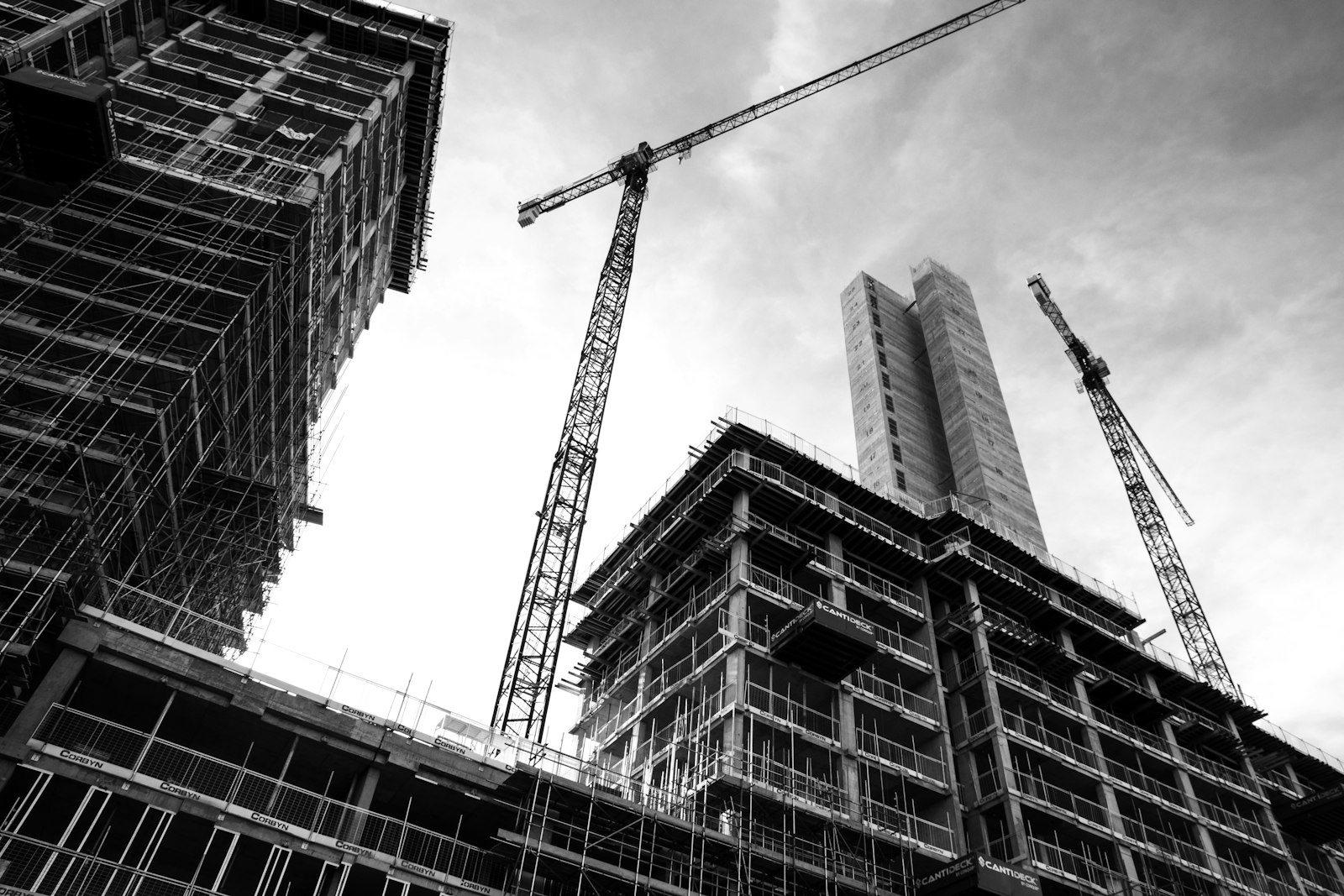
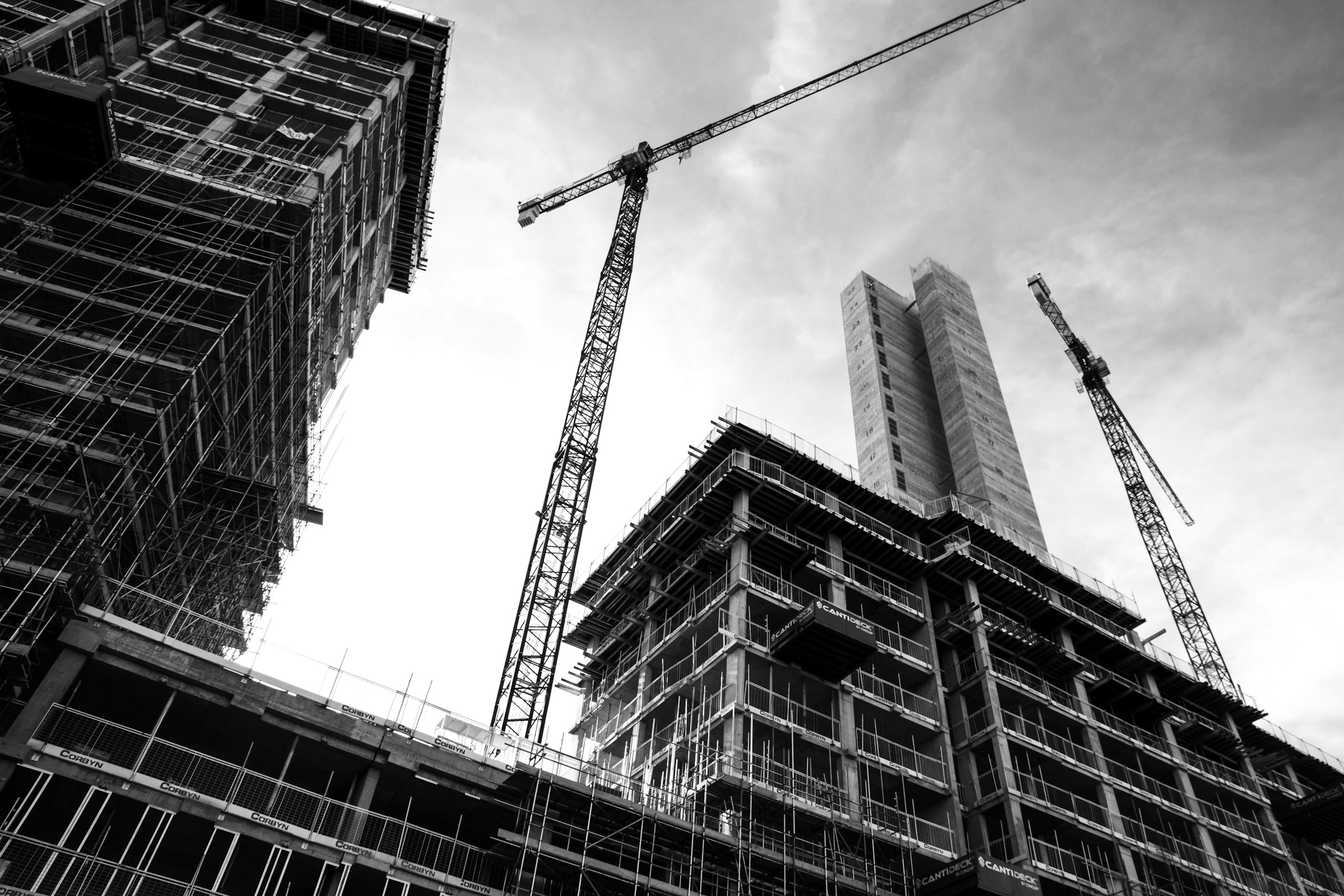
Downtown Rochester is in the middle of its most productive construction cycle in decades, and the pipeline is still filling. According to data reported by Rochester Business Journal in May 2026, citing Rochester Downtown Development Corp. CEO Galin Brooks, downtown investment in fiscal year 2025–26 reached an estimated $625 million — up from $491 million the prior year. At the same time, approximately 1,500 residential units are currently in the construction pipeline or under construction, and downtown Rochester's residential population has grown to 10,800 residents, making it the city's most populous neighborhood.
What's Driving the Investment Cycle
The surge is not driven by any single project. It reflects a confluence of adaptive reuse activity, new ground-up construction, and public-private financing tools — particularly the federal Low Income Housing Tax Credit program, New York State's Restore NY and Middle Income Housing programs, and Community Development Block Grant pass-throughs from the City of Rochester's HOME program. These tools have made projects financially viable even as construction costs remain elevated and interest rates sit in the 6-percent range.
Industrial vacancy in Monroe County remains tight — between 4 and 5 percent — while Class A office space is performing better than the national average, with most downtown towers at 80 percent occupancy or higher and many in the 90s, according to the same RBJ reporting. Class A rents have ticked up slightly and net absorption has been positive. The challenge lies in lower-class office product, where vacancy remains high and few tenants are absorbing space — creating the opportunity for the current wave of adaptive reuse conversions.
The Conversion Pipeline
Rochester has a decade-long track record of successful office-to-residential conversions — Tower280, The Metropolitan, Innovation Square, Sibley Square, The Terminal Building, the Gannett Building (now The Edmond), and The Rockford at Old City Hall. The current generation of projects is equally ambitious. According to RBJ's May 2026 reporting, several projects are underway or soon to begin construction:
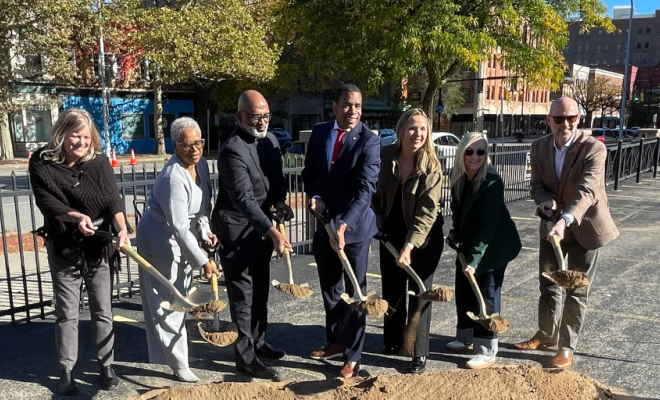
Gateway Apartments — 150 East Main Street, 129 affordable units, $72.3 million total development cost, developer SAA|EVI and contractor Christa Construction, groundbreaking announced by HCR on May 5, 2026. This is the first HONDA Act office-to-residential conversion outside New York City.
Tichner & Jacobi Building — St. Paul Street, conversion into mostly residential uses, status: underway or soon to begin.
Former Rochester Savings Bank Building — West Main Street at Fitzhugh Street, residential conversion, status: underway or soon to begin.
Rochester Club — East Avenue, residential conversion, status: underway or soon to begin.
Clinton Square (Riedman) — East Broad Street, top seven floors into 102 market-rate apartments, $42.6 million total project cost, previously covered by WCG.
The RBJ also cited First Federal Plaza as a future conversion candidate, noting that whoever acquires the property could pursue a residential conversion following the model established by its predecessors.
The Constraints Ahead
The conversion wave faces real headwinds. Construction costs remain very high by historical standards, and the gap between current development costs and achievable rents or sale prices in a mid-sized market like Rochester is narrower than in New York City. Developers who locked in financing at 3 percent rates four or five years ago are now facing refinancing into a 6-percent environment, which materially changes the debt service mathematics on existing projects and makes new ground-up construction difficult to underwrite without subsidy.
Utility connectivity is emerging as a new constraint. RBJ reported that developers and builders have had projects stifled by the inability of utility companies to provide adequate electrical service, and that grid connectivity now looms as a larger project-timing factor. New York State's all-electric building mandates, while currently on hold, add further uncertainty to the cost and permitting timeline of projects that were underwritten under prior code assumptions.
What the Cycle Means for Builders
For contractors in the Rochester market, the current environment is the most active in recent memory for urban renovation work. Office conversions, while involving lower structural complexity than new high-rise construction, require intensive MEP systems work — new electrical distribution, plumbing stacks, HVAC with individual unit controls, sprinkler upgrades, and elevator modernization — in buildings that present the full range of existing conditions hazards. Estimating and scheduling these projects accurately requires specialized experience that Rochester's established renovation contractors are well positioned to offer.
With $625 million active and a pipeline that includes at least five additional conversion projects, Rochester's downtown construction market is not cooling down in the near term.
The Labor Market Behind the Numbers
A $625 million construction investment cycle in a city the size of Rochester puts genuine pressure on the local construction labor market. Office conversions require skilled MEP trades workers — electricians, plumbers, HVAC mechanics — in buildings where the existing systems must be completely replaced to meet modern code and support residential occupancy. The work is different from new construction: it requires careful sequencing around occupied or partially occupied buildings, coordination with utility companies for new electrical service (a constraint RBJ identified as increasingly limiting project timelines), and expertise in navigating existing conditions that differ from what drawings show.
Rochester has a well-established construction trades ecosystem, but the volume of concurrent projects is straining capacity in certain specialties. Mechanical and electrical subcontractors in Monroe County are reporting strong backlogs, and general contractors are increasingly booking specialty trades months in advance to secure crews for projects that break ground in 2026 and 2027. This is broadly positive for the regional construction labor market — it supports sustained employment and potentially supports wage growth — but it adds complexity to project scheduling and underscores the importance of early procurement for owners and developers planning future projects.
Sources
https://rbj.net/2026/05/06/rochester-commercial-real-estate-market-stable-interest-rates/
https://hcr.ny.gov/news/governor-hochul-announces-723-million-affordable-housing-project-rochester
https://www.swbr.com/news/gateway-apartments-breaks-ground-as-catalyst-for-east-main-street-revitalization/
https://rbj.net/2026/05/18/galin-brooks-leave-ceo-rochester-downtown-development/
Let's connect
For organizations planning commercial, industrial, or infrastructure work, we will review the project and recommend the appropriate delivery approach.

Join our team
If you hold yourself to careful, accountable work, you already work the way we do.