

news +insights
Rivian's $5 Billion Georgia EV Plant Enters Vertical Construction Phase as DOE Loan Is Restructured
One of the largest advanced manufacturing construction projects in U.S. history moved into a new phase in late April 2026 when electric vehicle maker Rivian and the U.S. Department of Energy restructured the federal construction loan backing the company's sprawling $5 billion factory in Morgan and Walton counties, Georgia. The restructured deal reduces the loan's size while simultaneously unlocking expanded production capacity for the facility's first phase—and confirms that vertical construction will accelerate this summer.
What Changed: The DOE Loan Restructuring
Rivian announced on April 30, 2026 that it and the U.S. Department of Energy's Office of Energy Dominance Financing agreed to reduce the previously awarded $6.6 billion loan to $4.5 billion. The amended loan principal stands at just over $4 billion with $494 million in capitalized interest. Rivian expects to first draw on the loan by early 2027.
The restructuring carries a meaningful upside for the project's construction scope: the first phase's annual production capacity rises from 200,000 vehicles to 300,000 vehicles—a 50% increase over prior plans. Until the announcement, the project had been structured as two phases, each with 200,000 units of capacity. The revised plan consolidates and expands Phase 1, allowing Rivian to ramp its Georgia production more quickly "while still providing significant room for future expansion in later phases," the company said in a letter to shareholders.
"We're very excited to partner with the U.S. Department of Energy to grow our manufacturing footprint in Georgia," said RJ Scaringe, Rivian founder and CEO. "The thousands of dedicated people who will soon work in our Georgia plant will be instrumental to Rivian's growth as we scale American manufacturing and work to ensure that the U.S. retains its leadership in innovation and technology."
Construction Status and Timeline
The 2,000-acre site in southern Morgan and Walton counties—located approximately one hour east of Atlanta near Social Circle—has been in active site preparation since mid-2025. Rivian held a formal groundbreaking ceremony on September 16, 2025, attended by CEO Scaringe, Georgia Governor Brian Kemp, and Georgia House Speaker Jon Burns.
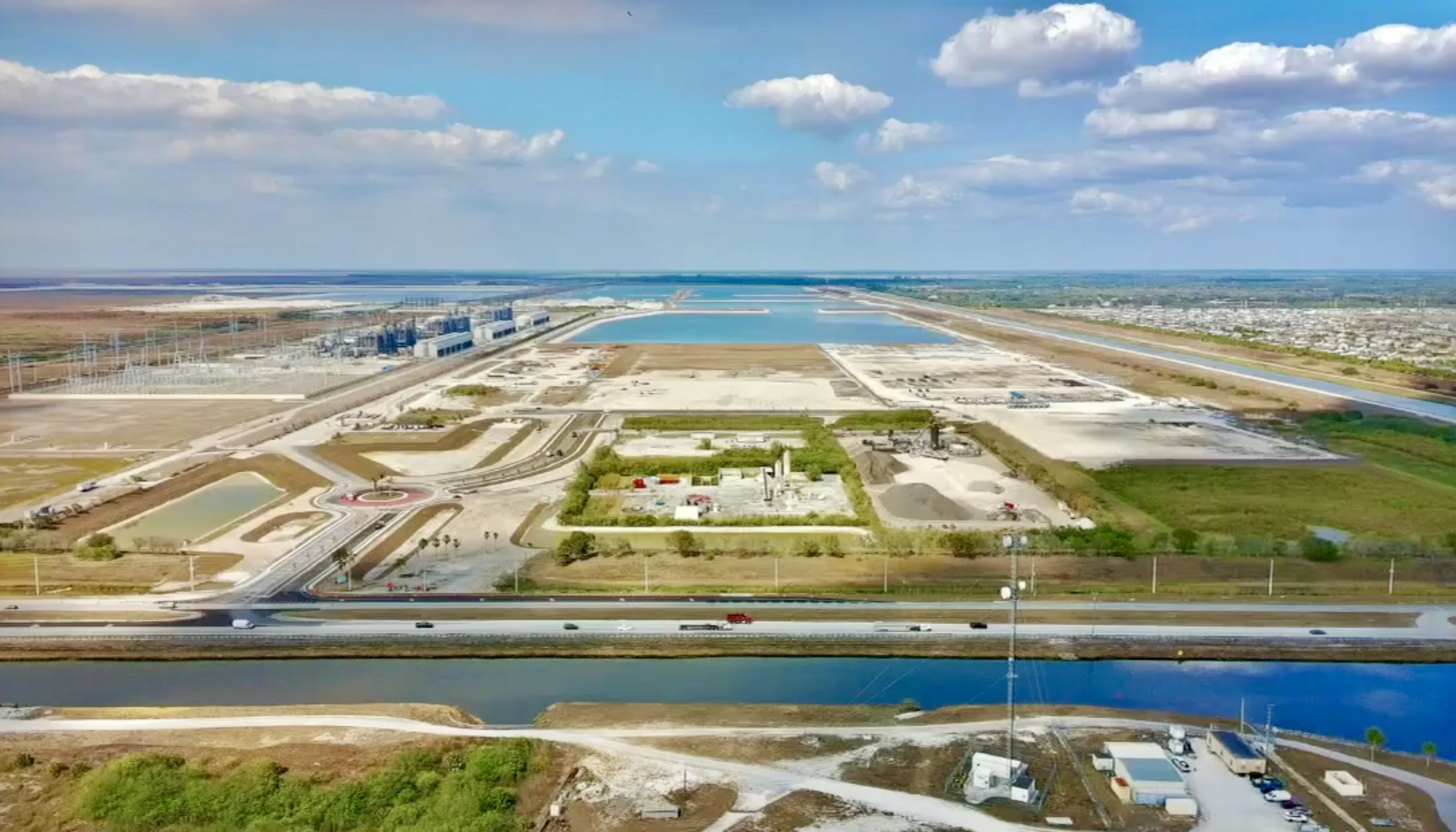
As of the April 2026 announcement, the site remains in a preparatory phase: utility work is underway across the acreage, construction trailers are in place, and heavy equipment is actively moving materials. Rivian confirmed that vertical construction will begin this summer (2026), with the stamping press area described as one of the first capital-intensive and technically demanding projects within the plant from a construction perspective.
"Preparations are underway for the development of the stamping press area, one of the most capital-intensive and technically demanding projects within the plant from a construction perspective," Rivian said in the release. "Progress will accelerate this summer as the facility's primary buildings begin to take shape."
The factory's first phase is expected to open in late 2028, assembling the company's R2 midsize SUV. The facility is also planned to build robotaxis as part of Rivian's partnership with Uber. The 9-million-square-foot campus will represent one of the largest manufacturing footprints in the southeastern United States when complete.
Project Scale and Economic Impact
The numbers attached to the Rivian Georgia project are significant even by large industrial construction standards:
- Total investment: $5 billion pledged by Rivian
- Site area: 2,000 acres in Morgan and Walton counties
- Total floor area: 9 million square feet
- Permanent jobs: 7,500 at average pay of at least $56,000 annually
- State incentives: Georgia has committed $1.5 billion in incentives contingent on job creation targets
- Construction employment: Approximately 2,000 construction jobs are projected during the build phase
- Phase 1 capacity: 300,000 vehicles annually (amended from 200,000)
When the project was first announced by Governor Kemp in December 2021, it was the largest jobs and investment deal in Georgia state history at the time, surpassed only by the subsequent Hyundai Motor Group EV factory announcement near Savannah. Hyundai's Metaplant, which opened earlier in 2025, covers 17 million square feet and was 2025's largest industrial project, setting a benchmark against which the Rivian facility—at 9 million square feet—will compete for construction resources in the region.
Context: Why the Loan Was Restructured
The original $6.6 billion DOE loan was finalized in early 2025 in the final days of the Biden administration, amid a wave of clean energy-related federal loans. The loan faced criticism from some Republican leaders who questioned whether it could be reclaimed, but Rivian officials maintained it was a completed transaction.
The Trump Administration renegotiated the terms rather than canceling the loan outright, reflecting both the project's economic significance to the state of Georgia and the complexity of unwinding a major infrastructure commitment already in progress. Rivian CFO Claire McDonough noted that the restructured terms allow the company to "meaningfully scale in the future." Separately, Rivian ended Q1 2026 with $4.8 billion in cash and expects another $2.6 billion through its Amazon, Volkswagen, and Uber partnerships during the year.
Implications for the Construction Industry
For general contractors and specialty subcontractors in the Southeast, the formal transition to vertical construction this summer activates a multi-year procurement and build program that will draw heavily on structural steel, precast concrete, MEP trades, and advanced systems integration expertise. A 9-million-square-foot manufacturing campus includes stamping, body assembly, paint, and general assembly buildings, each with distinct structural and utility systems requirements.
The stamping press area, which Rivian highlighted as one of the first construction priorities, typically involves among the heaviest foundation work on an automotive assembly campus—press pits, crane foundations, and heavy concrete structures capable of supporting presses weighing thousands of tons. This scope generally requires specialized civil and structural contractors with prior automotive experience.
For labor markets in the Atlanta metro region and surrounding rural counties, the project represents sustained construction employment at a scale that will intersect with other active large-project pipelines in the state, including data center campuses and logistics facilities. Competition for skilled tradespeople, particularly ironworkers, electricians, and pipefitters, is likely to intensify as summer 2026 vertical construction ramps.
What to Watch Next
The first loan draw by Rivian, expected in early 2027, will be a milestone confirming that key construction milestones have been met per DOE's disbursement conditions. Production timeline updates—Rivian targets late 2028 for the first R2 SUVs from Georgia—will be the most closely watched operational signal for whether the current construction schedule is holding. The fate of any Phase 2 expansion, which is now outside the scope of the DOE loan per CFO McDonough's comments, remains an open question dependent on company profitability and capital allocation decisions.
Bottom Line
Rivian's Georgia factory is now a confirmed, active large construction program, not a planned or delayed one. The DOE loan restructuring in April 2026 resolved a key political and financing uncertainty while actually improving Phase 1 capacity outcomes. With vertical construction starting this summer on a 9-million-square-foot, 2,000-acre campus employing 2,000 construction workers during build-out, this is one of the largest active industrial construction projects in the U.S. South. For construction professionals tracking large-project pipelines, the Rivian Stanton Springs campus should be on every radar.
Sources:
- Atlanta Journal-Constitution: Rivian to boost EV production at planned Georgia plant, shrinks DOE loan (April 30, 2026)
- Rivian Newsroom: Rivian Announces Optimized Capacity Plan for Georgia Plant
- TechCrunch: Rivian breaks ground on $5B Georgia factory (Sept. 16, 2025)
- Covington News: Vertical construction at Rivian plant expected to begin later this year
- Construction Dive: Major factory construction projects to watch in 2026

Let's connect
For organizations planning commercial, industrial, or infrastructure work, we will review the project and recommend the appropriate delivery approach.

Join our team
If you hold yourself to careful, accountable work, you already work the way we do.