
news +insights
Northeast Corridor Rail: $4.7 Billion in New Grants, the Hudson Tunnel Fight, and What the Pipeline Looks Like in 2026
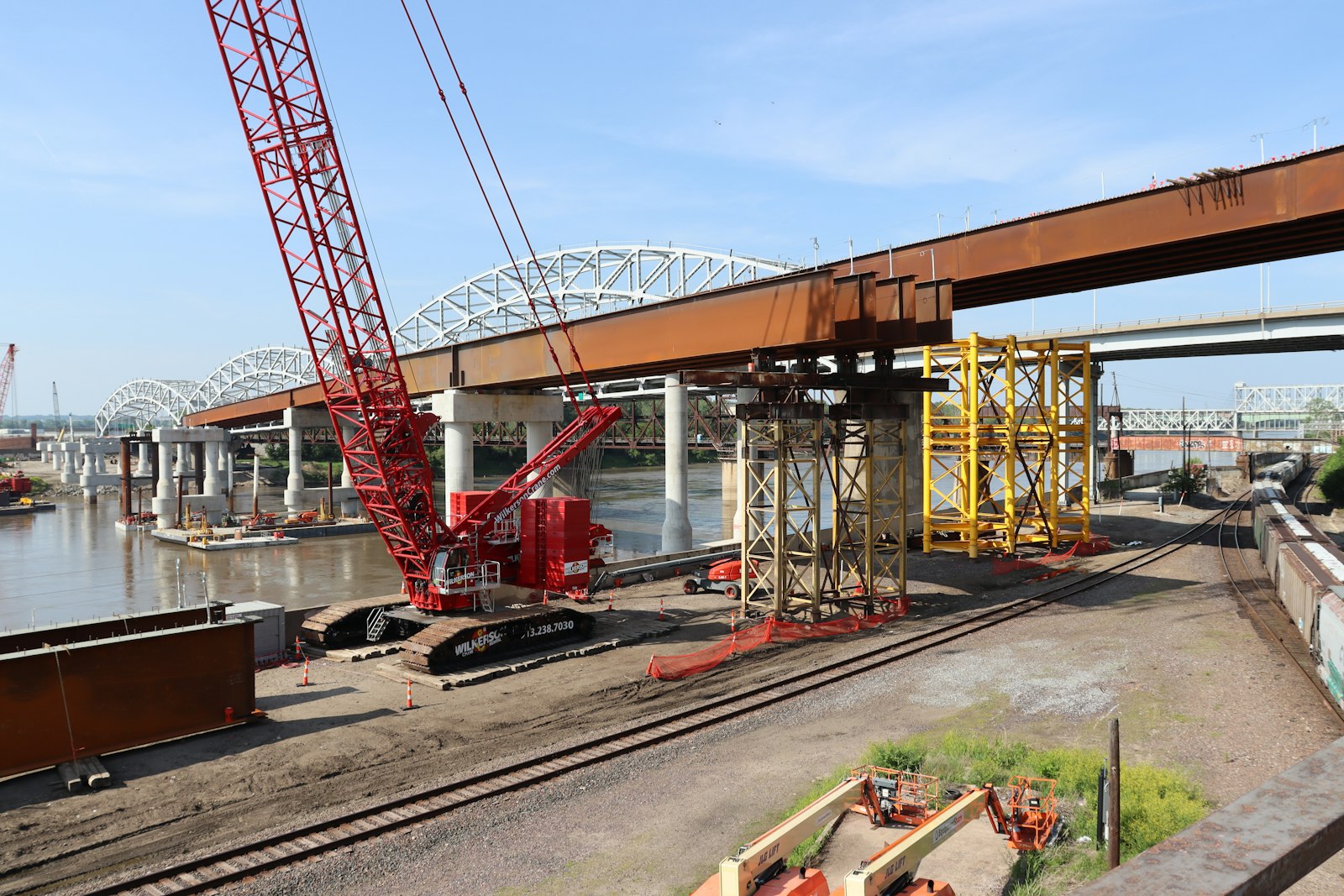
The Northeast Corridor—stretching from Washington, D.C., through Philadelphia and New York City to Boston—is the most heavily traveled passenger rail line in the United States and one of the most consequential pieces of transportation infrastructure on the continent. It is also one of the oldest, carrying physical systems that in some sections date to the nineteenth century and face a mounting backlog of repair, modernization, and capacity investment. In 2026, that picture is changing—slowly in some places, urgently in others.
$4.75 Billion in New NEC Grants Open for Applications
On April 20, 2026, U.S. Transportation Secretary Sean Duffy announced that the Department of Transportation was opening applications for $4.75 billion in grants for projects along Amtrak's Northeast Corridor under the Federal-State Partnership for Intercity Passenger Rail (Partnership-NEC) program. The funding, drawn from the 2021 Infrastructure Investment and Jobs Act, is available to states, transit agencies, Amtrak, and other eligible partners for projects that reduce the state-of-good-repair backlog, improve performance, or expand and establish new intercity passenger rail service on the NEC.
According to the Federal Railroad Administration's program page, the first round of funding applications focused on high-priority major station projects, with New York Penn Station and Washington Union Station designated as the initial priorities. The application window closed May 5, 2026, with projects required to be included in the 2026 NEC Project Inventory to be eligible. The FRA expects to award as many as five grants under the program, with a maximum award of up to the full $4.75 billion in a single grant scenario for the most transformative projects.
The Penn Station transformation is already in motion on a parallel track. Amtrak announced in March 2026 that three teams had been shortlisted to compete as Master Developer for the Penn Station project: Penn Forward Now (led by Fengate), Penn Transformation Partners (led by Halmar), and Grand Penn Partners (led by Macquarie). The selected developer will be announced in June 2026, with preliminary design and environmental review activities scheduled from summer 2026 through the end of 2027. Construction is targeted to begin at the end of 2027.
The Hudson Tunnel Project: Urgent but Uncertain
The most consequential construction project on the NEC—and arguably in the country—is the $16 billion Hudson Tunnel Project, the centerpiece of the Gateway Program. The project includes two major improvements: building nine miles of new passenger rail track between New Jersey and New York, including nearly five miles of new tunnel boring under the Hudson River; and rehabilitating the existing North River Tunnel, which has been in continuous service since 1910.
Construction has been underway in phases, and as of March 2026, Construction Dive reported that all sites had fully resumed activity following a brief federal funding dispute that caused contractors to suspend work on February 6. The Gateway Development Commission confirmed that construction at all active sites had restarted but warned that work would have to pause again within two to three months if federal funding disbursements did not continue. Gateway CEO Tom Prendergast stated: “The Hudson Tunnel Project is the most urgent passenger rail project in the country, and GDC's mission is to deliver it as soon as possible.”
Key construction milestones completed or underway as of March 2026 include:
- Completion of the Tonnelle Avenue Bridge and Utility Relocation Project in North Bergen, New Jersey, which clears the access point for tunnel boring machines to be assembled and launched.
- Arrival of components for the first tunnel boring machine (TBM) at the North Bergen site, with the second TBM components beginning to arrive in March.
- Completion of the Hudson County Access Shaft slurry wall, creating a watertight perimeter for the underground shaft, with excavation beginning in spring 2026.
- More than 11,000 cubic yards of concrete poured for the tunnel invert slab of the Hudson Yards Concrete Casing, with wall installation in progress.
- Deep soil mixing to stabilize the riverbed for tunnel boring resumed within the Hudson River cofferdam.
Critically, contract awards for the Hudson River Tunnel section itself—the project's most complex and costly element—remain on hold pending resolution of the federal funding standoff. The Gateway Program has described these awards as among the next major procurement milestones, and their delay adds to the risk of the overall project timeline.
Broader NEC Investment and Other Active Projects
The NEC is not just about the Hudson Tunnel. Amtrak's New Era infrastructure program tracks a portfolio of ongoing projects across the corridor, including bridge replacements at the Gunpowder and Pelham Bay bridges, electric system upgrades on the Zoo to Paoli segment, and the Long Bridge Project in Washington, D.C.—a two-track railroad bridge over the Potomac River that is a critical bottleneck for intercity and commuter rail. The DOT simultaneously announced $2 billion in Consolidated Rail Infrastructure and Safety Improvements (CRISI) program grants covering passenger and freight rail modernization projects nationwide, available to projects addressing grade crossing safety, congestion reduction, and intercity connectivity.
The $4.7 billion in NEC grants carries additional political complexity. Even as the Trump administration's FY 2027 budget proposed cutting Amtrak's budget by 82 percent and eliminating the Intercity Passenger Rail grant program, Smart Cities Dive noted that DOT is moving ahead with funding already committed under Biden-era legislation and congressional appropriations. The tension between the administration's proposed budget direction and the flow of IIJA-authorized funds creates an unusual dynamic for project sponsors and contractors trying to plan around federal disbursements.
What This Means for Construction
Rail infrastructure construction on the scale of the NEC pipeline involves some of the most technically demanding work in the built environment. Tunnel boring through dense urban geology, replacement of active rail bridges without disrupting service, construction of underground station concourses in the heart of major cities, and rehabilitation of century-old tunnel structures all require specialized expertise, heavy equipment, and extended programs of coordinated construction activity. The labor and supply chain demands of these projects ripple broadly into the construction economy.
For owners, developers, and general contractors tracking the national pipeline, the Northeast Corridor represents a multi-decade program of sustained investment. The $4.75 billion grant announcement is not the end of that commitment but one installment in a longer program—and for project sponsors who have been waiting years to move projects from environmental review into construction, 2026 is finally beginning to feel like a year of action.
Sources
U.S. DOT – $4.7B Investment in Amtrak's Northeast Corridor (April 2026) | Federal Railroad Administration – National Railroad Partnership Program | Construction Dive – Gateway Funding Fight Could Halt Construction Again on Hudson Tunnel (March 2026) | Gateway Development Commission – Hudson Tunnel Project Construction Update (March 2026) | Amtrak – Progress on New York Penn Station Transformation (March 2026) | Smart Cities Dive – Amtrak to Get $4.7B for Northeast Corridor Projects (April 2026) | Amtrak New Era – Infrastructure Projects
Let's connect
For organizations planning commercial, industrial, or infrastructure work, we will review the project and recommend the appropriate delivery approach.

Join our team
If you hold yourself to careful, accountable work, you already work the way we do.