
news +insights
New Highmark Stadium in Orchard Park: Western New York's Largest-Ever Construction Project Nears the Finish Line
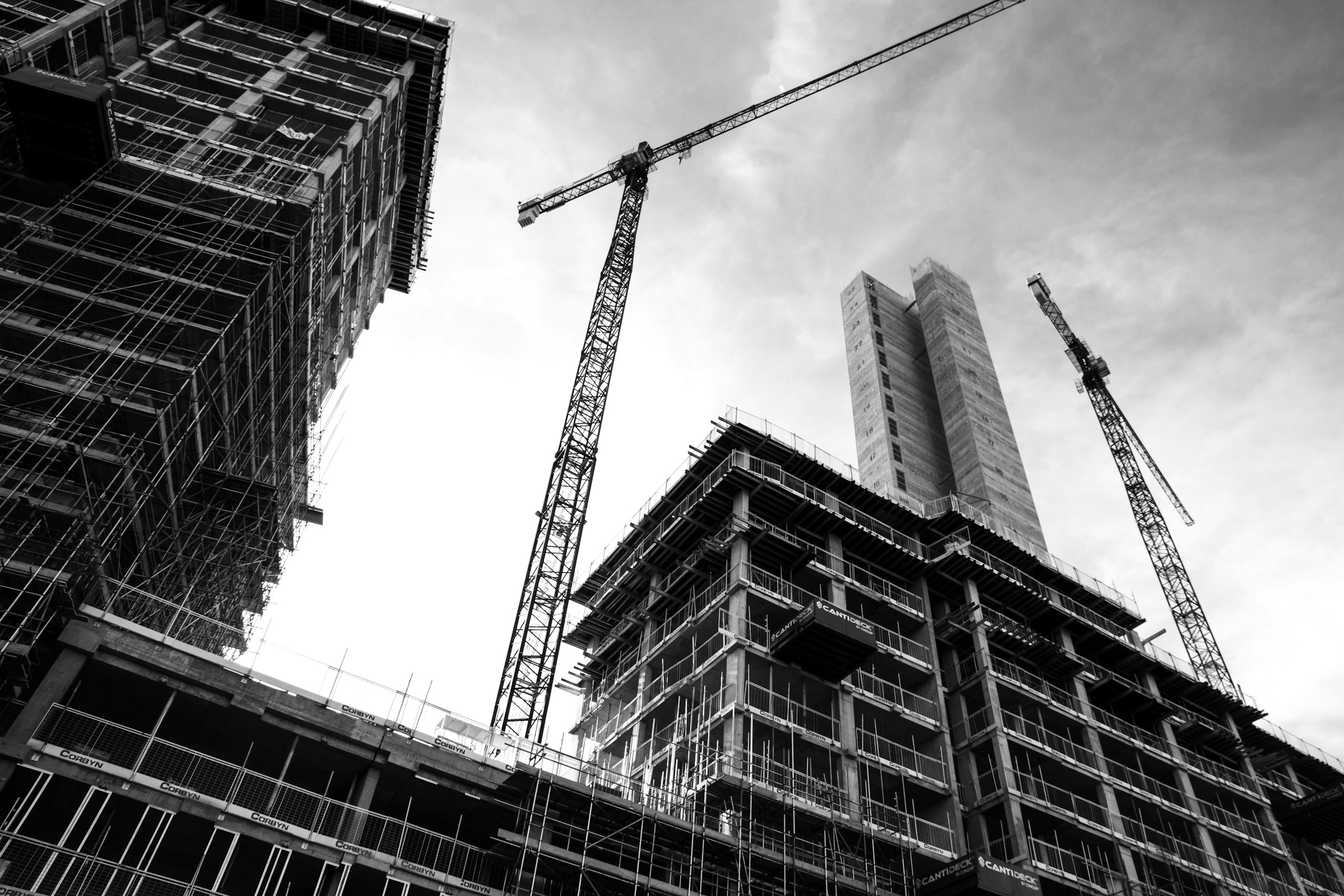
What began with a ceremonial groundbreaking on June 5, 2023, is now entering its final weeks of construction. The new Highmark Stadium in Orchard Park, Erie County, is 93 percent complete as of late March 2026 and on schedule for the Buffalo Bills to take the keys in June. With a total price tag that has grown to roughly $2.1–2.2 billion, it stands as the largest construction project in the history of Western New York.
Scale of the Project
The open-air stadium seats 60,108 fans, with total capacity reaching 63,000 — including standing-room areas — and potentially 66,000 for special events. Its canopy covers approximately 65 percent of all seats, protecting fans from Buffalo's famously difficult weather while preserving the open-air identity the organization wanted. The bowl is designed so that fans are up to 16 meters closer to the field than in the old venue across Abbott Road, creating what the team describes as a deliberately intimate, stadium-in-a-stadium effect.
The building envelope covers 1.35 million square feet. Construction has consumed over 630,000 cubic yards of excavated earth, 18,000 cubic yards of foundation concrete, and 1.5 million square feet of concrete floors. Workers have logged more than 1.8 million craft hours to date, a figure expected to nearly double by completion. The final structural steel beam was placed on April 4, 2025, in a topping-out ceremony attended by Bills owner Terry Pegula, Governor Kathy Hochul, and NFL Commissioner Roger Goodell.
Who Is Building It
A joint venture of Turner Construction Company and Gilbane Building Company is managing construction as a team known on the project simply as Gilbane | Turner. At peak activity, more than 1,400 trade workers — electricians, ironworkers, plumbers, masons, and more — have been on-site simultaneously. The stadium is designed by Populous, the Kansas City-based firm that also designed Sahlen Field in downtown Buffalo and more than a dozen other active NFL venues.
The latest interior progress includes natural Kentucky bluegrass installed in the fall of 2025, video boards and sports lighting already operational, a state-of-the-art sound system pushing audio into every concourse, and luxury suites taking final form. A Field Club at the 100 level can hold up to 1,200 guests with sightlines directly into the tunnel used by players, along with a first-of-its-kind field-level bar and DJ booth. Three towering bison sculptures — a bull at 27 feet tall, a cow at 22 feet, and a calf at 12 feet — will greet fans outside, each capable of emitting lit smoke through their nostrils at night.
Funding Structure and Public Investment
The project is jointly owned by New York State, with a public contribution of $850 million — $600 million from the State and $250 million from Erie County — representing the largest taxpayer contribution to an NFL stadium in history at the time the deal was signed in March 2022. The Bills and Pegula Sports and Entertainment are contributing $350 million, with the NFL providing a $200 million G-4 loan. Cost overruns since the original $1.4 billion deal, driven by inflation in labor and materials, have been absorbed by the Bills' ownership per the terms of the agreement. New York State will also cover all maintenance and repair costs once the stadium opens and contribute $6 million annually for capital improvements over the 30-year lease.
The old Highmark Stadium, directly across Abbott Road, will be demolished after the new venue opens. That deconstruction has already begun in phased stages, with full site conversion to parking and mixed-use space expected to take several additional years.
One Brief Setback
In February 2026, all work was temporarily suspended when graffiti — described by Erie County Executive Mark Poloncarz as pornographic and homophobic — was discovered in finished and unfinished areas of the stadium. Gilbane | Turner offered a $100,000 reward for information and launched a full investigation with trade contractors and union partners. Seven workers were ultimately identified, including two primary suspects who were fired. No arrests or criminal charges were filed. Construction resumed within days, and team officials confirmed the delay had no impact on the overall completion schedule.
Opening Timeline
Bills COO Pete Guelli confirmed in March 2026 that the team expects to receive the keys to the building in June, with soft-opening events beginning in July. The first preseason game is targeted for August, and the stadium is expected to host all 2026 regular-season home games. Looking further ahead, the National Hockey League has set a nonbinding target of the 2028 Winter Classic at the new venue, which would mark the 20th anniversary of the original Bills "Ice Bowl" at the previous stadium.
For Western New York, the project represents not only a new home for the Bills but a three-year demonstration of what large-scale construction mobilization looks like in the region — thousands of skilled tradespeople, hundreds of local subcontractors, and a deadline enforced by an NFL calendar.
Sources
- WKBW – Inside look at New Highmark Stadium, 93 percent complete (March 2026)
- Wikipedia – Highmark Stadium (construction and funding details)
- Turner Construction – Topping Out of New Highmark Stadium (April 2025)
- Turner Construction – New Highmark Stadium project profile
- Sports Illustrated / Bills Wire – Stadium completion update (March 2026)
- WKBW – Construction suspended due to graffiti (February 2026)

Let's connect
For organizations planning commercial, industrial, or infrastructure work, we will review the project and recommend the appropriate delivery approach.

Join our team
If you hold yourself to careful, accountable work, you already work the way we do.