
news +insights
The National Wastewater Infrastructure Wave: A $630 Billion Backlog Driving Construction Across the Country
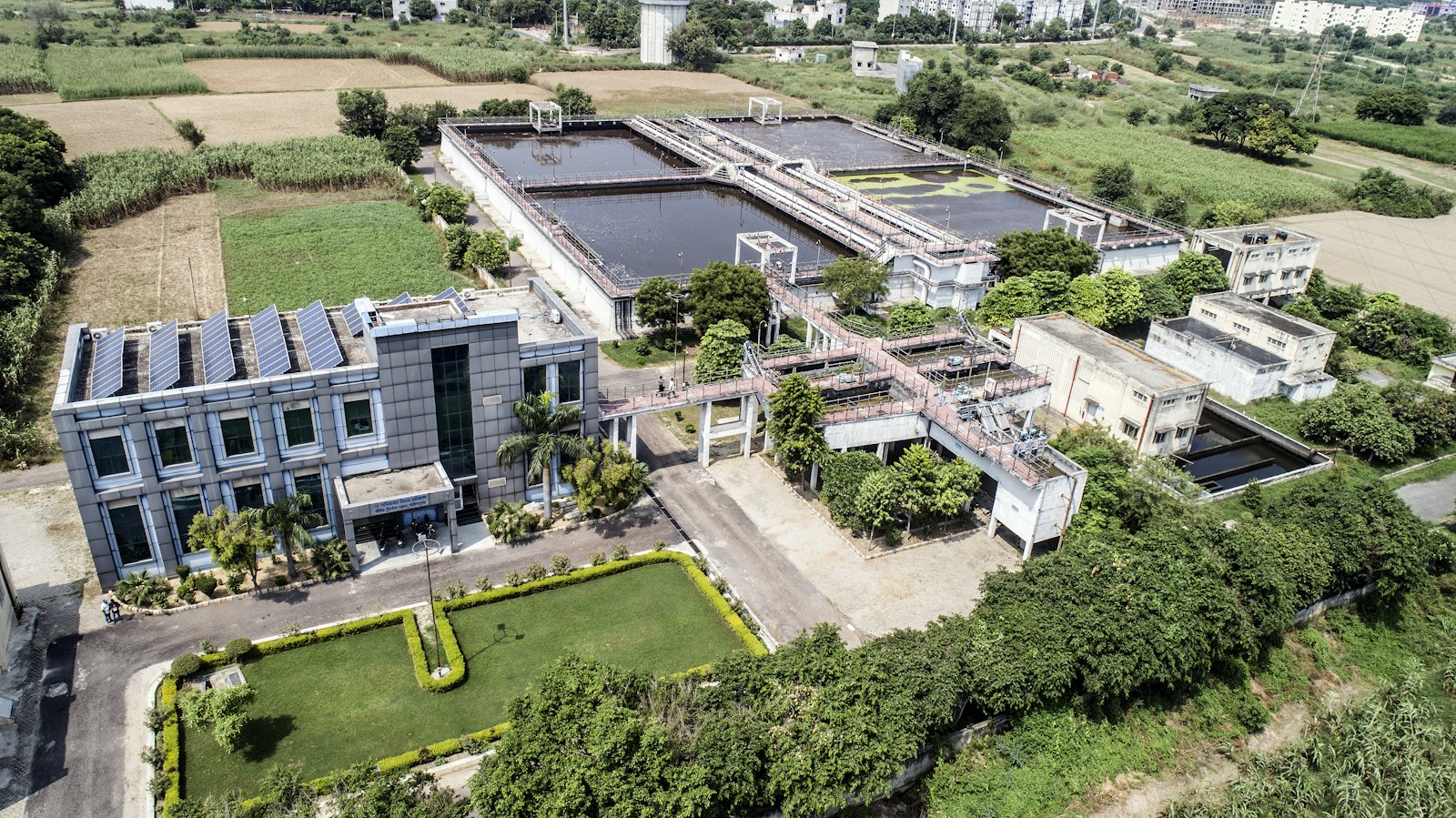
America's clean water infrastructure has spent decades in decline, and the numbers are finally forcing action. The U.S. Environmental Protection Agency's 2022 Clean Watersheds Needs Survey (CWNS)—the first comprehensive national assessment in a decade—places the estimated capital cost of needed wastewater, stormwater, and related clean water improvements at $630.1 billion over the next 20 years. When combined with the EPA's parallel estimate of $625 billion in drinking water infrastructure needs, the total picture is a $1.3 trillion infrastructure gap—and construction is now beginning to move at scale to address at least some of it.
A Backlog That Grew 73 Percent in a Decade
The CWNS data is striking in its detail. Infrastructure needs have grown by 73 percent since the prior survey in 2012, driven by the compounding effects of aging systems and climate-driven stormwater demands. Stormwater infrastructure needs alone increased nearly fivefold over that period, from less than $24 billion to more than $115 billion. The largest single category of need is conveyance—pipe replacement and new sewer systems—at $151.1 billion, followed by advanced wastewater treatment at $83.6 billion, nonpoint source control at $94.4 billion, and stormwater management at $115.3 billion.
Combined Sewer Overflow (CSO) correction accounts for $36.5 billion in documented national need. CSO systems—which carry both sanitary sewage and stormwater in a single pipe and overflow into rivers and waterways during heavy rain—are the subject of EPA consent orders in dozens of cities, driving multibillion-dollar mandatory infrastructure programs that are now moving into active construction.
Federal Funding Channels and the Construction Pipeline
The primary federal mechanism for delivering this investment is the Clean Water State Revolving Fund (CWSRF), which provides capitalization grants to states that in turn offer low-interest loans to municipalities and utilities for water quality infrastructure projects. To date, the CWSRF program has provided over $172 billion in funding to finance more than 48,000 loan agreements for water quality infrastructure projects nationwide. The EPA's project database lists hundreds of active CWSRF-funded construction efforts underway right now—ranging from a $220 million wastewater plant consolidation in Chemung County, New York to a $188 million CSO protection project in Fort Wayne, Indiana, to a $165 million treatment plant upgrade in Nampa, Idaho.
For larger and more complex undertakings, EPA's Water Infrastructure Finance and Innovation Act (WIFIA) program provides long-term, low-cost federal loans that can be paired with CWSRF and local funding. According to Government Market News, WIFIA has now closed 141 loans totaling $22 billion in credit assistance, supporting $48 billion in water infrastructure investment across the country. These large WIFIA projects are often the most significant construction undertakings in their regions—treatment plant expansions and upgrades valued at hundreds of millions of dollars that require years of construction activity.
The National League of Cities reported in December 2025 that IIJA water funding remains available through fiscal years 2025 and 2026, with EPA in the process of allocating capitalization grants to states that then distribute funds to communities. The IIJA provided more than $50 billion for water infrastructure overall—the largest single federal water investment in history—but it covers less than 4 percent of the identified long-term need. That gap is what keeps the construction pipeline so deep even as individual grant rounds close.
Active Projects Illustrate the Scale
Some of the largest projects in the current national pipeline illustrate the types of construction this wave is producing. In Somerville and Cambridge, Massachusetts, a $1.29 billion CSO control plan submitted to regulators in April 2026 would fund the construction of underground storage tanks, microtunnels, and large-scale sewer separation across the Alewife Brook, Mystic River, and Charles River watersheds. The plan includes a 9-foot-diameter microtunnel connecting Cambridge to Somerville and storage tanks capable of holding millions of gallons during storm events. Construction is expected to span 25 or more years in phased packages—meaning a sustained, long-term construction program in one regional market.
In Sandpoint, Idaho, voters approved a $130 million bond for a full wastewater treatment plant replacement, with construction targeted for late 2026. In Fort Worth, Texas, a $62.8 million biosolids reuse project using a design-build delivery method is underway through CWSRF financing. In the greater Chicago area, the Metropolitan Water Reclamation District of Greater Chicago received $36.8 million for a phosphorus recovery system. In Delaware, Wilmington secured $36 million for a renewable energy and biosolids facility.
These projects reflect a national pattern: medium-to-large municipalities are leveraging a layered capital stack of federal revolving funds, WIFIA loans, state grants, local bonds, and rate-supported capital programs to advance projects that have been deferred for years. The EPA recognized 48 water infrastructure projects at the 2026 Council of Infrastructure Financing Authorities Summit, all having received federal investment through State Revolving Fund programs.
Headwinds: Funding Gaps and Policy Uncertainty
The construction wave is real, but it faces headwinds. The President's FY 2026 budget proposed cutting SRF capitalization grants by nearly 90 percent, a move that drew immediate opposition from congressional appropriators and the National League of Cities. Capstone DC's analysis suggested the SRF programs are likely to “stay afloat” given bipartisan support in a midterm election year, but the uncertainty has added complexity to long-range capital planning for utilities. Additionally, IIJA authorization for water infrastructure programs expires September 30, 2026, making reauthorization a critical legislative priority for the sector.
For construction firms, engineers, and equipment suppliers, the wastewater and clean water infrastructure market represents a rare combination of documented need, established federal funding mechanisms, and years of pent-up demand now translating into active construction programs. Project types span the full range—treatment plant upgrades and expansions, deep sewer tunnel boring, pipe rehabilitation, pump station upgrades, biosolids management facilities, and green stormwater infrastructure. The market is national in scope but intensely local in delivery, making it an important segment for firms operating across multiple regions.
Sources
EPA – Clean Watersheds Needs Survey (2022 CWNS) | EPA – Clean Water State Revolving Fund Projects | Government Market News – The Next Infrastructure Wave Isn't Roads—It's Treatment Plants (December 2025) | National League of Cities – Cities Look to the Future on Water Infrastructure Funding (December 2025) | Somerville Beacon – Somerville's $1.3 Billion Combined Sewer Overflow Plan (April 2026) | Food & Water Watch – EPA: $1.3 Trillion Needed for Nation's Water Infrastructure (2024) | Capstone DC – Water Infrastructure Funding Expected to Stay Afloat Despite Proposed Cuts (April 2026) | EPA – EPA Recognizes Excellence and Innovation in Local Water Infrastructure Projects (April 2026)

Let's connect
For organizations planning commercial, industrial, or infrastructure work, we will review the project and recommend the appropriate delivery approach.

Join our team
If you hold yourself to careful, accountable work, you already work the way we do.