

news +insights
MARAD's $774 Million Port Funding Round: What It Means for U.S. Marine Construction
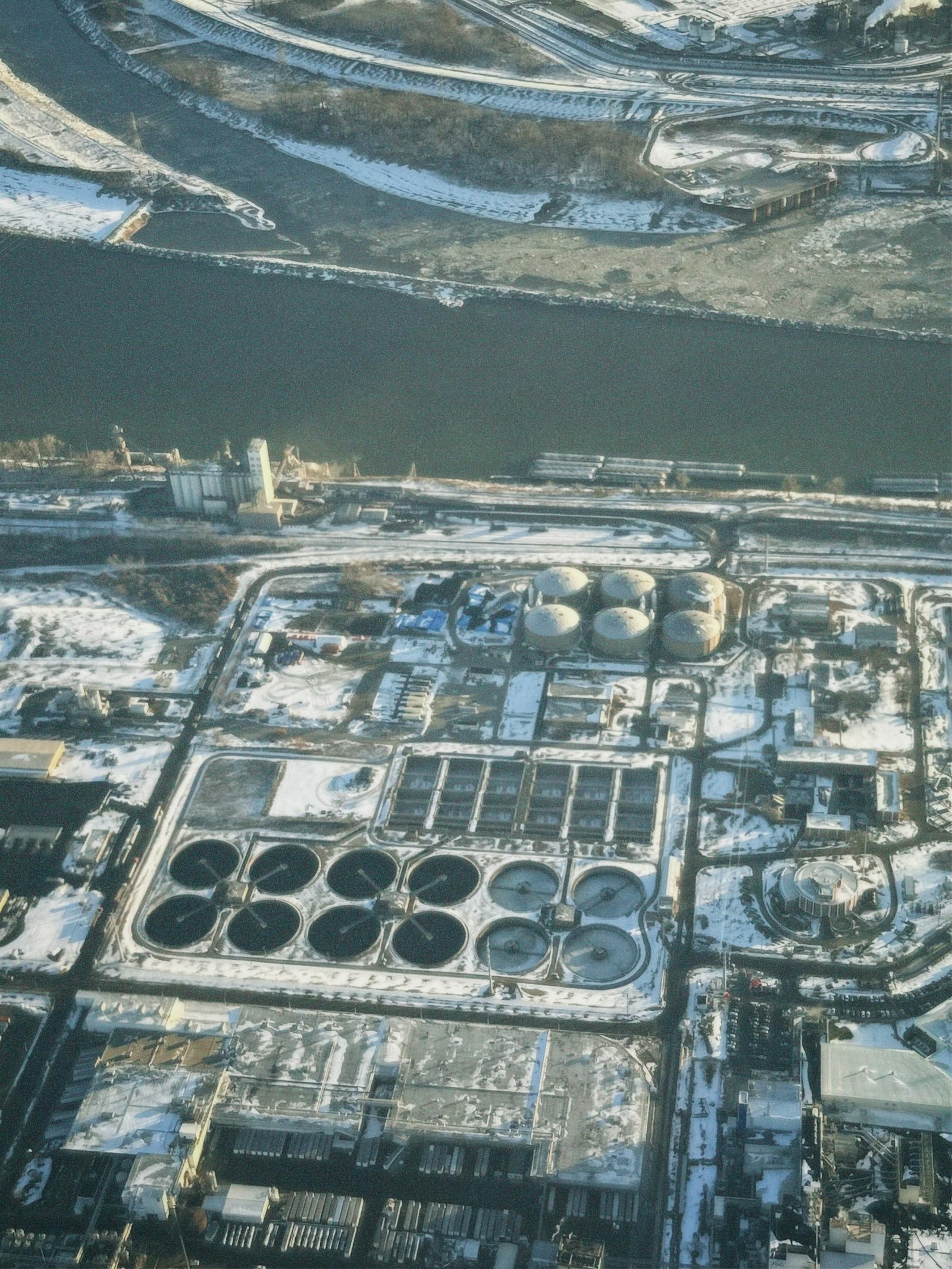
In late April 2026, the U.S. Department of Transportation announced a record $774 million in port infrastructure grants through the Maritime Administration's Port Infrastructure Development Program — the largest single-year distribution in the program's history, surpassing the roughly $703 million awarded in FY2022. The funding covers 37 projects across coastal seaports, Great Lakes ports, and inland river ports nationwide.
For the construction industry, this is a near-term pipeline of marine, rail, cargo, and terminal work in markets across the country — with many recipients expected to move into final design, environmental review, and bidding in 2026 and 2027.
What the Awards Cover
According to Dredge Wire's analysis of the award package, the projects span a wide range of marine construction disciplines:
- Berth and dock construction: Port Canaveral (Florida) received $20.2 million to rehabilitate North Cargo Berths 1 and 2, including structural repairs, fender replacement, lighting, and utilities. Construction is expected to begin in early 2027.
- Rail access and tunnel expansion: Port of Whittier (Alaska) received $20.4 million to upgrade a rail tunnel on the Alaska Railroad mainline to accommodate double-stack container operations. Port of Beaumont (Texas) received $37.8 million to add approximately 13,784 linear feet of new rail track, reconstruct its switching interchange, and upgrade utility systems.
- Container yard development: Port Houston (Texas) received $48 million for a 47-acre container yard at its Bayport terminal, including a new terminal gate, reinforced pavement, and stormwater, water, and electrical infrastructure.
- Cargo-handling equipment and terminal upgrades: Port of Guam received $59.6 million for three new ship-to-shore cranes and terminal upgrades projected to increase throughput and reduce vessel waiting time by 15–20 percent.
- Industrial infrastructure: In Donaldsonville, Louisiana, a $43.4 million grant will support a dock conveyance system to move iron ore pellets from berths to a planned steel manufacturing facility.
- Terminal expansion: In Baltimore, $39.7 million will fund Phase 2 of Tradepoint Atlantic's container terminal, including yard buildout and cargo-moving equipment.
- Regional logistics: Port of Savannah (Georgia) received $53 million for a lay berth and supply chain optimization project. Port of Skagway (Alaska) received $38.6 million for industrial dock redevelopment.
The Long Beach and Los Angeles Context
While MARAD's awards represent federal funding, some of the country's largest port construction programs are entirely self-funded through port revenues and bonds. The Port of Long Beach — the nation's second-busiest container port, which handled a record 9.9 million TEUs in 2025 — is executing a $3.2 billion capital program that includes:
- The Pier G Unified Wharf: a $365 million project that broke ground in July 2025 and is expected to be completed in 2028, adding 19 acres by filling in a water slip to accommodate larger vessels.
- The Pier B On-Dock Rail Support Facility: a $2.2 billion rail yard expansion that will grow the existing 82-acre yard to 171 acres and more than triple on-dock rail capacity to 4.7 million TEUs annually. Jacobs is providing construction management. The project is expected to wrap up in 2032.
The New York and New Jersey port complex is also advancing a $100 million first phase of equipment and facility upgrades at one of its marine terminals, including new straddle carriers and a planned on-dock rail yard.
A Critical Funding Deadline
The Port Infrastructure Development Program draws its current authority from the $2.25 billion, five-year allocation in the Infrastructure Investment and Jobs Act, which runs through FY2026. Industry analysts note that without reauthorization or supplemental funding, PIDP would revert to significantly lower baseline appropriations after FY2026 — meaning this $774 million round may represent the peak of federal port investment before a contraction in federally backed project volume.
Transportation Secretary Sean Duffy framed the investment in supply-chain terms: "U.S. ports keep our grocery store shelves stocked, our energy supply chains resilient, and our export market strong."
For contractors and port authorities, the near-term opportunity is clear. For market planners, the lesson is equally important: the window of peak federal port investment may be shorter than it appears.
What the Pipeline Looks Like for Contractors
Marine construction is a specialized field, but the MARAD FY2025 awards include work accessible to a broad range of contractors beyond pure marine specialists. Terminal paving, reinforced concrete yard construction, utility systems, stormwater infrastructure, lighting, fencing, and freight-handling equipment installation all fall within the scope of conventional civil and commercial contractors with appropriate bonding and experience.
Port work also tends to be publicly procured with transparent bid processes, providing predictable entry points for contractors seeking public-sector diversification. The MARAD PIDP program posts all awards publicly, and individual port authorities follow standard public procurement processes for design and construction contracts. For contractors in Gulf Coast markets (Houston, Beaumont, Donaldsonville), Atlantic ports (Baltimore, Savannah), Pacific ports (Long Beach), and Alaska (Whittier, Skagway), the near-term bidding calendar based on FY2025 awards is already taking shape.
The broader lesson from this funding round is about timing. Because IIJA port funding is set to expire after FY2026 without reauthorization, port authorities have a strong incentive to use their awards efficiently and move into construction as quickly as permitting allows. That compressed timeline works in contractors' favor — but it also means competitive bid windows may be short. Monitoring MARAD award lists and following up with specific port authorities is the most direct path to opportunity in this segment.
Sources
- GovMarket News — MARAD Awards $774M in Port Infrastructure Grants
- Dredge Wire — DOT's Record $774M Port Funding Round Could Mark Peak Before IIJA Expires
- Construction Dive — Jacobs Nabs Slice of $2.2B Port Project in LA Area
- Long Beach Post — Port of Long Beach CEO on Record Year and $3.2B Capital Program
- Container News — US Allocates $774 Million to Upgrade Ports

Let's connect
For organizations planning commercial, industrial, or infrastructure work, we will review the project and recommend the appropriate delivery approach.

Join our team
If you hold yourself to careful, accountable work, you already work the way we do.