
news +insights
Baltimore's Frederick Douglass Tunnel: Replacing the Northeast Corridor's Most Dangerous Bottleneck
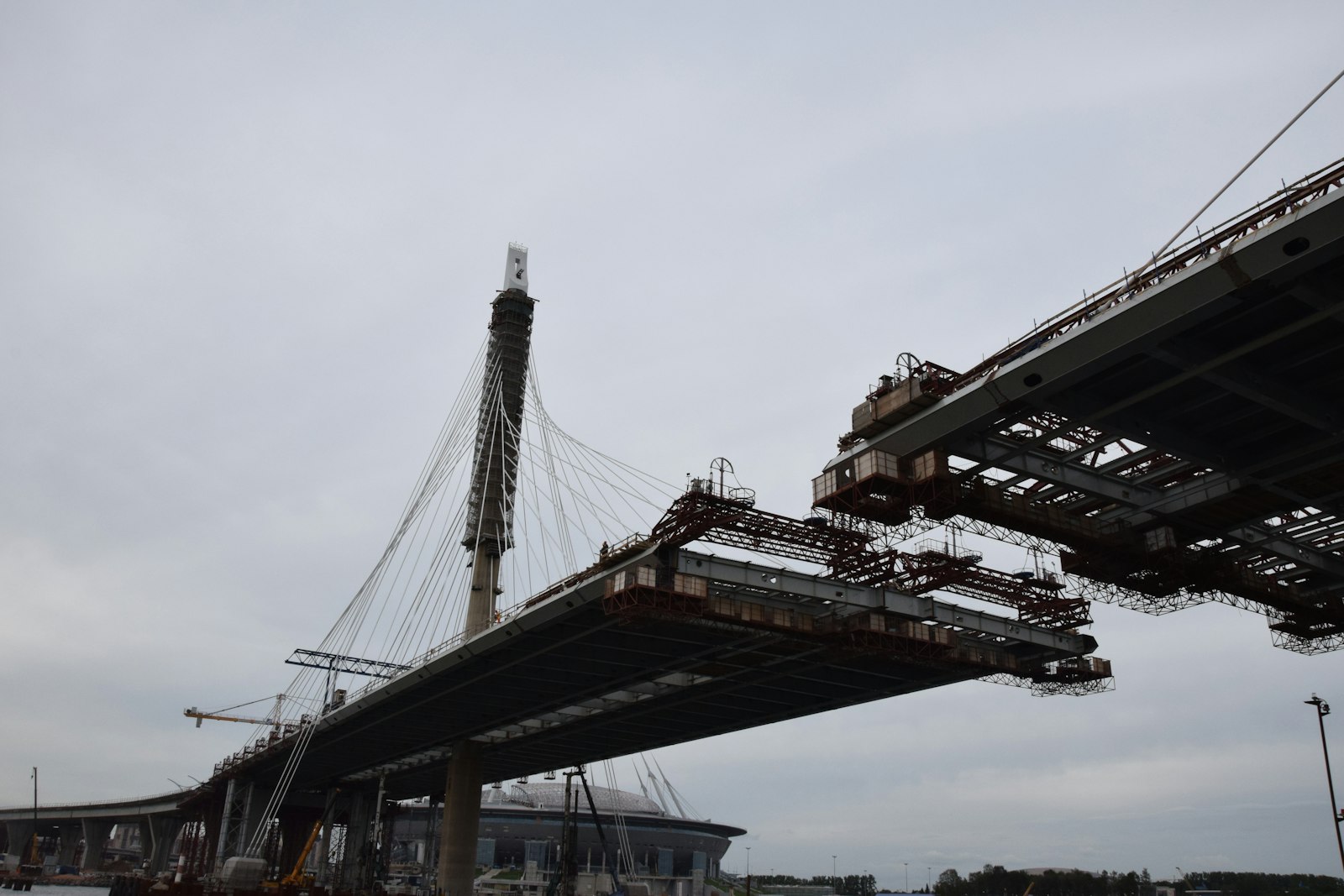
A 151-year-old railroad tunnel beneath West Baltimore is finally being replaced. The Baltimore & Potomac Tunnel Replacement Program — now officially centered on the new Frederick Douglass Tunnel — entered active construction in 2025 and represents one of the most complex and consequential infrastructure undertakings in the United States today. The roughly $6 billion program is expected to be complete by 2036.
A Tunnel Built During the Civil War Era
The original B&P Tunnel dates from the 1870s, making it the oldest tunnel in Amtrak's network. The 1.4-mile structure carries trains on the Northeast Corridor (NEC) between Baltimore's Penn Station and the rail lines running south toward Washington, D.C., and Virginia. It is the single point of failure for approximately 14 million MARC and Amtrak passengers who depend on this section of track each year.
The tunnel's age has compounded its problems. Excessive water infiltration weakens the structure continuously. The floor is sinking. The tight curvature of the bore forces trains to reduce speed to just 30 mph — less than a third of the 100 mph that modern electrified passenger rail is capable of on straight track. Delays occur on 99 percent of weekdays, with more than 10 percent of trains affected at any given time. Modern fire and life safety systems cannot be installed in the existing structure.
Without intervention, the NEC's reliability between Baltimore and Washington would continue to deteriorate. The corridor carries roughly 700,000 daily riders across its full length and supports, by some estimates, 20 percent of U.S. GDP in the regional economy it connects.
What Is Being Built
The centerpiece of the program is the new Frederick Douglass Tunnel, named for the abolitionist and former Maryland native who famously escaped slavery by boarding a train in Baltimore. The tunnel will consist of two new high-capacity tubes, each approximately two miles long, designed for fully electrified Amtrak and MARC commuter rail service. Trains will be able to travel at up to 100 mph — more than three times the current 30 mph restriction.
The program also includes five bridge replacements to accommodate the NEC's realignment, a new fully accessible West Baltimore MARC Station with elevators and level boarding, modern rail infrastructure and signal systems, and a $50 million Community Investment Program for West Baltimore neighborhoods along the construction corridor.
Who Is Building It
Amtrak awarded major construction contracts using a Construction Manager at Risk (CMAR) delivery model. Kiewit / J.F. Shea Joint Venture holds Package A, covering the new tunnel construction itself. Clark Construction / Stacy and Witbeck Joint Venture holds Package B for the Southern Approach. The program's engineer of record is a WSP / Parsons Joint Venture, and the delivery partner — a first-of-its-kind risk-sharing arrangement for Amtrak — is the ADVANCE joint venture of AECOM and Jacobs.
Tunnel boring machines (TBMs) are currently being manufactured for the project. In February 2026, contractors completed a significant milestone: a controlled blasting "breakthrough" for the utility siphon tunnel beneath the existing NEC tracks, a 350-foot underground structure that safely relocates water, sewer, communications, and electrical utilities to clear the path for the new tunnel tubes.
Construction Activity in 2026
Field work is active across multiple fronts in West Baltimore. Utility relocations are underway at both the northern and southern approaches, including a 126-inch-diameter stormwater main scheduled for installation in early 2026. Several roadway closures are in effect — including W. Mulberry Street, N. Pulaski Street, and Rayner Avenue — as crews complete underground work and rebuild rail bridges overhead.
Forty-seven residential and commercial properties were acquired and are being demolished to clear the alignment. Amtrak's Historic Salvage Program allowed community members to claim salvageable materials from those structures, with approximately 50 percent of available materials claimed as of late 2025.
Looking ahead, 2026 will see continued utility relocation, siphon tunnel completion, and the early phases of structural work for the new Mulberry Street railroad bridge — one of five bridge replacements required to accommodate the NEC's realignment for the new tunnel geometry.
Funding and Policy Context
The program is funded through a combination of Infrastructure Investment and Jobs Act (IIJA) Federal Railroad Administration discretionary grants, Maryland DOT / Maryland Transit Administration contributions, and Amtrak internal program revenues. The IIJA's rail discretionary programs have been central to getting the program to active construction; the expiration of IIJA advance appropriations at the end of FY2026 is being closely watched by rail advocates as Congress works on surface transportation reauthorization.
The NEC Commission reports that the Corridor has nearly 90 active construction projects underway in 2026, with Amtrak and state partners investing a record $5 billion in NEC infrastructure in 2025 alone. The Frederick Douglass Tunnel is the largest single project in that pipeline.
Why This Project Matters Beyond Baltimore
Rail delays in the B&P Tunnel cascade across the entire NEC from Washington to Boston, affecting commuter rail systems in Maryland, Delaware, New Jersey, Connecticut, and Massachusetts. A train delayed entering Baltimore can arrive late in New York, disrupting connections as far as Providence and Boston.
Replacing the tunnel eliminates what transportation planners describe as a structural constraint on the entire 457-mile corridor. Once the new tunnel is operational, the NEC will have the physical capacity to increase frequency, reduce travel times between Baltimore and Washington significantly, and eventually accommodate the higher-speed service the corridor's geometry otherwise allows.
For the construction industry, the program represents a decade-long pipeline of major civil, structural, and systems work. The use of tunnel boring machines, CMAR delivery, a first-ever delivery partner risk-sharing model, and accelerated bridge construction methods make the program a reference project for how complex urban rail infrastructure can be delivered in the modern era.
Sources
Amtrak New Era — B&P Tunnel Replacement Program | Amtrak — Frederick Douglass Tunnel Program | NEC Commission — Inside the Rebuild of the Northeast Corridor (April 2026) | Amtrak New Era — Construction Updates | Amtrak Media — Program Partners (January 2025)

Let's connect
For organizations planning commercial, industrial, or infrastructure work, we will review the project and recommend the appropriate delivery approach.

Join our team
If you hold yourself to careful, accountable work, you already work the way we do.