
news +insights
Federal Courthouse Construction: A National Pipeline Advancing Under New Efficiency Rules
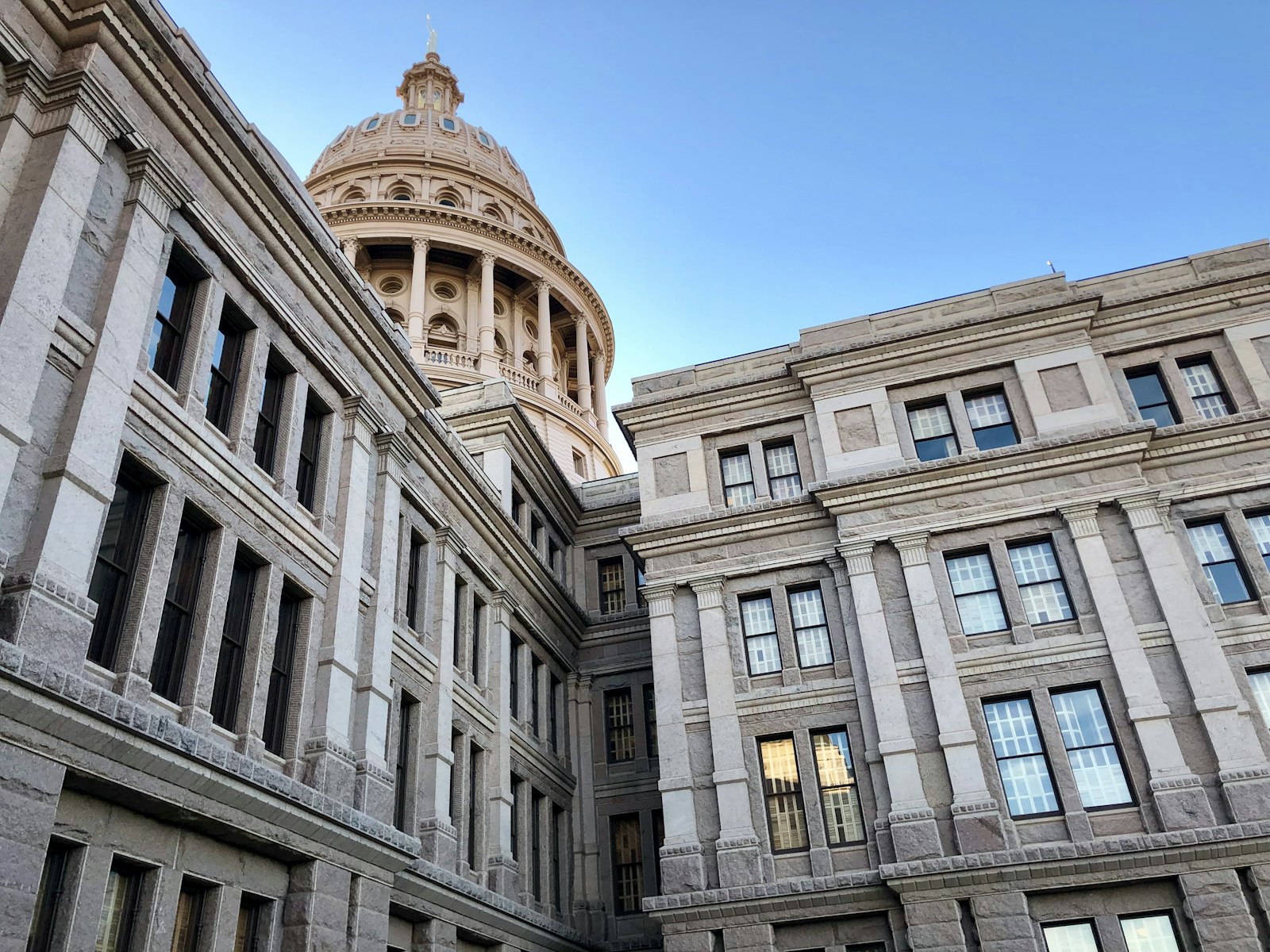
Across the United States, the federal judiciary is in the midst of a courthouse construction cycle that has been decades in the making. The U.S. General Services Administration — the agency responsible for federal real estate and construction — is delivering new courthouses in multiple cities while navigating a significant shift in how future projects will be designed and authorized. For construction professionals tracking federal building work, the GSA courthouse pipeline is an active and evolving opportunity.
What Is Currently Under Construction
The most advanced active project is the new Fort Lauderdale U.S. Courthouse in Florida. Authorized in fiscal years 2018 and 2023 at a total cost of $245 million, the 255,000-gross-square-foot building includes 12 courtrooms and 17 judges' chambers and will house the U.S. District Court for the Southern District of Florida along with related federal agencies. Full construction began in September 2024 and is expected to reach substantial completion in fall 2026. The project was delivered using a Design-Build Bridging method, with Brasfield & Gorrie as the design-build contractor and Skidmore, Owings & Merrill as the bridging architect.
The Federal Judiciary's FY2027 budget submission confirms that as of March 2026, GSA has completed 12 courthouse projects funded since FY2016. These include seven entirely new courthouse buildings in San Antonio, Nashville, Anniston, Greenville (SC), Harrisburg, Huntsville, and Des Moines — along with three annexes and two acquisitions.
What Is in the Next Wave
The judiciary's current top courthouse construction priority for FY2027 is a space emergency in San Juan, Puerto Rico, where the federal courts have operated under significant capacity constraints for years. Following San Juan, the judiciary's Capital Projects Plan identifies new courthouse projects in Hartford, Connecticut; Bowling Green, Kentucky; Anchorage, Alaska; and McAllen, Texas as the next priorities.
The Hartford project is particularly significant. GSA is advancing a $335 million new federal courthouse in downtown Hartford to replace the 1960s-era Abraham Ribicoff Federal Building. The planned 281,000-square-foot facility will feature 11 courtrooms and 18 judges' chambers and is expected to become the primary headquarters for the U.S. District Court for the District of Connecticut. Design work is scheduled to begin in mid-2026, with construction targeted for 2027 and substantial completion projected for 2030.
In Chattanooga, Tennessee, GSA confirmed in February 2026 that it is moving forward with a new courthouse on Vine Street, citing projected savings of up to $117 million compared to alternative sites. The new facility will be approximately 190,701 gross square feet with seven courtrooms and nine chambers. GSA has begun design work and anticipates construction starting shortly, with the project fully funded by the FY2025 appropriations act.
New Rules Changing How Courthouses Get Built
Congress is reshaping the courthouse construction program through proposed legislation that would fundamentally alter how new buildings are designed. The Courthouse Affordability and Space Efficiency (CASE) Act of 2025 would bar GSA from commencing construction on any new courthouse project not already underway unless the design meets specific courtroom-sharing requirements.
Under the CASE Act's framework, buildings serving 10 or more active district judges would be required to maintain a ratio of no more than two courtrooms for every three active judges — rather than the current practice of generally providing one courtroom per judge. The legislation would also require GSA to update the federal courts' Design Guide to reflect sharing concepts, and tie any new capacity addition to the utilization or disposal of existing underused space in the same courthouse complex.
The proposal responds to longstanding concerns about courthouse cost escalation. The Government Accountability Office reported in 2025 that recent changes to the courts' design guide had already increased courthouse construction costs by 12 percent, prompting a GAO recommendation for reassessment. The CASE Act would push decision-making in courthouse planning from locally driven judicial needs toward national space-efficiency standards — a significant shift for a program that has historically been highly responsive to individual court requests.
GSA's Broader Real Estate Reset
The courthouse program is operating alongside a broader reorganization of the federal real estate portfolio. GSA has identified dozens of properties for accelerated disposition, including the Strom Thurmond Federal Building and Courthouse in Columbia, South Carolina, listed for disposition in April 2026 with projected savings of $59.4 million. The GSA's FY2026 Congressional Justification requested $193.3 million through the Asset Proceeds and Space Management Fund to support disposal and right-sizing of the federal footprint.
This combination of targeted new construction and aggressive surplus disposal is reshaping the federal building market. For contractors, the immediate pipeline — Fort Lauderdale completing, Hartford and Chattanooga advancing to construction, San Juan and the next wave in procurement — represents hundreds of millions in active federal building work at a time when the overall civilian federal construction budget is under significant pressure.
What to Watch
The pace of courthouse construction will depend on several factors: Congressional appropriations for GSA's construction accounts in FY2027, the fate of the CASE Act courtroom-sharing requirements, and GSA's project approval processes as the administration continues to emphasize right-sizing federal real estate. The judiciary has identified additional space emergencies that will require construction solutions; whether those projects receive funding authorization in FY2027 and FY2028 will determine the next phase of the national courthouse pipeline.
Sources
GSA — Fort Lauderdale U.S. Courthouse Project Page | U.S. Courts — FY2027 Congressional Budget Summary | S&P Partnerships — GSA Hartford Courthouse (July 2025) | GSA — Chattanooga Courthouse Site Selection (February 2026) | Codify Legal — CASE Act Analysis (February 2026) | GSA — Strom Thurmond Courthouse Disposition (April 2026)

Let's connect
For organizations planning commercial, industrial, or infrastructure work, we will review the project and recommend the appropriate delivery approach.

Join our team
If you hold yourself to careful, accountable work, you already work the way we do.