

news +insights
Erie County Finishes $11 Million Rath Building Microgrid, Solar and Roof Upgrade
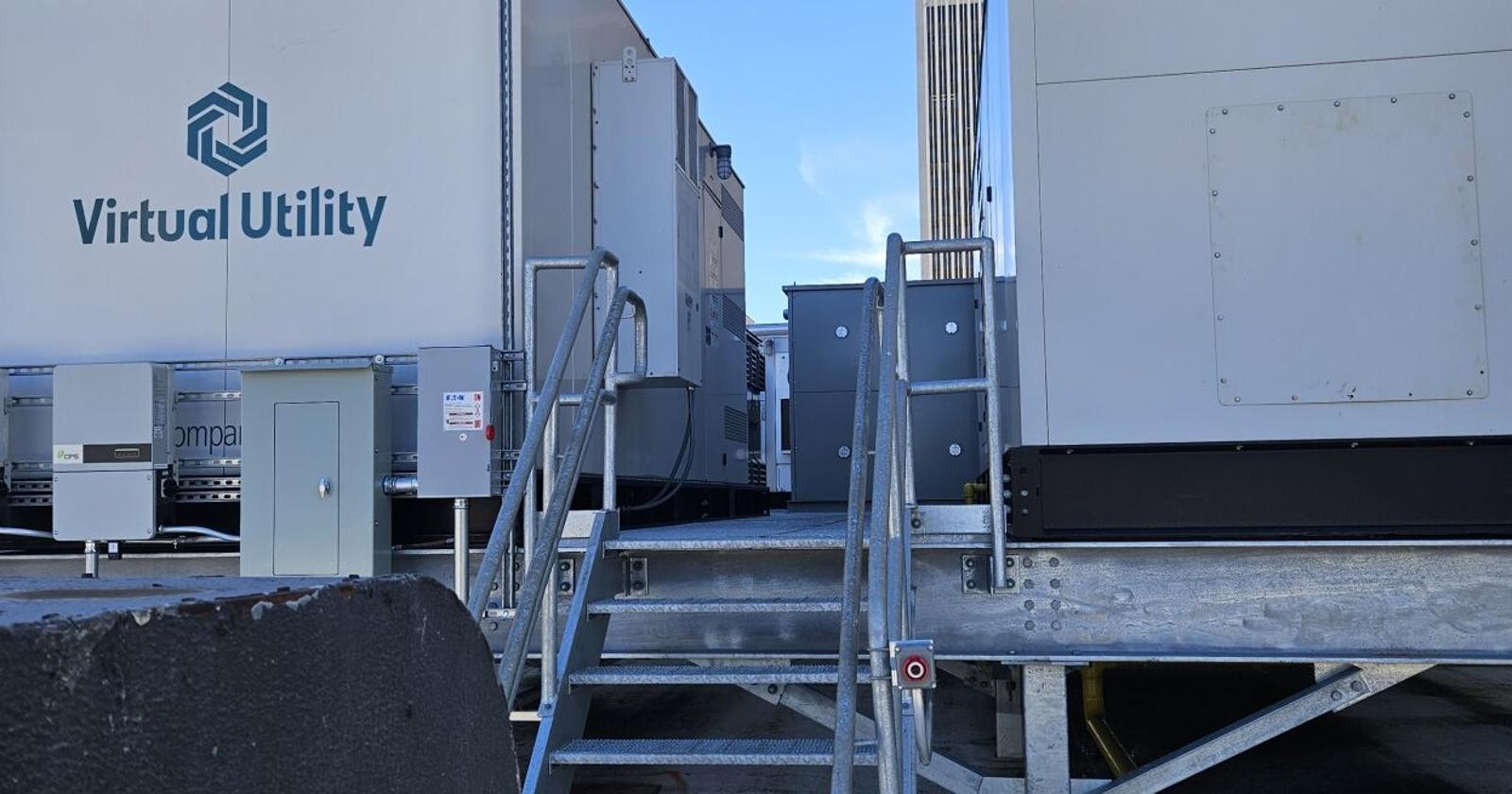
Erie County has finished an $11 million electrical and energy overhaul of the Edward A. Rath County Office Building in downtown Buffalo, adding a 2 megawatt on-site resilient power system, a new roof, a rooftop solar array and electric vehicle chargers to a 1969 tower that had not been substantially modernized since it opened. County Executive Mark Poloncarz and Public Works Commissioner William Geary toured the completed work on September 22 with representatives of e2Companies and 34 Group, and the county received a federal Investment Tax Credit rebate check for $2,493,951 at the event Erie County.
For Western New York owners, facility managers and electrical contractors, the project is a working local example of a public building retrofit built around a microgrid rather than a conventional backup generator, and it was paid for partly with a federal Investment Tax Credit rebate.
What Happened
The county described the work as a microgrid and infrastructure modernization of the 16 story Rath Building at 95 Franklin Street, and called it the most comprehensive energy resiliency and modernization upgrade in the building's history Erie County. WBFO reported the county's investment at just over $11 million, offset by just under $2.5 million in federal rebates WBFO.
Poloncarz told WBFO that the building's systems were designed in the 1960s and that "it really hadn't had modernization of the building since then" WBFO. Geary said the infrastructure was being fortified for the "next 30 to 50 years" and that the county expects to make back its money in 12 years WBFO.
Key Project Details
- Resilient power: A 2 megawatt R3Di system provides continuous, conditioned on-site power so county operations can ride through grid outages and power quality events Erie County.
- Generation mix: The Buffalo News reported the microgrid uses battery and natural gas generation that can activate and fully power the county operations hub indefinitely if downtown loses power Buffalo News.
- Roof and solar: The existing roof had reached the end of its useful life and was replaced with a system designed to carry new energy equipment, and a solar array was installed on the fifth floor level Erie County. The county has not published the array's kilowatt capacity.
- EV charging: Level 2 chargers were installed in the parking garage, and the Buffalo News reported the new solar panels help power chargers in the basement Erie County Buffalo News.
- Controls: A Grove365 platform monitors and optimizes the building's energy systems within e2Companies' Virtual Utility platform Erie County.
- Federal incentive: The $2,493,951 Investment Tax Credit rebate was presented as a check to Erie County Erie County.
The building houses about 1,200 of the county's roughly 5,500 employees, according to the county release Erie County. The Buffalo News put the number at more than 1,300 and noted the building also serves as the network hub for county government and public safety communications Buffalo News. The difference likely reflects how staff and other occupants are counted; either way, the building is the center of day to day county operations.
Work Still Ahead
The microgrid is not the end of the work. The Buffalo News reported that new wiring and breaker boxes will continue as upgrades over the next few years Buffalo News. The county also described the installation as the first major milestone in a long term partnership with e2Companies to evaluate and deploy more distributed energy and resiliency systems across county facilities Erie County. Neither source gives a list of the next buildings, a budget or a schedule, so those details are still to come.
Why It Matters
Three things stand out for the local market.
First, resilience is becoming a design requirement for public buildings. The county's stated goals were keeping critical operations running through grid and power quality events and reducing reliance on lengthy traditional utility infrastructure upgrades Erie County. That second point matters for any owner whose project depends on new utility service capacity, since adding on-site generation and storage can be one way to manage power needs while utility work catches up.
Second, federal tax credit money is reaching local public owners. A rebate of nearly $2.5 million on an $11 million project is a meaningful share of the cost WBFO. Towns, school districts and authorities planning roof replacements or electrical service upgrades may look to the Rath Building as a model for combining necessary capital repairs with solar, storage and controls that qualify for incentives.
Third, the 12 year payback is a number owners can test. Geary's estimate gives other public owners a benchmark to compare against their own energy costs and building conditions WBFO. The county has not released annual savings figures, so it is not yet possible to check that estimate independently.
Implications for Owners, Developers, Contractors and Subs
- Owners and facility managers: Aging 1960s and 1970s buildings with end of life roofs and electrical gear are candidates for the same approach of pairing a required replacement with energy upgrades. Watch whether Erie County publishes savings data after a full year of operation.
- Electrical contractors: The ongoing wiring and breaker work at the Rath Building, plus the county's plan to look at additional facilities, points to continued electrical scopes in occupied public buildings, where phasing around live operations is a core skill Buffalo News.
- Roofing contractors: Roofs that must carry solar arrays and equipment require structural review, attachment details and coordination with electrical trades. The Rath project tied the roof replacement directly to the new energy equipment Erie County.
- Mechanical and controls subs: Monitoring platforms such as Grove365 bring commissioning and integration work that can extend beyond the main installation Erie County.
- Developers: Private owners face the same question of utility capacity and power quality, especially for buildings adding EV charging or electrified systems. The public sector example may make lenders and tenants more familiar with microgrid designs.
What to Watch
- Which county facilities are next under the e2Companies partnership, and how those projects are procured and funded Erie County.
- The schedule and scope of the remaining wiring and breaker upgrades at the Rath Building Buffalo News.
- Published energy savings and operating data that can confirm or revise the 12 year payback estimate WBFO.
- Whether other Western New York public owners pursue similar direct pay tax credit rebates for roof, solar and resilience projects.
Bottom Line
Erie County has turned a necessary roof and electrical replacement at its main office tower into an $11 million microgrid project with 2 megawatts of resilient power, solar, EV charging and a federal rebate of nearly $2.5 million Erie County WBFO. With more wiring work planned at the building and a partnership aimed at other county facilities, this looks like the start of a longer program of public energy retrofits in Erie County rather than a one-time project.
Image credit: The Buffalo News. Image from the source article.
Sources
- Erie County Executive, press release, Sept. 22, 2026: https://www4.erie.gov/exec/press/erie-county-completes-significant-electrical-upgrade-other-infrastructure-improvements-rath
- WBFO, County expects major savings from Rath Building upgrades: https://www.btpm.org/local/2026-09-22/county-expects-major-savings-from-rath-building-upgrades
- Buffalo News, 5 Under 5 local government roundup, Sept. 28, 2026: https://buffalonews.com/news/local/government-politics/article_17d4c877-812b-4376-9f87-6c2ae0b7866b.html
- Buffalo News, Improvements to the Rath Building (photo collection): https://buffalonews.com/news/local/collection_7cec91f3-efb9-4257-bf82-263f43a8b478.html

Let's connect
For organizations planning commercial, industrial, or infrastructure work, we will review the project and recommend the appropriate delivery approach.

Join our team
If you hold yourself to careful, accountable work, you already work the way we do.