
ConstructConnect's Spring 2026 Forecast: $2.27 Trillion, 5.1% Growth, and a Data Center Supercycle Rewriting the Outlook
The most comprehensive look at where the U.S. construction market is headed comes every quarter from ConstructConnect's Chief Economist Michael Guckes. The Spring 2026 U.S. Put-in-Place Construction Forecast Report, published April 16, holds total spending for 2026 at $2.27 trillion — unchanged from the prior forecast — with year-on-year growth of 5.1%. But the stability of the topline masks significant revisions beneath the surface: nonresidential growth has been revised upward, residential forecasts have been cut sharply, and one sector — data center and power infrastructure construction — is being described as a "once-in-a-generation investment supercycle" that is rewriting the rules for the entire nonresidential market.
For owners, contractors, and developers trying to understand where to position for the remainder of 2026 and into the next several years, the Spring forecast offers a detailed roadmap. The picture it paints is one of a bifurcated market: a technology- and energy-driven commercial and civil boom running alongside a residential sector constrained by affordability and a manufacturing segment correcting from historic highs.
Nonresidential: Revised Upward as Data Centers Dominate
Nonresidential building construction is projected to grow 6.5% in 2026, a meaningful upward revision from the 5.7% forecast in ConstructConnect's prior report. The primary driver is the data center and AI infrastructure investment wave. Private office construction — the Census category that encompasses both traditional office space and data centers — is forecast to grow 25.2% in 2026, with growth continuing at 14.8% in 2027 and 7.4% in 2028.
The scale of the data center opportunity is extraordinary in historical context. ConstructConnect projects private office and data center spending to climb from just under $90 billion in 2025 to a peak of $144 billion in 2029, with cumulative five-year spending of $659.3 billion through 2030. The United States accounts for roughly 40% of global data center investment, and the tech industry's appetite for AI computing infrastructure shows no sign of abating. Microsoft, Amazon, Google, and Meta have each announced capital expenditure commitments running into the hundreds of billions over the next several years — much of which will flow directly into construction spending on new facilities, power infrastructure, and supporting logistics.
The ripple effects extend well beyond data centers themselves. Power infrastructure construction is projected to grow 13.3% in 2026 and 13.9% in 2027 — directly tied to the data center sector's voracious demand for electricity. Data centers typically consume 10 to 100 megawatts or more of power capacity per campus, and the surge in new facilities is driving investment in transmission lines, substations, natural gas peaker plants, and utility-scale solar and battery storage. ConstructConnect projects power and communications activity to grow more than 8% annually between 2026 and 2029.
Civil Construction: Stronger Than Expected, With Long-Term Tailwinds
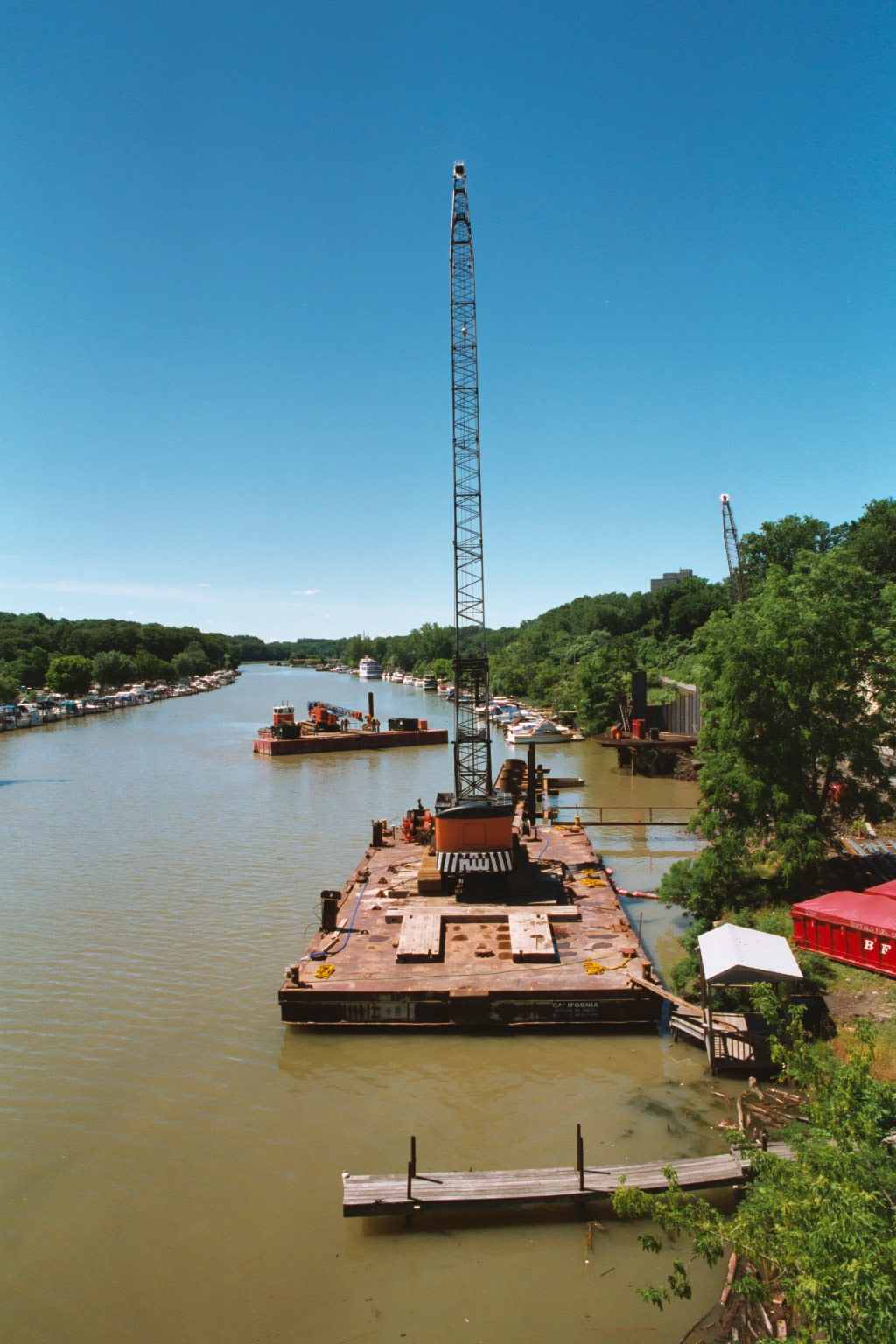
Civil construction — highways, bridges, environmental public works, and water infrastructure — exceeded expectations in 2025, rising 2.7% when a 2.0% decline had been forecast. The Spring 2026 report reflects that upside revision and projects continued growth of 8.1% in 2026. By 2030, ConstructConnect projects civil construction spending of $666 billion — an increase of 33% from current levels, or 5.9% compounded annually.
The long-term tailwind for civil construction is structural: IIJA formula funding for surface transportation and water infrastructure continues to move through the system, Army Corps civil works projects are advancing, and the wave of environmental public works driven by federal water quality requirements and state-level investment programs shows no signs of abating. The Spring forecast projects a five-year compound annual growth rate for the public sector overall of 1.3% — modest, but an improvement over a prior forecast that projected a negative CAGR.
One area of relative weakness within civil is the sewage, waste disposal, and water supply category, which ConstructConnect projects will face a CAGR of negative 1.5% through the forecast period — a reflection of the uneven pace of federal water infrastructure funding deployment and the headwinds from a proposed 90% cut to EPA water infrastructure program annual appropriations in the FY2026 appropriations cycle. Congress ultimately maintained water program funding at FY2025 levels in the enacted FY2026 appropriations, but the uncertainty around future funding is shaping longer-term project pipelines.
Residential: Sharply Revised Downward
The biggest downside revision in the Spring 2026 forecast is in residential construction. ConstructConnect now projects only 2.3% growth in residential spending for 2026 — down substantially from the prior forecast of 9.7%. The key factors are well-known but persistent: mortgage rates remain elevated, home prices have not declined enough to restore affordability in most major markets, and single-family starts are running below prior-year levels. Thirty-year mortgage rates have declined by almost 1% since the start of 2025, and wages and disposable income are growing faster than average national home prices — but the gap has not closed enough to unlock a significant increase in buyer demand.
The longer-term residential outlook is more optimistic. ConstructConnect projects consecutive years of approximately 8% residential growth through 2029 as affordability gradually improves and demographic demand — particularly from millennials entering peak homebuying years — sustains underlying demand. But the near-term picture is one of constraint.
The Manufacturing Wildcard
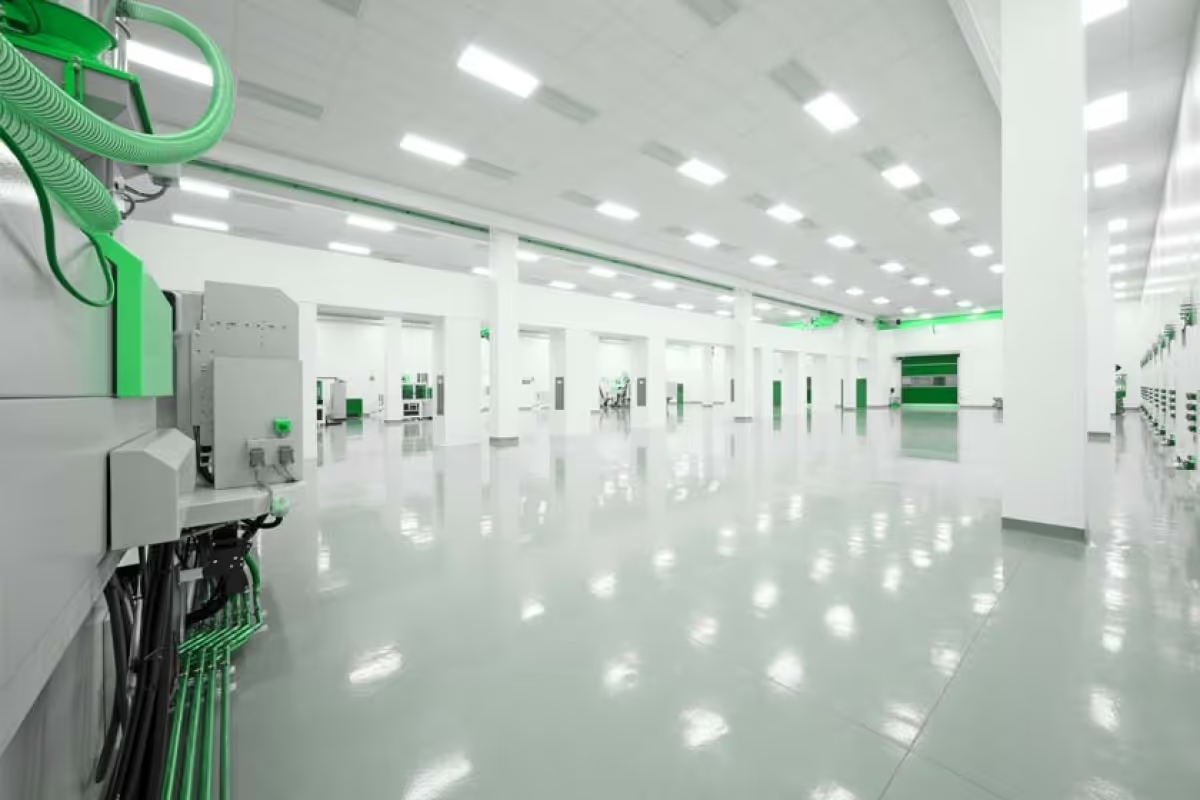
Manufacturing construction sits at an inflection point. The category remains the single largest subcategory within private nonresidential construction, but spending has fallen roughly 17% from its December 2023 peak as CHIPS Act-incentivized semiconductor fab projects wrap up. Whether manufacturing construction stabilizes or continues to decline depends heavily on the pace of new project announcements in semiconductor fabrication, electric vehicle supply chain facilities, and pharmaceutical manufacturing — each of which has its own set of policy, tariff, and demand-side variables.
The Spring 2026 forecast notes one meaningful tailwind: the widening gap between U.S. and European energy prices — partly a consequence of international energy market shifts — gives U.S. manufacturers new cost competitiveness against some foreign competitors. This could accelerate additional reshoring decisions and new manufacturing construction announcements in the second half of 2026 and into 2027, particularly in energy-intensive industries.
What Contractors and Owners Should Take Away
The Spring 2026 forecast conveys several strategic messages for construction industry participants. Data center and energy infrastructure work is the industry's primary growth engine for the foreseeable future, and firms that have built expertise in those sectors are well-positioned. Civil and public works construction offers steady, durable volume, anchored by IIJA formula funding and a large backlog of deferred maintenance and environmental compliance projects. Residential and manufacturing construction face near-term headwinds that require disciplined capacity management.
The broader context is one of an industry navigating material cost volatility, workforce constraints, and an uneven demand environment — but doing so from a position of historically high total volume. At $2.27 trillion in projected annual spending, 2026 is on track to be one of the largest construction years in U.S. history. The question for most firms is not whether work exists, but where it is, what it requires, and how to win it profitably.
Sources
ConstructConnect — Spring 2026 U.S. Put-in-Place Construction Forecast Report (April 16, 2026)
U.S. Census Bureau — Monthly Construction Spending, March 2026 (May 7, 2026)
Dodge Construction Network — Construction Starts Power On, Up 9% in April (May 20, 2026)
Congressional Research Service — FY2026 Appropriations for EPA Water Infrastructure Programs (March 2026)
Construction Coverage — U.S. Construction Market Size and Industry Data (Updated May 2026)

Discuss an Upcoming Project


