
news +insights
Buffalo Ready Homes: City and UB Develop Pre-Approved Plans for Vacant Lot Infill
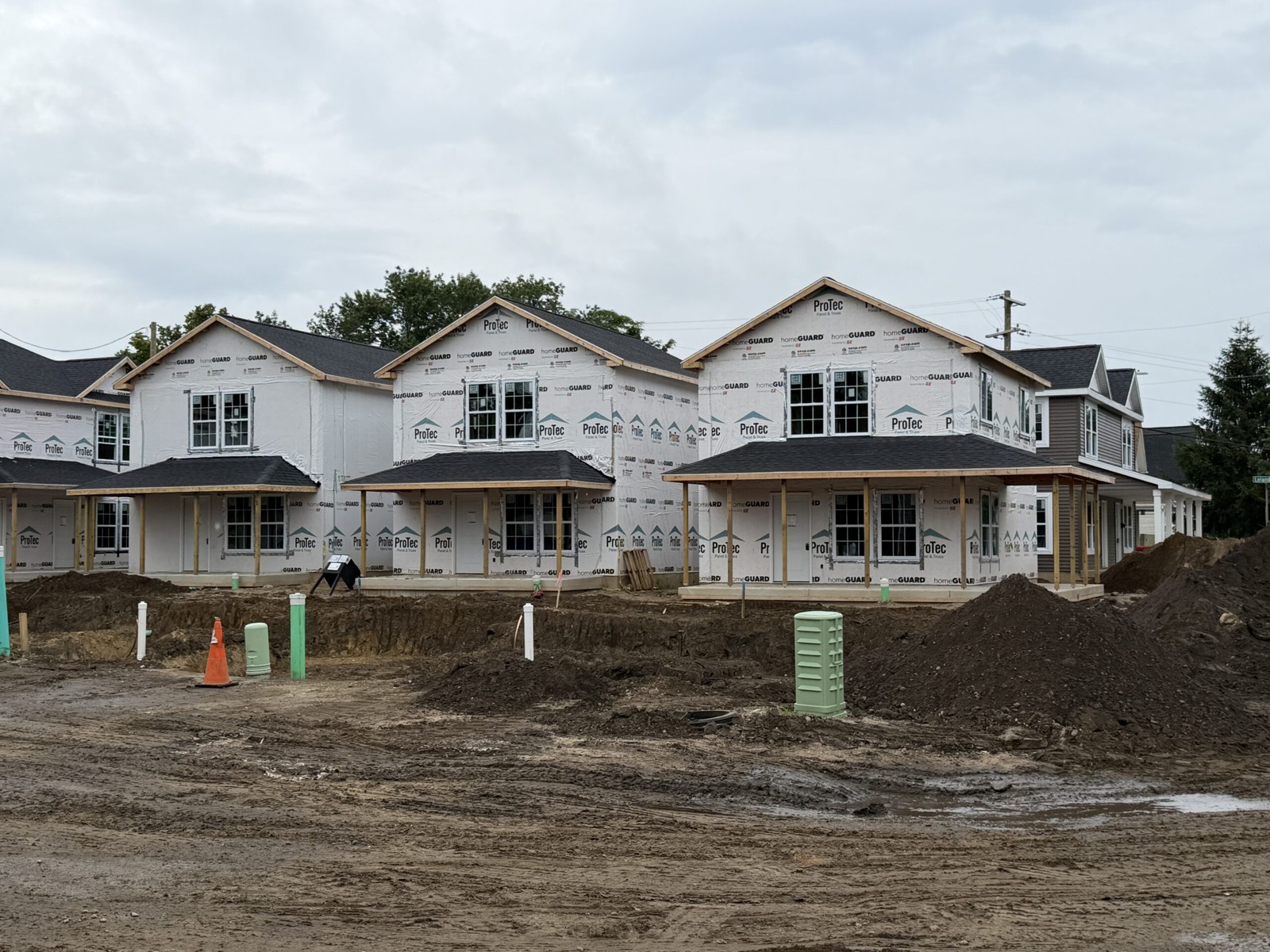
The City of Buffalo and the University at Buffalo are developing a library of pre-approved home designs meant to make it easier, faster and cheaper to build single-family homes and doubles on the city's more than 10,000 vacant lots, starting on the East Side. The initiative, called Buffalo Ready Homes, was announced October 7 by UB's School of Architecture and Planning and Mayor Sean Ryan's office, with completed plans expected in summer 2027 University at Buffalo Buffalo News.
For small builders, nonprofit developers and individual lot owners, the program targets the design and permitting costs that often make one-off infill houses hard to finance in Buffalo neighborhoods.
What Happened
UB said the partnership will create housing plans that already meet Buffalo's zoning requirements and fit the character of its neighborhoods, so builders do not have to start every project from scratch University at Buffalo. "Across Buffalo, we have thousands of vacant lots where homes once stood," Ryan said, adding that the program "will help us address both of those problems at the same time," referring to vacant land and the need for affordable homes University at Buffalo.
The Buffalo News reported the city has more than 10,000 vacant lots covering about 1,400 acres Buffalo News. The designs will be available for use on any property in the city, though the first focus is the East Side Buffalo News University at Buffalo.
Key Details
- Home types: Single-family homes and two-family doubles University at Buffalo. The Buffalo News reported that options include modular and site-built homes, and that some may be built without basements Buffalo News.
- Size: About 1,200 square feet, smaller than the typical Buffalo home of about 1,800 square feet Buffalo News.
- Target prices: Officials hope for $200,000 to $250,000, possibly up to $300,000, depending on when the homes are built Buffalo News.
- Subsidies: The program is expected to rely on New York State Homes and Community Renewal subsidies, and buyer eligibility would follow HCR programs, including for households below area median income Buffalo News University at Buffalo.
- Design team: Trautman Associates is working with the UB Regional Institute on the home designs and architectural documents UB Regional Institute.
- Intended users: Individuals and small-scale developers who own a city lot, plus nonprofits that would sell homes to qualified buyers University at Buffalo.
Timeline
The UB team studied zoning, the permitting process and vacant lot patterns over the summer of 2026. It is holding listening sessions with builders, developers, nonprofits and community partners this fall, and may survey residents University at Buffalo. Design work is expected over the winter and into spring 2027, with completed plans presented in summer 2027 University at Buffalo. After review with city staff, the final plans will be made available to the public through the City of Buffalo UB Regional Institute.
No construction dates or unit targets have been announced. The UB release does not say when the first homes would be built University at Buffalo.
What Pre-Approved Means
The term can be misleading. The UB Regional Institute says pre-approved does not mean an individual project is automatically approved. Each home will still need the applicable city review and permits UB Regional Institute. The aim is to "reduce uncertainty in the development process" and "lower barriers to infill housing," but the program has not published estimates of time or cost savings UB Regional Institute.
UB Regional Institute director Bart Roberts said, "The impetus for this was looking at best practices and precedents from other cities" University at Buffalo. Matt Roland, who directs the School of Architecture and Planning's real estate development program, said, "Our target audience would be individuals or small-scale developers who own a lot in the city where they want to build a house" University at Buffalo.
Why It Matters
Infill homes on scattered city lots are among the hardest projects to make work. Each one carries its own design fees, zoning review and permit risk, and it lacks the economies of scale of a subdivision. A shared set of plans built around Buffalo's zoning could shorten the front end for builders who do one to five homes a year, and give lenders and appraisers a consistent product to evaluate.
The smaller footprint and possible slab-on-grade designs point to lower construction costs per house Buffalo News. Combined with HCR subsidies, the $200,000 to $300,000 price target is meant to compete with existing homes for first-time buyers Buffalo News.
Implications for Owners, Developers, Contractors and Subs
- Small builders and residential GCs: Repeatable, code-checked plans could support a steady stream of similar houses, which helps with crew scheduling and material ordering.
- Modular manufacturers: Modular construction is one of the options under consideration, which could open Buffalo infill work to factory builders Buffalo News.
- Nonprofit developers and land banks: Nonprofits that sell homes to qualified buyers are named as intended users and could pair the plans with HCR funding University at Buffalo.
- Trades: Foundation, framing, MEP and finish subs that work on small residential jobs may see more East Side work if builders adopt the plans after 2027.
- Lot owners: Individuals who own vacant parcels gain a potential path to build without hiring an architect for a custom design University at Buffalo.
What to Watch
- Fall 2026 listening sessions and any builder survey results University at Buffalo.
- The number and types of designs released in summer 2027 University at Buffalo.
- Whether the city pairs the plans with vacant lot sales, faster review tracks or fee reductions.
- HCR funding commitments tied to the program Buffalo News.
- The first builds and their actual costs compared with the price targets.
Bottom Line
Buffalo Ready Homes aims to turn some of Buffalo's 10,000-plus vacant lots into roughly 1,200-square-foot homes and doubles priced around $200,000 to $300,000, using zoning-compliant plans available to small builders and nonprofits Buffalo News University at Buffalo. The plans are due in summer 2027. Whether the program produces houses will depend on subsidies, city lot policy and whether local builders take up the designs.
Image credit: UB Regional Institute. Image from the source article.
Sources
- University at Buffalo news release, Oct. 7, 2026: https://www.buffalo.edu/news/releases/2026/10/Buffalo-Ready-Homes.html
- UB Regional Institute, Buffalo Ready Homes: https://regional-institute.buffalo.edu/work/buffaloreadyhomes/
- Buffalo News: https://buffalonews.com/news/local/business/article_ad37c9b1-741f-46c4-891c-1095ae0b0918.html


Let's connect
For organizations planning commercial, industrial, or infrastructure work, we will review the project and recommend the appropriate delivery approach.

Join our team
If you hold yourself to careful, accountable work, you already work the way we do.