
news +insights
Brightline West Moves Through Civil Construction: America's First True High-Speed Rail Takes Shape
Something unprecedented is being built along Interstate 15 in the Nevada and California desert. Brightline West's high-speed rail corridor — a 218-mile, all-electric passenger rail system connecting Las Vegas to Rancho Cucamonga in Southern California — is in active civil construction along all four segments of the project, with completion targeted for late 2029.
When it opens, it will be America's first true high-speed passenger rail system, with trains operating at speeds exceeding 186 miles per hour. The journey from Las Vegas to Southern California is projected to take approximately two hours and ten minutes — roughly twice as fast as average drive time on the frequently congested I-15 corridor.
The Scale of What Is Being Built
The civil construction phase of the project — which encompasses all foundational infrastructure before track and electrification work begins — has been divided into four geographic segments. According to the Brightline West construction overview, those segments are:
- Nevada (34 miles): From the Las Vegas station to the Nevada–California state line, including construction within the I-15 median, along the eastbound highway shoulder, and a connection to the Vehicle Maintenance Facility near Sloan Road.
- California North (110 miles): The longest segment, entirely within the I-15 median, running from the state line to Barstow, California.
- California Middle (39 miles): Barstow to Hesperia, including the 3,800-foot Barstow Viaduct — one of the project's signature engineering structures.
- California South (34 miles): Hesperia to Rancho Cucamonga, navigating the mountainous terrain of Cajon Pass before entering the urban environment near the terminus station.
Once civil work on each segment is handed over, Brightline West's system and track contractor will begin installing rail, signaling and control systems, the overhead catenary system, and electrical substations. Train testing follows. The sequencing means civil completion in the Nevada and California North segments must lead before track work can proceed along the full corridor.
Stations and Facilities
Four stations are planned. In Las Vegas, a flagship station located at the south end of the Strip near the I-15/I-215 interchange will serve as the primary gateway, with Wi-Fi-enabled lounges and extensive ground transportation connections. The Southern California terminus in Rancho Cucamonga will feature elevated platforms above existing Metrolink regional rail tracks, enabling direct connections to the broader Southern California transit network and 4,000 parking spaces in an adjacent structure.
Two intermediate stations in the High Desert — at Apple Valley and Hesperia — will serve commuters and recreational travelers along the corridor. All four stations are being designed to the same contemporary standard, though the flagships carry a larger footprint.
The Vehicle Maintenance Facility near Sloan, Nevada — located approximately 10 minutes from the Las Vegas station — will house the train fleet's operations control center and support everything from nightly cleaning to heavy maintenance overhauls.
Financing and Federal Support
In December 2023, the Nevada Department of Transportation and Brightline West were awarded $3 billion in federal Department of Transportation funding toward the project, according to the Nevada DOT project page. The full project cost has been reported at more than $21 billion, making it one of the largest private transportation investments in U.S. history and placing it among the most significant construction projects underway in the country today.
The project's privately financed structure differentiates it from most U.S. passenger rail initiatives, which rely primarily on government funding. Brightline's model — tested on its Florida operations between Miami and Orlando — depends on fare revenue, development around stations, and the premium passenger experience to service long-term project debt.
A Timeline That Has Shifted
Initial timelines had targeted completion in time for the 2028 Los Angeles Olympics. Newsweek reported in January 2026 that the company confirmed a revised completion date of late 2029, with civil construction and land preparation continuing through 2026. Brightline has not yet disclosed when track installation will begin, though that phase will follow completion of civil work along each segment.
Field operations along the I-15 corridor are ongoing. The Las Vegas station construction site is active. Utility relocations and ground preparation for the rail infrastructure are progressing across the corridor, though the project has described most 2026 activity as predominantly foundational and enabling work ahead of the more visible structural phases.
What This Means for the Construction Industry
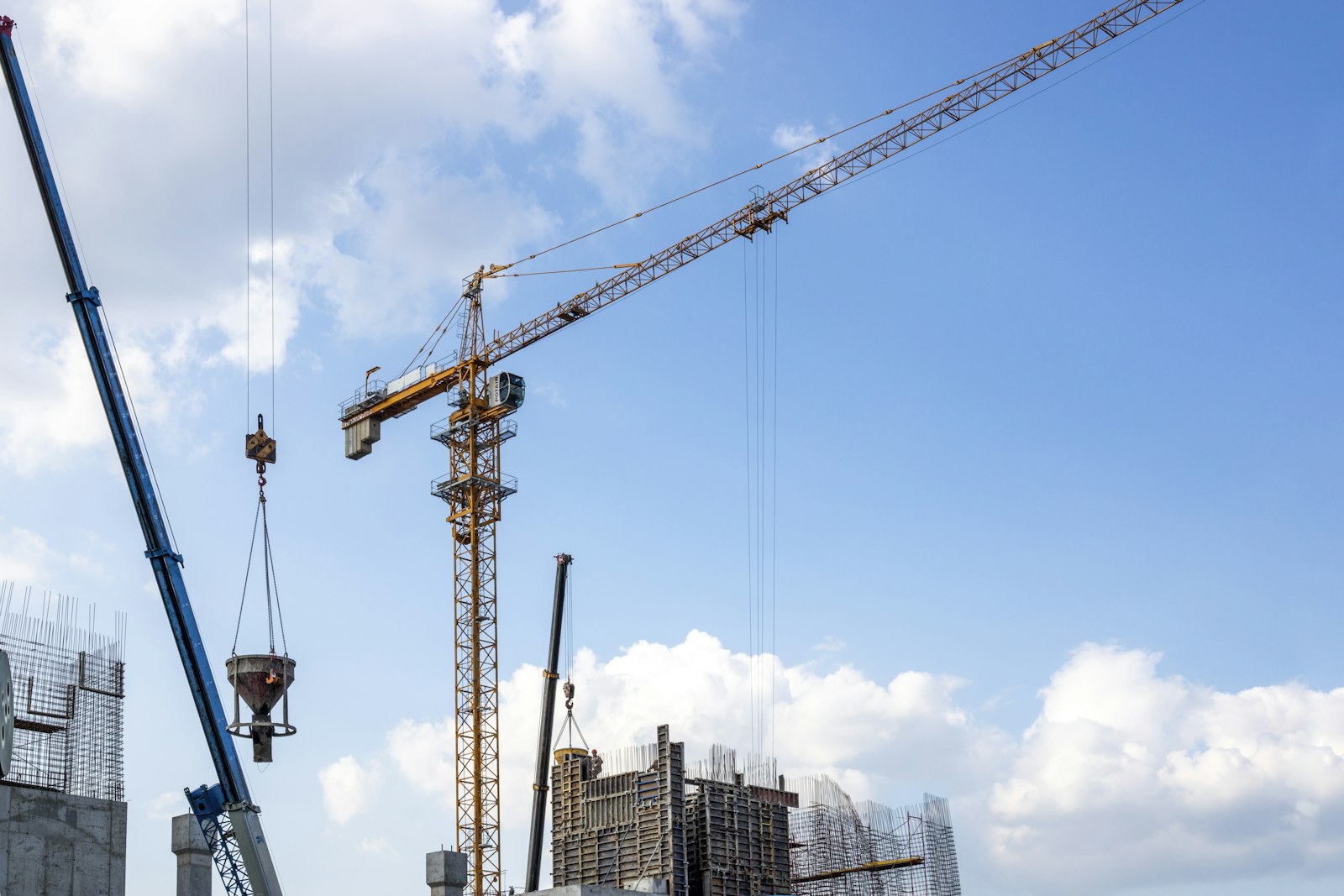
Brightline West is a textbook example of the mega-infrastructure projects that are reshaping large-scale construction demand in the United States. Civil work on a 218-mile corridor involves an extraordinary scope: highway improvements in a live-traffic environment, drainage and stormwater systems designed for desert climate conditions, retaining walls and earthwork at scale, viaduct and bridge structures, and utility relocations across two states and multiple jurisdictions.
The follow-on track, electrification, and systems work will engage an entirely different set of specialty contractors — rail trackwork, overhead contact system installers, signaling and communications specialists, and electrical substation builders. For large industrial and infrastructure contractors, the Brightline West build represents a multi-year program that will generate significant procurement activity well beyond the civil phase currently underway.
Sources
Brightline West — Construction Overview | Nevada DOT — Brightline West High Speed Rail Project | Newsweek — Brightline West Gets New Completion Date | Construction Owners — 10 US Megaprojects Set to Break Ground in 2026
Let's connect
For organizations planning commercial, industrial, or infrastructure work, we will review the project and recommend the appropriate delivery approach.

Join our team
If you hold yourself to careful, accountable work, you already work the way we do.