

news +insights
Federal Judge Halts Big Bend Border Barrier Work, Affecting $7.5B in Contracts
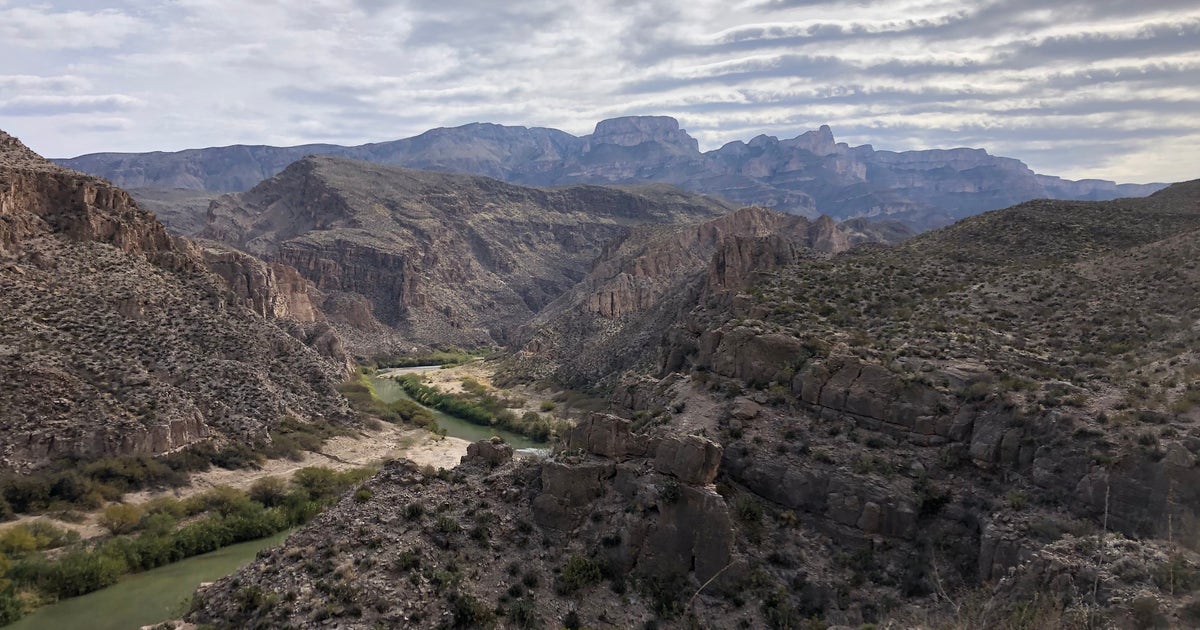
A federal judge in El Paso has issued a preliminary injunction halting border barrier construction across the Big Bend region of Texas, an order that reaches five federal contracts worth about $7.5 billion. U.S. District Judge Kathleen Cardone of the Western District of Texas issued the order on October 2, 2026, and it bars barrier work, related infrastructure and ground-disturbing activity throughout the Border Patrol's Big Bend Sector ENR. The injunction stays in effect while the underlying lawsuit proceeds KWTX.
For the construction industry, the ruling raises immediate questions about work status, schedule and cost recovery on some of the largest federal civil contracts now active in Texas. Several of those questions do not yet have public answers.
What the Court Ordered
Judge Cardone read her order from the bench at the end of a hearing on Friday, October 2 KWTX. According to ENR, the order prohibits border barriers, related infrastructure and "any construction or ground disturbing activities" in the sector ENR. The Associated Press reported that the injunction covers Big Bend National Park along with roughly 500 miles of the Big Bend Sector, about one quarter of the U.S. border with Mexico ABC News. It also reaches riverside areas outside the park where work was planned largely on private land ABC News.
The judge found that the plaintiffs were likely to succeed on the merits of at least one of their claims and would likely suffer serious, irreparable harm without court relief FOX 7 Austin. The Associated Press reported that she also found the balance of equities and the public interest favored a temporary block ABC News.
The Legal Basis
The case was filed in April against the Department of Homeland Security and its secretary by the Center for Biological Diversity on behalf of Friends of the Ruidosa Church, a nonprofit that preserves a historic church in Presidio County, and Danny William Miller, a river guide and landowner in Redford KWTX. The suit argues that the five contracted projects are unconstitutional on several grounds, including separation of powers and the taking of private land KWTX. The plaintiffs also contend that DHS improperly set aside environmental protections and acted without the congressional approval they say is required FOX 7 Austin.
At the center of the dispute are DHS waivers of environmental, cultural-resource and contracting requirements, including the Endangered Species Act and the National Environmental Policy Act, issued to speed construction of barriers and roads KWTX. ENR reported that the injunction stays those waivers and requires compliance with otherwise applicable laws ENR.
That has a specific construction consequence. Section 408 of the Rivers and Harbors Act ordinarily requires federal permission for work affecting infrastructure built by the U.S. Army Corps of Engineers, and one of the affected contracts involves work next to flood-control levees near Presidio ENR. In August, a different federal judge, Reggie Walton, had ruled that a July 2 DHS waiver defeated flood-control claims, and ENR reported that the new order stays that waiver ENR.
The government's position is that physical infrastructure is needed, even in remote areas, to reach what it calls "operational control" of the border KWTX. This is a preliminary ruling, not a final decision on the merits.
Contracts and Contractors Affected
ENR identified five federal contracts totaling about $7.5 billion ENR:
- Fisher Sand & Gravel Co.: two contracts worth roughly $3.8 billion combined, including a $1.22 billion Presidio contract with work adjacent to flood-control levees ENR.
- Barnard Construction Co.: two contracts totaling nearly $2 billion ENR.
- Southwest Valley Constructors, a Kiewit Corp. unit: one $1.72 billion contract in the Big Bend National Park area, covering 17 miles of vehicle barrier and about 205 miles of roads and related infrastructure. Its current completion date is May 11, 2027, with options that extend into 2028 ENR.
The Texas Tribune, in a report carried by KWTX, described the program as walls, roads, fences, lights, sensors and other infrastructure totaling more than $7.5 billion KWTX.
Status of the Work
Vertical construction had already begun. U.S. Customs and Border Protection confirmed to ENR that contractors started erecting 30-foot steel panels on September 15 along a 47-mile stretch in Hudspeth County ENR. Contractors had also been cutting new roads in the national park, according to the Texas Tribune KWTX.
Accounts of an earlier voluntary pause differ slightly. The Texas Tribune reported that work in and around the national park had been paused through September KWTX. FOX 7 Austin reported that a pause began in August and ended on the Wednesday before the ruling, and that the government said in court filings it was working on "reducing the scope" and would not restart for several weeks FOX 7 Austin.
What has happened contractually since the order is not clear. ENR reported that CBP had not said whether formal suspension or stop-work orders had been issued to the contractors, and that Southwest Valley Constructors declined to discuss stoppages or schedule impacts and referred questions to CBP ENR.
What Happens Next
None of the sources reviewed reports that an appeal has been filed. CBP told ENR it is consulting with the Department of Justice on its response and said it is "confident in our legal authorities to secure the border" ENR. CBP and DHS did not immediately comment to the Associated Press on the day of the ruling ABC News. Any appeal of an order from the Western District of Texas would go to the U.S. Court of Appeals for the Fifth Circuit, where the government could also ask for the injunction to be paused while the appeal is heard.
The case is one of six lawsuits filed over the Big Bend work, and outcomes have varied. One day before the injunction, a judge in a separate case denied a temporary restraining order that sought to stop work in and around the national park KWTX.
Implications for Contractors and Subs on Federal Work
The points below are general observations about how federal construction contracts typically handle a court-ordered halt. They are not statements about the terms of these five contracts, which have not been published in the sources reviewed.
- Wait for written direction. A court order binds the government. A contractor's obligations change through the contracting officer. Federal construction contracts commonly include suspension of work and stop-work order clauses, and the form of the direction affects what costs can be recovered and when notice is due.
- Track standby and demobilization costs separately. Idle equipment, retained crews, site security, storage of fabricated steel and remobilization are the usual cost categories in a suspension. Clean, contemporaneous records are the basis for any later request for equitable adjustment.
- Mind the notice deadlines. Suspension clauses generally limit recovery for costs incurred before the contractor gave written notice and require a claim to be submitted promptly after the suspension ends.
- Termination for convenience is a possibility. If a halt becomes prolonged or the scope is reduced, the government can end all or part of a contract for its convenience. Recovery is then generally limited to costs incurred, reasonable profit on work performed and settlement expenses, not profit on unperformed work.
- Subs and suppliers depend on flow-down. A subcontractor's rights to suspension costs or termination settlement usually come from the subcontract, not from the prime contract. Subs should check whether those clauses were flowed down, give notice to the prime in writing and document labor, equipment and material commitments.
- Permitting risk can return. With the waivers stayed, requirements such as Section 408 review could apply again to affected scopes ENR. That can change sequencing and schedule even if work is later allowed to resume.
What to Watch
- Whether the government appeals and seeks a stay of the injunction.
- Whether CBP issues formal stop-work or suspension orders, and how long they run ENR.
- Any reduction in scope, which the government referenced in court filings before the ruling FOX 7 Austin.
- Rulings in the five other Big Bend lawsuits KWTX.
- Extensions to contract completion dates, including Southwest Valley's May 11, 2027 date ENR.
Bottom Line
A preliminary injunction issued October 2 has stopped barrier construction and ground-disturbing work across the Big Bend Sector, touching five contracts held by Fisher Sand & Gravel, Barnard Construction and Southwest Valley Constructors worth about $7.5 billion ENR. The order is temporary and the government has said it is weighing its response with the Department of Justice ENR. Until the appellate path and the contracting officers' directions are known, the firms on these jobs and their subcontractors face an open-ended pause with cost and schedule consequences still to be defined.
Image credit: National Park Service (NPS/D. Dosedal). Image from the source article.
Sources
- ENR, Federal Injunction Hits $7.5B in Big Bend Border Construction Contracts: https://www.enr.com/articles/63777-federal-injunction-hits-75b-in-big-bend-border-construction-contracts
- KWTX (The Texas Tribune), Judge halts border barrier construction in Big Bend: https://www.kwtx.com/2026/10/02/judge-halts-border-barrier-construction-big-bend/
- ABC News (Associated Press), Judge temporarily blocks border wall construction in Texas' Big Bend region: https://abcnews.com/Politics/wireStory/judge-temporarily-blocks-border-wall-construction-texas-big-136961010
- FOX 7 Austin, Big Bend border barrier construction stopped by federal court: https://www.fox7austin.com/news/big-bend-border-wall-paused



Let's connect
For organizations planning commercial, industrial, or infrastructure work, we will review the project and recommend the appropriate delivery approach.

Join our team
If you hold yourself to careful, accountable work, you already work the way we do.