
news +insights
Batavia Wins Its Second $10 Million DRI Award, and a Data Center Is Already Breaking Ground
Two significant construction investments are converging in Batavia, Genesee County in spring 2026, cementing the small city's status as one of the most active development markets between Buffalo and Rochester. The city has now secured a second $10 million Downtown Revitalization Initiative (DRI) award from New York State — making it the first municipality in the state to win two full DRI rounds — while separately, a Hut 8 Corp. data center project is beginning $18 million in electrical infrastructure upgrades that must be completed before the data center itself can go live.
DRI Round 9: A Second Major Infusion
On April 20, 2026, Governor Kathy Hochul announced that Batavia had won the Finger Lakes region's share of the ninth round of the Downtown Revitalization Initiative, receiving $10 million. The Village of Victor and the Town of Irondequoit received $4.5 million each under the companion NY Forward program. Total state investment across all three Finger Lakes communities: $19 million.
This is Batavia's second DRI win — the first came in 2017–2018, also worth $10 million, and produced eight funded projects all completed by 2025. LaBella Associates, which served as lead planning consultant on the first round, documented the results: $4 million in building renovations across 23 properties, 70 workforce housing units through two projects totaling more than $25 million, and the Ellicott Trail through the city center.
For the second round, the city is focused on housing, catalytic redevelopment, public space improvements, and small business growth. Backed by more than $50 million in identified projects, City Council President Eugene Jankowski Jr. described the award as "a transformational investment in Batavia and a strong affirmation of our downtown vision." Batavia, Victor, and Irondequoit will now enter the Strategic Investment Plan development phase, engaging local planning committees, state agency experts, and private planning consultants to define which projects receive funding.
Notably, Batavia was required to hold Pro-Housing Community certification to qualify — a condition for all DRI and NY Forward recipients in 2026. The city has also recently approved "The Residences at River Pointe," a $24 million, 72-unit workforce housing project at 400 South River Street on a former rock quarry site, and an Ashton Ridge subdivision with 159 total units.
The Data Center: $18 Million in Infrastructure Work Starts First
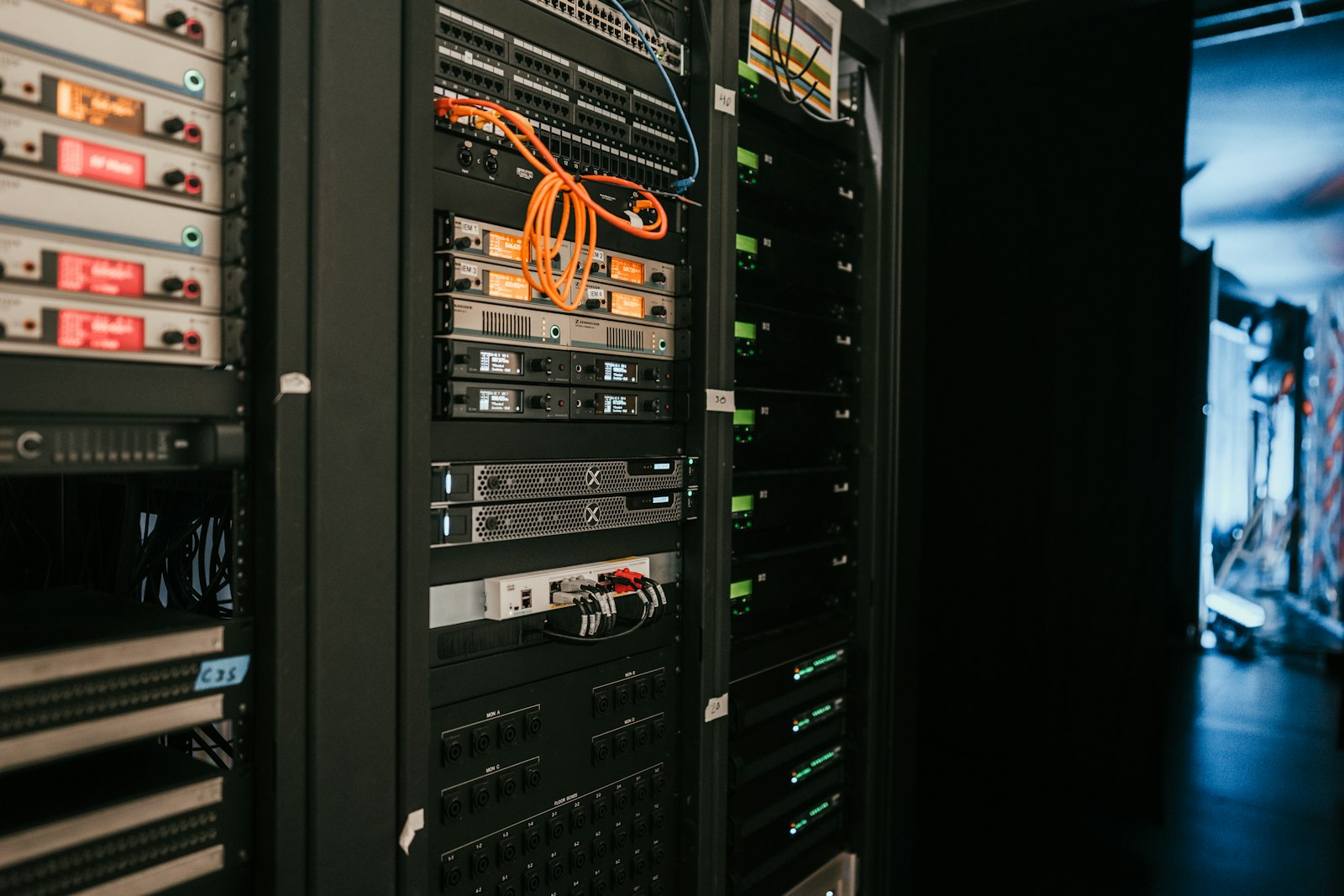
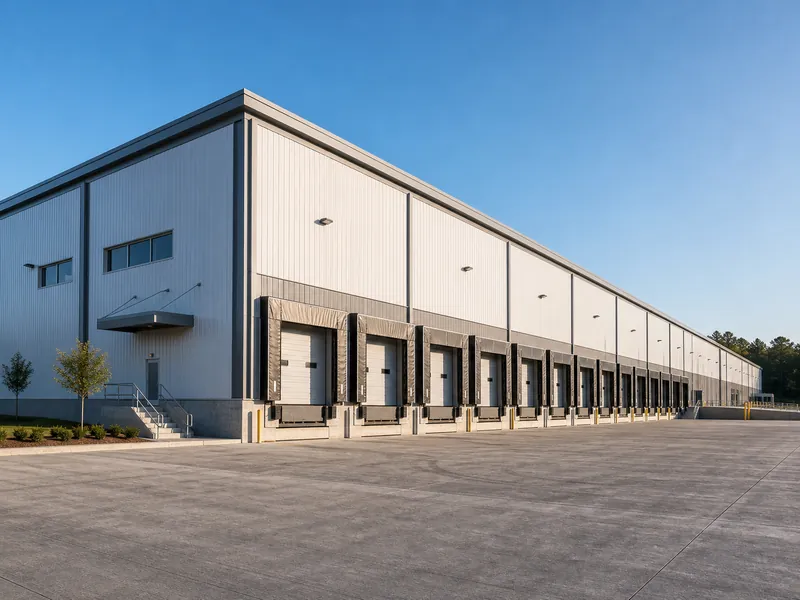
Separate from the DRI, a private sector construction investment of a very different kind is underway at Batavia's Northeast Industrial Park. In July 2025, the Batavia City Council approved an Electric Master Services Agreement (12–1 vote) with Batavia DC Corp., a subsidiary of Hut 8 Corp. (Nasdaq: HUT), for a 120,000-square-foot data center at 1780 Hubbard Avenue — directly adjacent to the city's Northeast Substation.
The construction sequencing is important for contractors to understand. Before the data center building can go live, Hut 8 must complete $18 million in off-site electrical infrastructure work — substation upgrades and new transformers at the Northeast Substation — which the developer is paying for entirely upfront. That infrastructure construction was expected to begin in spring 2026. The city will reimburse Hut 8 for those upgrades over seven years, using only revenue generated by the data center.
Key project parameters:
- Site: 7.2 acres, zoned General Industrial, vacant lot
- Building: One facility, approximately 120,000 square feet
- Power capacity: 20 MW initial (target: late 2026 / early 2027), scalable to 50 MW by approximately 2031
- Water use: Capped at 1,000 gallons per day average — a closed-loop cooling system equivalent to approximately four residential homes
- Blockchain prohibition: The MSA explicitly prohibits cryptocurrency mining; the facility is limited to enterprise colocation and high-performance computing workloads
- Revenue to city: Projected between $23 million and $85 million in net revenue over 20 years, including $375,000 to $800,000 annually in franchise fees
Why Batavia Matters for WNY Construction
The two projects together illustrate a development model gaining traction in smaller upstate cities: use DRI funding to activate downtown mixed-use and housing projects while leveraging industrial-zoned land for large-format technology infrastructure that generates the fiscal capacity to maintain those investments. Batavia's first DRI round demonstrated that follow-on private investment — more than $50 million documented by LaBella — reliably follows well-executed state-funded downtown catalysts.
For contractors, the practical opportunity is layered. The DRI Strategic Investment Plan process takes roughly 12 months before specific projects are selected and go to construction. Firms with experience in historic building rehabilitation, streetscape construction, mixed-use residential, and public gathering space work should watch for the plan's publication — likely winter 2026–2027 — and prepare to respond to IFBs that follow. The data center infrastructure work, however, is already in progress: the $18 million substation upgrades and the eventual 120,000-square-foot facility represent near-term commercial and industrial construction demand in the Genesee County market.
Implications for Owners and Developers
Batavia's double-award status signals that New York State's program managers view the city as a high-fidelity implementation partner — municipalities that deliver on their first round are competitive for second rounds, and Batavia delivered all eight projects on schedule. For developers looking at smaller Finger Lakes cities, this track record suggests the local planning infrastructure is in place to move projects quickly once DRI funding is allocated. The city's recent approval of multiple workforce housing projects also reflects an active IDA and supportive local government for projects seeking PILOT agreements and tax incentives.
What to Watch Next
- The DRI Strategic Investment Plan process for Batavia Round 9 will begin immediately; construction bids on individual DRI projects typically emerge 12–18 months after the award.
- Hut 8's Northeast Substation upgrade construction should be visible this summer. Phase 1 operational target is late 2026 / early 2027.
- The Residences at River Pointe ($24M, 72 units) at 400 South River Street is expected to proceed toward construction bids in 2026.
- Victor and Irondequoit are now entering the NY Forward planning process — two new communities that will produce construction-ready project slates in 2027.
Bottom Line
Batavia, New York is simultaneously managing a DRI-funded downtown construction pipeline and a $500 million private data center build — the largest private investment in the city's history. For contractors and subcontractors active in Genesee County and the greater Rochester–Buffalo corridor, both pipelines warrant close attention. The data center's electrical infrastructure work is already underway; the DRI construction wave follows in 2027.
Sources
- Governor Hochul — DRI Round 9 Finger Lakes Winners, April 20, 2026
- Rochester Business Journal — DRI and NY Forward Awards, April 21, 2026
- Batavia 5th Ward Blog — Data Center Explained, March 20, 2026
- Batavia 5th Ward Blog — Year in Review, April 3, 2026
- LaBella Associates — Batavia DRI Round 2 Results, 2025

Let's connect
For organizations planning commercial, industrial, or infrastructure work, we will review the project and recommend the appropriate delivery approach.

Join our team
If you hold yourself to careful, accountable work, you already work the way we do.