
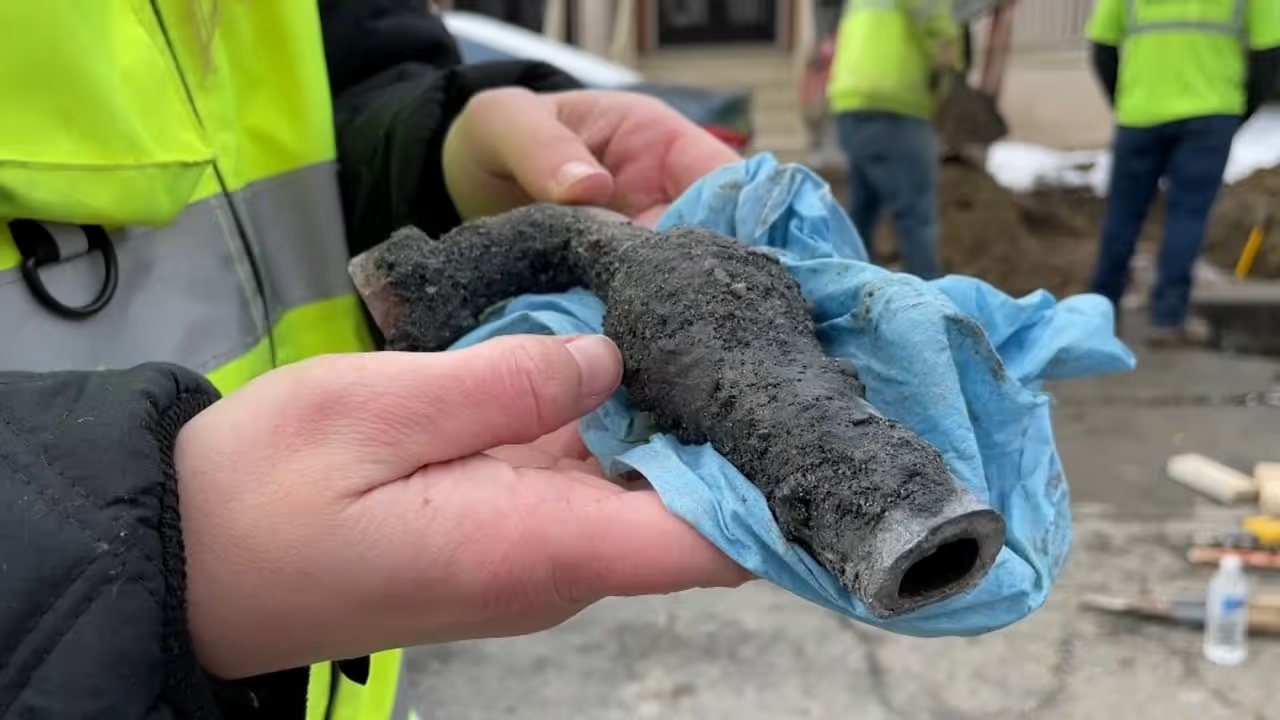
New York State Awards Major Infrastructure Funding for Lead Removal
Rochester is receiving $14 million in state funding to replace lead service lines and upgrade drinking water infrastructure as part of New York State's Lead Infrastructure Forgiveness and Transformation (LIFT) initiative. This represents a critical investment in the city's water systems and public health protection.
The Lead Service Line Crisis
Lead service lines remain one of the most persistent water infrastructure challenges facing aging communities like Rochester. The Rochester water system historically relied on lead pipes to connect homes and businesses to municipal water supplies, creating ongoing contamination risks for residents.
According to the Infrastructure United network, over one-third of New York's water service lines may contain lead, affecting approximately 3 million residents statewide. Monroe County, which includes Rochester, has been identified as a priority area for lead remediation efforts.
New York's $66 Million LIFT Initiative
In November 2025, New York State announced an innovative funding approach through its LIFT initiative, which awards nearly $66 million in grants to seven communities to replace lead service lines. The program specifically targets municipalities that received federal assistance through the Infrastructure Investment and Jobs Act (IIJA) but require additional resources to cover full replacement costs.
Award breakdown includes:
- $14 million to Rochester
- $14 million to New York City
- $14 million to Poughkeepsie
- $10.48 million to Lockport
- $4.77 million to Oswego
- $3.82 million to the Mohawk Valley Water Authority
- $3.45 million to Buffalo
- $1.35 million to Gloversville
The construction and replacement work targets historically disadvantaged communities, prioritizing neighborhoods where lead plumbing materials remain most common.
How LIFT Works: Debt Forgiveness Structure
What makes New York's LIFT program particularly innovative is its debt forgiveness structure. Rather than requiring municipalities to repay the grants, the State uses LIFT funding to retire remaining project financing once construction is complete. This prevents additional costs from being passed to local ratepayers—a critical concern for Rochester residents who already face significant water infrastructure expenses.
This approach recognizes that aging industrial cities like Rochester cannot absorb massive rate increases while simultaneously addressing generations of deferred infrastructure maintenance.
The Scope: What the Work Entails
In Rochester, the $14 million grant will fund the identification and replacement of lead service lines in older neighborhoods where lead plumbing materials remain prevalent. The work involves:
- Testing and identification: Systematic surveying of service lines to determine which contain lead
- Replacement construction: Physical removal of lead pipes and installation of safe, non-toxic alternatives
- Quality assurance: Water testing to verify safe lead levels post-replacement
- Community engagement: Public education about lead risks and remediation efforts
Why This Matters for Contractors and Developers
For the construction industry in upstate New York, lead service line replacement represents a significant market opportunity. These projects require skilled contractors experienced in:
- Underground utility work and excavation
- Water system infrastructure modification
- Environmental remediation protocols
- Municipal compliance and permitting
- Coordination with active water systems
Contractors working on these projects must meet strict safety and environmental standards, including proper disposal of lead-containing materials.
Federal and State Infrastructure Investment Context
New York's LIFT initiative builds on the foundation established by the Biden-Harris Infrastructure Investment and Jobs Act (IIJA), which has been a major source of water infrastructure funding nationwide. The federal program initially provided resources for municipalities to begin lead remediation projects, but cost escalation made full project completion challenging.
New York State's decision to provide gap funding through LIFT demonstrates state-level commitment to meeting federal infrastructure goals while protecting local ratepayers.
Public Health Implications
Lead exposure in drinking water poses documented risks, particularly for children and pregnant women. The Monroe County Department of Public Health released 2024 childhood lead testing data in November 2025, emphasizing the ongoing importance of lead remediation efforts. Early detection and prevention through infrastructure replacement remain critical public health strategies.
Timeline and Next Steps
New York State has not yet announced specific project timelines for Rochester or the other six communities receiving LIFT awards. Municipalities are expected to coordinate with state officials to develop implementation schedules, secure additional approvals if needed, and begin contractor procurement processes.
Rochester Water Department officials will work with Monroe County Industrial Development Agency (COMIDA) and state representatives to establish replacement priorities, focusing on neighborhoods with highest lead contamination risks and greatest public health vulnerability.
Implications for Rochester Development
Safe water infrastructure is foundational for economic development and attracting new residents and businesses. Rochester's receipt of this $14 million award signals continued state investment in the region's infrastructure resilience and reinforces the city's position within New York's larger infrastructure investment strategy.
The construction and engineering work associated with lead service line replacement will support local contractors and generate skilled employment opportunities throughout the project lifecycle.
Industry Watch
Contractors, engineers, and developers working in upstate New York should monitor the Rochester project's development and implementation. As one of seven pilot communities, Rochester's experience with LIFT funding will likely inform future infrastructure initiatives in the state.
For more information on New York water infrastructure initiatives and lead remediation efforts, contractors can consult the Infrastructure United network and New York State's Department of Environmental Conservation (NYSDEC). Published sources include Infrastructure United (November 21, 2025) and Monroe County Department of Public Health (November 6, 2025 lead testing report).

Discuss an Upcoming Project


